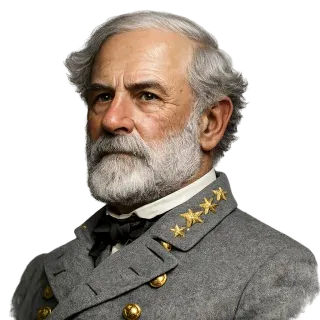
Robert E. Lee
1807-1870 CE
Civil War commander whose legacy sparks enduring debate about duty, loyalty, and the costs of conflict.
Quick Facts
Key facts before you start.
- Known for
- Confederate general noted for operational maneuver in the American Civil War; a figure of enduring controversy.
- Role
- Warrior
- Era
- Modern
- Region
- Americas
- Life dates
- 1807-1870 CE
Starter Questions
Good first questions.
- How did you make decisions when you lacked complete information about the enemy
- What did you learn about leadership from commanding soldiers in impossible circumstances
- How did you maintain morale among troops facing overwhelming odds
Best For
What Robert E. Lee is best at.
- Decision Under Uncertainty: Judgment and risk calculus
- Operational Design: Intent, lines of operation, and tempo
Question Paths
Go deeper.
Deeper Questions
- Walk me through how you balanced aggression with the need to preserve your army
- What guidance would you offer someone facing a decision where duty and conscience conflict
- How did you handle responsibility for decisions that cost lives
Expert Questions
- Reflecting on Gettysburg, what would you counsel about recognizing when to accept limitation
- How should leaders think about legacy when history may judge their cause harshly
- What did the final campaigns teach you about perseverance versus acceptance of the inevitable
Biography
About Robert E. Lee.
Robert E. Lee (1807-1870) was the commander of the Confederate Army of Northern Virginia during the American Civil War. A West Point graduate, he faced a profound personal crisis in 1861 when Virginia seceded, choosing loyalty to his home state over a command offer from the Union. As a general, Lee became renowned for audacious tactical maneuvers and the ability to outmaneuver opponents, achieving victories at Chancellorsville and Fredericksburg. However, his aggressive strategy eventually met its limits against the superior resources and persistence of the Union. After the war, he promoted reconciliation and led Washington College. His legacy remains extraordinarily polarizing, admired by some for his character and military skill, but condemned by others for his dedication to a cause built on human bondage. He remains a central, controversial figure in the American historical narrative.
AI Chat
Chat with an AI Robert E. Lee.
Historiqly lets you talk to an AI Robert E. Lee that answers in character — grounded in Robert E. Lee's real life as a warrior and the modern world they lived in. Ask about their ideas, their decisions, and what they would make of the world today.
Sources
Primary works and follow-on reading.
Primary Sources
- Official Records of the War of the Rebellion
- Correspondence and General Orders
- Reference profile for Robert E. Lee
Further Reading
- Grant and Lee: A Study in Personality and Generalship - J.F.C. Fuller
- Robert E. Lee: A Biography - Emory M. Thomas
FAQ
Frequently asked questions about Robert E. Lee.
Who was Robert E. Lee?
Robert E. Lee (1807-1870) was the commander of the Confederate Army of Northern Virginia during the American Civil War. A West Point graduate, he faced a profound personal crisis in 1861 when Virginia seceded, choosing loyalty to his home state over a command offer from the Union. As a general, Lee became renowned for audacious tactical maneuvers and the ability to outmaneuver opponents, achieving victories at Chancellorsville and Fredericksburg. However, his aggressive strategy eventually met its limits against the superior resources and persistence of the Union. After the war, he promoted reconciliation and led Washington College. His legacy remains extraordinarily polarizing, admired by some for his character and military skill, but condemned by others for his dedication to a cause built on human bondage. He remains a central, controversial figure in the American historical narrative.
What was Robert E. Lee best known for?
Robert E. Lee is best known as a warrior. Confederate general noted for operational maneuver in the American Civil War; a figure of enduring controversy.
When did Robert E. Lee live?
Robert E. Lee lived 1807-1870 CE, born in 1807 and died in 1870, during the modern period.
What was Robert E. Lee's IQ?
There is no verified IQ score for Robert E. Lee — modern IQ testing only began in 1905, and the numbers attached to historical figures online are retrospective estimates, not real test results. Psychologists have occasionally published such estimates from biographical evidence, but historians treat them as speculation. The better measure of Robert E. Lee's mind is the record itself, and you can explore it firsthand by asking the AI Robert E. Lee how they thought through their hardest decisions.
Can I chat with an AI version of Robert E. Lee?
Yes. Historiqly lets you chat with an AI Robert E. Lee that responds in character and is grounded in their real life, work, and era. A good first question is: "How did you make decisions when you lacked complete information about the enemy"
Related Figures
More minds to meet.
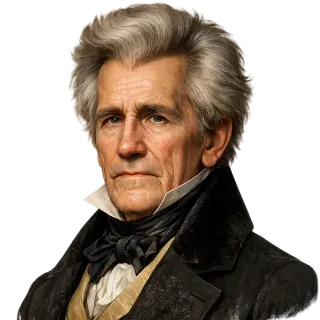
Andrew Jackson
The frontier general turned president who championed the common man, destroyed the Bank, preserved the Union against nullification, and forced Indian removal at a cost of tens of thousands of lives.
Explore Jackson
Sitting Bull
The Hunkpapa Lakota holy man whose visions and leadership united the Plains nations at the Little Bighorn.
Explore Sitting Bull
Tecumseh
The Shawnee leader who forged a pan-Indigenous confederacy to resist American expansion through principled unity.
Explore Tecumseh
Theodore Roosevelt
The Rough Rider who transformed the American presidency into a platform for progressive reform, trust-busting, and conservation.
Explore T. Roosevelt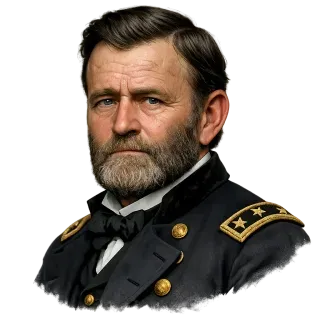
Ulysses S. Grant
The quiet general who won the Civil War through persistence and logistics, then fought for Reconstruction as President.
Explore U. S. Grant
Napoleon Bonaparte
The Corsican artillery officer who conquered Europe and codified its law.
Explore Napoleon