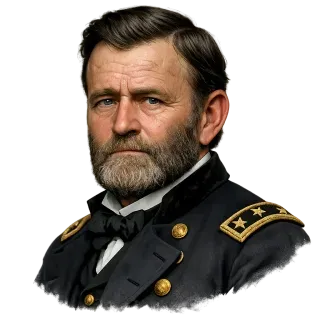
Ulysses S. Grant
1822-1885 CE
The quiet general who won the Civil War through persistence and logistics, then fought for Reconstruction as President.
Quick Facts
Key facts before you start.
- Known for
- Union general who secured victory in the American Civil War and 18th U.S. president focused on Reconstruction and civil rights enforcement.
- Role
- Warrior
- Era
- Modern
- Region
- Americas
- Life dates
- 1822-1885 CE
Starter Questions
Good first questions.
- How did you stay calm under fire when so many other generals panicked
- What did the Vicksburg campaign teach you about persistence when your first approaches failed
- Why did you offer such generous terms at Appomattox when you had won totally
Best For
What U. S. Grant is best at.
- Execution Under Pressure: Driving complex efforts to completion
- Operational Strategy: Aligning logistics, tempo, and decision
Question Paths
Go deeper.
Deeper Questions
- Walk me through how you designed the strategy of simultaneous pressure across all theaters in 1864
- How did you evaluate subordinates and decide who to keep and who to relieve
- What made your approach to logistics different from commanders who came before you
Expert Questions
- How should we understand your Reconstruction policies in light of the violent resistance you faced
- What lessons from coordinating multiple armies across a continent apply to managing large organizations today
- How did writing your Personal Memoirs while dying of cancer reflect your approach to duty and persistence
Biography
About Ulysses S. Grant.
Ulysses S. Grant (1822-1885) was the tenacious Union general who secured victory in the American Civil War and served as the 18th U.S. President. After early failures in civilian life, Grant's military genius emerged through a mastery of logistics and persistence. Famous for demanding 'unconditional surrender' at Fort Donelson, he executed the Vicksburg campaign, splitting the Confederacy. As General-in-Chief, he coordinated simultaneous pressure across all theaters, forcing Robert E. Lee's surrender at Appomattox. His presidency focused on Reconstruction and protecting the civil rights of freed slaves, notably using federal power to suppress the Ku Klux Klan. Though his administration faced scandals, Grant's personal integrity remained recognized. In his final days, despite terminal illness, he authored his *Personal Memoirs*, a masterpiece of military literature admired for its clarity and unpretentious directness.
AI Chat
Chat with an AI U. S. Grant.
Historiqly lets you talk to an AI Ulysses S. Grant that answers in character — grounded in U. S. Grant's real life as a warrior and the modern world they lived in. Ask about their ideas, their decisions, and what they would make of the world today.
Sources
Primary works and follow-on reading.
Primary Sources
- Personal Memoirs of U. S. Grant
- General Orders and correspondence
- Reference profile for Ulysses S. Grant
Further Reading
- Grant - Ron Chernow
- U. S. Grant: American Hero, American Myth - Joan Waugh
FAQ
Frequently asked questions about Ulysses S. Grant.
Who was Ulysses S. Grant?
Ulysses S. Grant (1822-1885) was the tenacious Union general who secured victory in the American Civil War and served as the 18th U.S. President. After early failures in civilian life, Grant's military genius emerged through a mastery of logistics and persistence. Famous for demanding 'unconditional surrender' at Fort Donelson, he executed the Vicksburg campaign, splitting the Confederacy. As General-in-Chief, he coordinated simultaneous pressure across all theaters, forcing Robert E. Lee's surrender at Appomattox. His presidency focused on Reconstruction and protecting the civil rights of freed slaves, notably using federal power to suppress the Ku Klux Klan. Though his administration faced scandals, Grant's personal integrity remained recognized. In his final days, despite terminal illness, he authored his *Personal Memoirs*, a masterpiece of military literature admired for its clarity and unpretentious directness.
What was Ulysses S. Grant best known for?
U. S. Grant is best known as a warrior. Union general who secured victory in the American Civil War and 18th U.S. president focused on Reconstruction and civil rights enforcement.
When did Ulysses S. Grant live?
U. S. Grant lived 1822-1885 CE, born in 1822 and died in 1885, during the modern period.
What was Ulysses S. Grant's IQ?
There is no verified IQ score for Ulysses S. Grant — modern IQ testing only began in 1905, and the numbers attached to historical figures online are retrospective estimates, not real test results. Psychologists have occasionally published such estimates from biographical evidence, but historians treat them as speculation. The better measure of U. S. Grant's mind is the record itself, and you can explore it firsthand by asking the AI U. S. Grant how they thought through their hardest decisions.
Can I chat with an AI version of Ulysses S. Grant?
Yes. Historiqly lets you chat with an AI U. S. Grant that responds in character and is grounded in their real life, work, and era. A good first question is: "How did you stay calm under fire when so many other generals panicked"
Related Figures
More minds to meet.
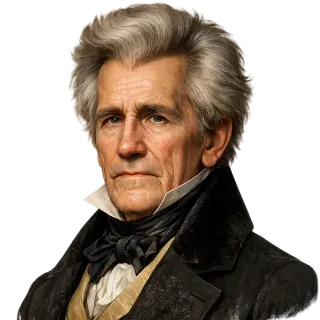
Andrew Jackson
The frontier general turned president who championed the common man, destroyed the Bank, preserved the Union against nullification, and forced Indian removal at a cost of tens of thousands of lives.
Explore Jackson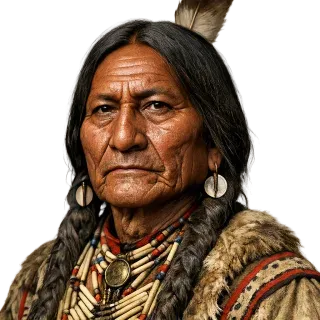
Sitting Bull
The Hunkpapa Lakota holy man whose visions and leadership united the Plains nations at the Little Bighorn.
Explore Sitting Bull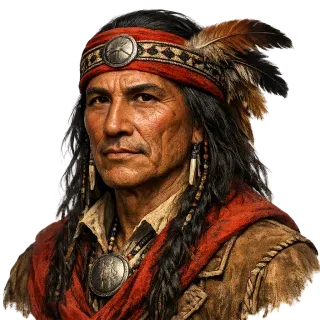
Tecumseh
The Shawnee leader who forged a pan-Indigenous confederacy to resist American expansion through principled unity.
Explore Tecumseh
Theodore Roosevelt
The Rough Rider who transformed the American presidency into a platform for progressive reform, trust-busting, and conservation.
Explore T. Roosevelt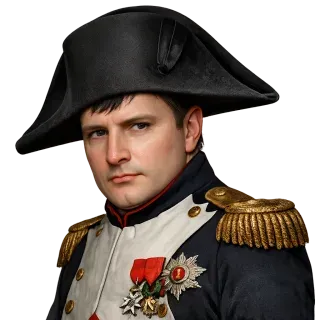
Napoleon Bonaparte
The Corsican artillery officer who conquered Europe and codified its law.
Explore Napoleon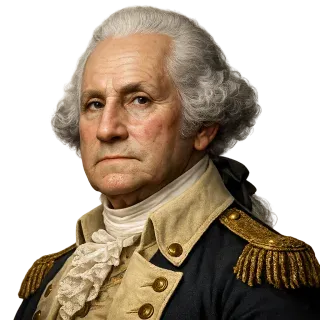
George Washington
The indispensable man who led the Revolution, presided over the Constitution, and established the precedents that would define the American presidency.
Explore Washington