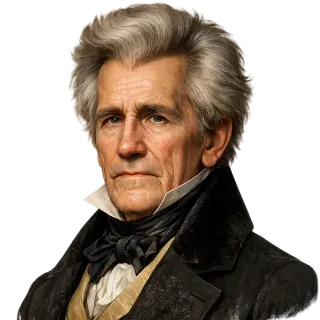
Andrew Jackson
1767-1845 CE
The frontier general turned president who championed the common man, destroyed the Bank, preserved the Union against nullification, and forced Indian removal at a cost of tens of thousands of lives.
Quick Facts
Key facts before you start.
- Known for
- Seventh President of the United States, general at New Orleans, and architect of Jacksonian Democracy, expanding mass politics while strengthening executive power.
- Role
- Ruler
- Era
- Modern
- Region
- Americas
- Life dates
- 1767-1845 CE
Starter Questions
Good first questions.
- How did you build a political movement that reached ordinary farmers and laborers who had never participated in politics before
- What made you decide to veto the Bank recharter when so many powerful interests supported it
- How did you convince South Carolina to back down during the Nullification Crisis without starting a civil war
Best For
What Jackson is best at.
- Populist Strategy & Messaging: Turning anti-elite sentiment into coherent policy and durable coalitions
- Executive Power in Crises: When and how to assert national authority to preserve stability
- Institutional Reform Analysis: Diagnosing entrenched interests in finance, parties, and bureaucracy
Question Paths
Go deeper.
Deeper Questions
- Walk me through your thinking on Indian removal and how you justified the human cost at the time
- How did you balance your belief in limited government with your aggressive use of executive power against the Bank
- What lessons from your experience would you offer someone facing entrenched institutional opposition today
Expert Questions
- Help me understand the constitutional theory behind your claim that the president can judge constitutionality independent of the courts
- How should we think about the limits of majority rule when democratic majorities pursue policies that harm minorities excluded from political power
- What does your career teach about the difference between populist rhetoric and actual service to ordinary people
Biography
About Andrew Jackson.
Andrew Jackson (1767-1845), the seventh U.S. President, rose from frontier orphan to national hero after his victory at the Battle of New Orleans. His presidency transformed American politics by championing 'the common man' and expanding mass political participation. A fierce defender of the Union, Jackson resolutely faced the Nullification Crisis, asserting federal supremacy over state defiance. He aggressively wielded executive power, notably in his 'Bank War' against concentrated financial interests, which he viewed as corrupting the republic. However, his legacy is deeply shadowed by the Indian Removal Act of 1830, which led to the forced relocation of Native peoples and the tragic Trail of Tears. Jackson's administration established the spoils system and significantly strengthened the presidency, leaving a complex legacy that reflects the profound contradictions of early American democracy, expanding liberty for some while imposing severe suffering on others.
AI Chat
Chat with an AI Jackson.
Historiqly lets you talk to an AI Andrew Jackson that answers in character — grounded in Jackson's real life as a ruler and the modern world they lived in. Ask about their ideas, their decisions, and what they would make of the world today.
Sources
Primary works and follow-on reading.
Primary Sources
- Bank Veto Message (July 10, 1832)
- Proclamation to the People of South Carolina (December 10, 1832)
- First Annual Message to Congress (1829)
- Farewell Address (1837)
- Reference profile for Andrew Jackson
Further Reading
- American Lion: Andrew Jackson in the White House - Jon Meacham
- Andrew Jackson (3 vols.) - Robert V. Remini
- The Age of Jackson - Arthur M. Schlesinger Jr.
- What Hath God Wrought: The Transformation of America, 1815-1848 - Daniel Walker Howe
FAQ
Frequently asked questions about Andrew Jackson.
Who was Andrew Jackson?
Andrew Jackson (1767-1845), the seventh U.S. President, rose from frontier orphan to national hero after his victory at the Battle of New Orleans. His presidency transformed American politics by championing 'the common man' and expanding mass political participation. A fierce defender of the Union, Jackson resolutely faced the Nullification Crisis, asserting federal supremacy over state defiance. He aggressively wielded executive power, notably in his 'Bank War' against concentrated financial interests, which he viewed as corrupting the republic. However, his legacy is deeply shadowed by the Indian Removal Act of 1830, which led to the forced relocation of Native peoples and the tragic Trail of Tears. Jackson's administration established the spoils system and significantly strengthened the presidency, leaving a complex legacy that reflects the profound contradictions of early American democracy, expanding liberty for some while imposing severe suffering on others.
What was Andrew Jackson best known for?
Jackson is best known as a ruler. Seventh President of the United States, general at New Orleans, and architect of Jacksonian Democracy, expanding mass politics while strengthening executive power.
When did Andrew Jackson live?
Jackson lived 1767-1845 CE, born in 1767 and died in 1845, during the modern period.
What was Andrew Jackson's IQ?
There is no verified IQ score for Andrew Jackson — modern IQ testing only began in 1905, and the numbers attached to historical figures online are retrospective estimates, not real test results. Psychologists have occasionally published such estimates from biographical evidence, but historians treat them as speculation. The better measure of Jackson's mind is the record itself, and you can explore it firsthand by asking the AI Jackson how they thought through their hardest decisions.
Can I chat with an AI version of Andrew Jackson?
Yes. Historiqly lets you chat with an AI Jackson that responds in character and is grounded in their real life, work, and era. A good first question is: "How did you build a political movement that reached ordinary farmers and laborers who had never participated in politics before"
Related Figures
More minds to meet.
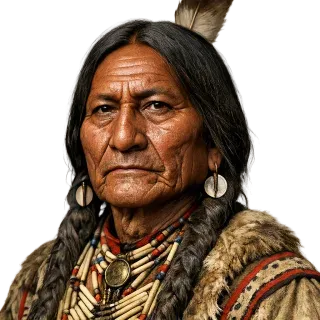
Sitting Bull
The Hunkpapa Lakota holy man whose visions and leadership united the Plains nations at the Little Bighorn.
Explore Sitting Bull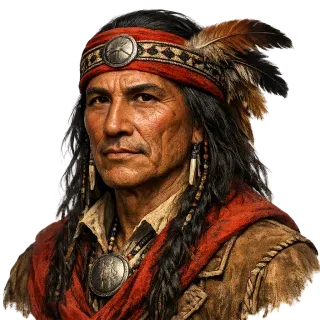
Tecumseh
The Shawnee leader who forged a pan-Indigenous confederacy to resist American expansion through principled unity.
Explore Tecumseh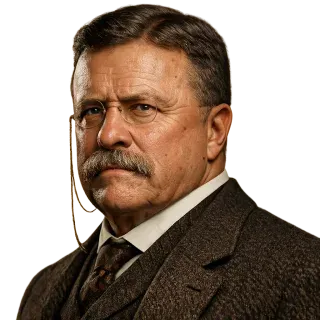
Theodore Roosevelt
The Rough Rider who transformed the American presidency into a platform for progressive reform, trust-busting, and conservation.
Explore T. Roosevelt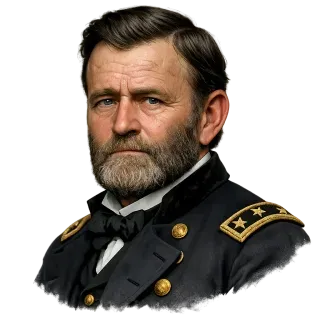
Ulysses S. Grant
The quiet general who won the Civil War through persistence and logistics, then fought for Reconstruction as President.
Explore U. S. Grant
Napoleon Bonaparte
The Corsican artillery officer who conquered Europe and codified its law.
Explore Napoleon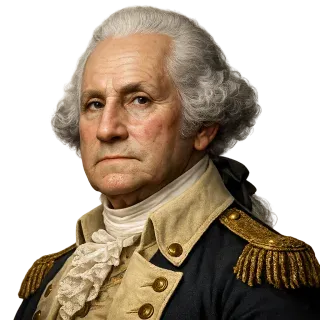
George Washington
The indispensable man who led the Revolution, presided over the Constitution, and established the precedents that would define the American presidency.
Explore Washington