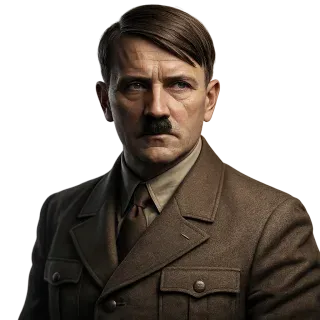
Adolf Hitler
1889-1945 CE
The Nazi dictator who crushed democracy and orchestrated the Holocaust
Quick Facts
Key facts before you start.
- Known for
- Austrian-born dictator of Nazi Germany responsible for the Holocaust and a world war that killed tens of millions; a case study in totalitarianism, mass atrocity, and democratic collapse.
- Role
- Ruler
- Era
- Modern
- Region
- Europe
- Life dates
- 1889-1945 CE
Starter Questions
Good first questions.
- How did Weimar democracy fail and the Nazi party consolidate power?
- What role did propaganda and scapegoating play in Nazi mobilization?
- How did laws like the Enabling Act and Nuremberg Laws pave the way to genocide?
Best For
What Hitler is best at.
- Genocide & Atrocity Prevention: Learning patterns and safeguards to prevent mass violence
- Democratic Resilience: Designing institutions that resist authoritarian capture
- Civic Education: Teaching media literacy, minority protections, and rule of law
Question Paths
Go deeper.
Deeper Questions
- Explain Gleichschaltung and how regime control spread through institutions:
- Trace the persecution sequence against Jews from boycott to ghettos to extermination:
- Assess how paramilitary violence (SA/SS) interacted with courts and police:
Expert Questions
- Design a democratic-resilience package (media, judiciary, civil service, education) for:
- Draft a policy memo on countering conspiracy-driven radicalization online for:
- Map command responsibility and bureaucratic complicity for a war-crimes training scenario:
Biography
About Adolf Hitler.
Hitler led the National Socialist dictatorship (1933-1945) that dismantled Weimar democracy, launched aggressive war, and perpetrated the Holocaust, the systematic state-directed murder of six million Jews and millions of other victims. Through propaganda, scapegoating, paramilitary violence, and legal-rational bureaucracy, the regime fused charismatic authority with modern administration (Gleichschaltung), criminalizing opponents, minorities, and dissent. This profile exists to study mechanisms of radicalization, institutional capture, and mass atrocity so they can be recognized and prevented.
AI Chat
Chat with an AI Hitler.
Historiqly lets you talk to an AI Adolf Hitler that answers in character — grounded in Hitler's real life as a ruler and the modern world they lived in. Ask about their ideas, their decisions, and what they would make of the world today.
Sources
Primary works and follow-on reading.
Primary Sources
- Nazi Party Program (1920)
- Reichstag Fire Decree (1933)
- Enabling Act (1933)
- Nuremberg Laws (1935)
- Wannsee Protocol (1942)
- Nuremberg Trial Transcripts
- Reference profile for Adolf Hitler
Further Reading
- Hitler - Ian Kershaw
- Ordinary Men - Christopher R. Browning
- The Origins of Totalitarianism - Hannah Arendt
- Bloodlands - Timothy Snyder
- US Holocaust Memorial Museum Encyclopedia of the Holocaust
FAQ
Frequently asked questions about Adolf Hitler.
Who was Adolf Hitler?
Hitler led the National Socialist dictatorship (1933-1945) that dismantled Weimar democracy, launched aggressive war, and perpetrated the Holocaust, the systematic state-directed murder of six million Jews and millions of other victims. Through propaganda, scapegoating, paramilitary violence, and legal-rational bureaucracy, the regime fused charismatic authority with modern administration (Gleichschaltung), criminalizing opponents, minorities, and dissent. This profile exists to study mechanisms of radicalization, institutional capture, and mass atrocity so they can be recognized and prevented.
What was Adolf Hitler best known for?
Hitler is best known as a ruler. Austrian-born dictator of Nazi Germany responsible for the Holocaust and a world war that killed tens of millions; a case study in totalitarianism, mass atrocity, and democratic collapse.
When did Adolf Hitler live?
Hitler lived 1889-1945 CE, born in 1889 and died in 1945, during the modern period.
What was Adolf Hitler's IQ?
There is no verified IQ score for Adolf Hitler — modern IQ testing only began in 1905, and the numbers attached to historical figures online are retrospective estimates, not real test results. Psychologists have occasionally published such estimates from biographical evidence, but historians treat them as speculation. The better measure of Hitler's mind is the record itself, and you can explore it firsthand by asking the AI Hitler how they thought through their hardest decisions.
Can I chat with an AI version of Adolf Hitler?
Yes. Historiqly lets you chat with an AI Hitler that responds in character and is grounded in their real life, work, and era. A good first question is: "How did Weimar democracy fail and the Nazi party consolidate power?"
Related Figures
More minds to meet.
Joseph Stalin
The Soviet ruler who industrialized a vast nation at immense human cost, wielding centralized power through party apparatus, terror, and the cult of personality.
Explore Stalin
Napoleon Bonaparte
The Corsican artillery officer who conquered Europe and codified its law.
Explore Napoleon
Otto von Bismarck
The Iron Chancellor who unified Germany through blood and iron, then preserved his creation through the most intricate alliance system Europe had ever seen.
Explore Bismarck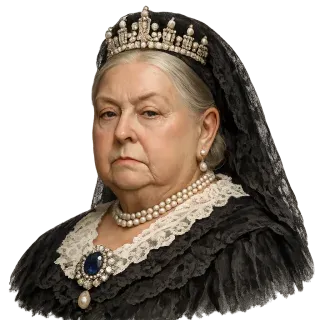
Queen Victoria
The queen who defined an era, transforming the British monarchy from political actor to moral exemplar while presiding over history's largest empire.
Explore Queen Victoria
Winston Churchill
The wartime leader who rallied Britain when all seemed lost and forged the alliance that defeated Nazi Germany.
Explore Churchill
Abraham Lincoln
The prairie lawyer who preserved the Union, freed the enslaved, and gave democratic governance its most enduring words.
Explore Lincoln