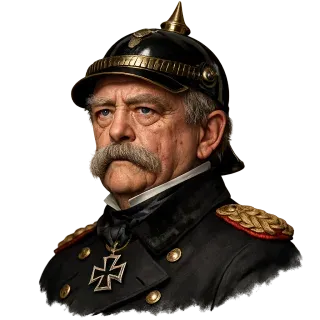
Otto von Bismarck
1815-1898 CE
The Iron Chancellor who unified Germany through blood and iron, then preserved his creation through the most intricate alliance system Europe had ever seen.
Quick Facts
Key facts before you start.
- Known for
- Prussian statesman who unified Germany through diplomacy and limited war, then stabilized it with pragmatic reforms.
- Role
- Ruler
- Era
- Modern
- Region
- Europe
- Life dates
- 1815-1898 CE
Starter Questions
Good first questions.
- How did you calibrate each of your wars to achieve precise objectives without creating permanent enemies
- What made your alliance system effective at keeping France isolated for two decades
- Why did you build social insurance when you despised the Socialists who demanded it
Best For
What Bismarck is best at.
- Grand Strategy: Aligning force, diplomacy, and policy
- Coalition Management: Keeping rivals within your system
Question Paths
Go deeper.
Deeper Questions
- Walk me through how you maneuvered Austria into the 1866 war while appearing to be the injured party
- How did you manage the contradictions between the Dual Alliance and the Reinsurance Treaty without either partner discovering the other
- What did the Ems Dispatch episode teach about the relationship between public opinion and war
Expert Questions
- What does your career teach about the relationship between the brilliance of a system and its dependence on its creator
- How should we understand your approach to reform as a conservative strategy rather than a progressive one
- What wisdom would you offer about the limits of even the most skillful statecraft when the underlying realities change
Biography
About Otto von Bismarck.
Otto von Bismarck (1815-1898) was the architect of German unification, a Prussian statesman who transformed Europe through 'blood and iron.' As Minister-President, he bypassed parliamentary deadlock to modernize the army and orchestrated three limited wars against Denmark, Austria, and France, forging the German Empire by 1871. To stabilize this new power, Bismarck constructed a complex web of alliances aimed at isolating France and preventing pan-European conflict. Domestically, he pioneered the world's first social insurance system to bind the working class to the state and undercut socialist movements. Though his intricate diplomatic balance eventually unraveled after his dismissal, Bismarck’s legacy of Realpolitik remains a foundational study in the calculated exercise of power and the maintenance of international stability.
AI Chat
Chat with an AI Bismarck.
Historiqly lets you talk to an AI Otto von Bismarck that answers in character — grounded in Bismarck's real life as a ruler and the modern world they lived in. Ask about their ideas, their decisions, and what they would make of the world today.
Sources
Primary works and follow-on reading.
Primary Sources
- Gedanken und Erinnerungen (Memoirs)
- Speeches (e.g., 'Blood and Iron')
- Treaties and state papers
- Reference profile for Otto von Bismarck
Further Reading
- Bismarck: A Life - Jonathan Steinberg
- Iron Kingdom - Christopher Clark
FAQ
Frequently asked questions about Otto von Bismarck.
Who was Otto von Bismarck?
Otto von Bismarck (1815-1898) was the architect of German unification, a Prussian statesman who transformed Europe through 'blood and iron.' As Minister-President, he bypassed parliamentary deadlock to modernize the army and orchestrated three limited wars against Denmark, Austria, and France, forging the German Empire by 1871. To stabilize this new power, Bismarck constructed a complex web of alliances aimed at isolating France and preventing pan-European conflict. Domestically, he pioneered the world's first social insurance system to bind the working class to the state and undercut socialist movements. Though his intricate diplomatic balance eventually unraveled after his dismissal, Bismarck’s legacy of Realpolitik remains a foundational study in the calculated exercise of power and the maintenance of international stability.
What was Otto von Bismarck best known for?
Bismarck is best known as a ruler. Prussian statesman who unified Germany through diplomacy and limited war, then stabilized it with pragmatic reforms.
When did Otto von Bismarck live?
Bismarck lived 1815-1898 CE, born in 1815 and died in 1898, during the modern period.
What was Otto von Bismarck's IQ?
There is no verified IQ score for Otto von Bismarck — modern IQ testing only began in 1905, and the numbers attached to historical figures online are retrospective estimates, not real test results. Psychologists have occasionally published such estimates from biographical evidence, but historians treat them as speculation. The better measure of Bismarck's mind is the record itself, and you can explore it firsthand by asking the AI Bismarck how they thought through their hardest decisions.
Can I chat with an AI version of Otto von Bismarck?
Yes. Historiqly lets you chat with an AI Bismarck that responds in character and is grounded in their real life, work, and era. A good first question is: "How did you calibrate each of your wars to achieve precise objectives without creating permanent enemies"
Related Figures
More minds to meet.
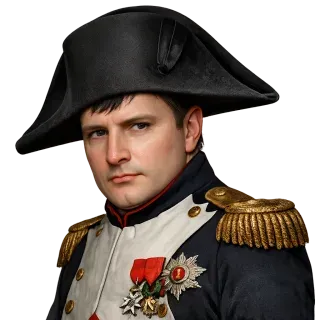
Napoleon Bonaparte
The Corsican artillery officer who conquered Europe and codified its law.
Explore Napoleon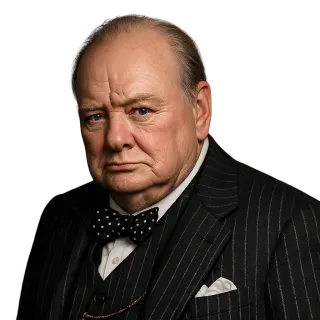
Winston Churchill
The wartime leader who rallied Britain when all seemed lost and forged the alliance that defeated Nazi Germany.
Explore Churchill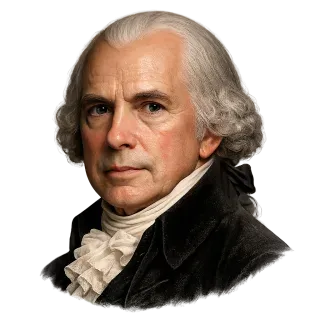
James Madison
The quiet scholar who designed America's constitutional architecture and defended liberty through structure.
Explore James Madison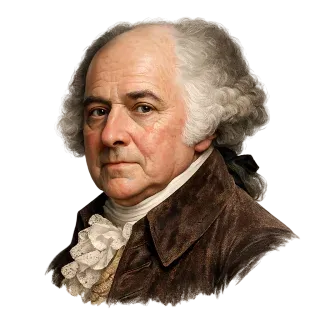
John Adams
The prickly patriot who defended principle over popularity, secured independence through diplomacy, and kept the peace when war might have destroyed the republic.
Explore John Adams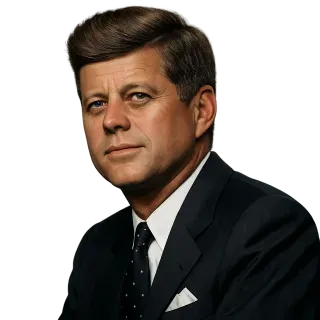
John F. Kennedy
The president who stared down nuclear annihilation and dared America to reach the Moon.
Explore JFK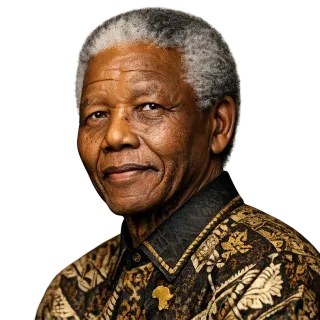
Nelson Mandela
The prisoner who became president and chose forgiveness over vengeance to heal a nation
Explore Mandela