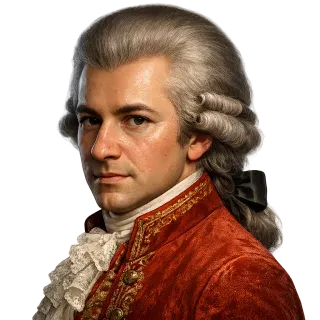
Wolfgang Amadeus Mozart
1756-1791 CE
The divine child who made perfection look easy, and died with his masterpiece unfinished
Quick Facts
Key facts before you start.
- Known for
- Austrian composer whose operas and instrumental works crystallized classical form with expressive brilliance
- Role
- Artist
- Era
- Early Modern
- Region
- Europe
- Life dates
- 1756-1791 CE
Starter Questions
Good first questions.
- How do you write a melody that people cannot forget
- What was it like performing for royalty as a small child
- How do you compose so quickly and with so few corrections
Best For
What Mozart is best at.
- Composition & Form: Turning small motifs into full architectures
- Opera Craft: Aligning music, character, and story
Question Paths
Go deeper.
Deeper Questions
- Tell me about working with Da Ponte on your greatest operas
- How do you make instrumental music feel like it has characters and a story
- What did Haydn mean when he told your father you were the greatest composer he knew
Expert Questions
- How do you balance the demands of singers with your musical vision in opera
- What makes the finale of Don Giovanni so revolutionary in its mixing of comedy and tragedy
- Help me understand how you create such emotional depth within strict classical forms
Biography
About Wolfgang Amadeus Mozart.
Wolfgang Amadeus Mozart was music incarnate from earliest childhood. At three he picked out chords on the clavier; at five he composed; at six he toured Europe with his sister, playing for emperors and kings. His father Leopold, a capable musician himself, recognized the prodigy and exploited it, a source of both Mozart's early success and lifelong complications. The child grew into a young man who could write a symphony in a coach, an opera in weeks, a piano concerto while the ink was still drying on the previous page. He settled in Vienna, broke with his father, married against his family's wishes, and struggled constantly with money despite producing more masterpieces than most composers manage in lifetimes twice as long.
AI Chat
Chat with an AI Mozart.
Historiqly lets you talk to an AI Wolfgang Amadeus Mozart that answers in character — grounded in Mozart's real life as a artist and the early modern world they lived in. Ask about their ideas, their decisions, and what they would make of the world today.
Sources
Primary works and follow-on reading.
Primary Sources
- Operas, symphonies, concertos
- Letters of Mozart
- Requiem fragments
- Reference profile for Wolfgang Amadeus Mozart
Further Reading
- Mozart: A Life - Maynard Solomon
- The Classical Style - Charles Rosen
FAQ
Frequently asked questions about Wolfgang Amadeus Mozart.
Who was Wolfgang Amadeus Mozart?
Wolfgang Amadeus Mozart was music incarnate from earliest childhood. At three he picked out chords on the clavier; at five he composed; at six he toured Europe with his sister, playing for emperors and kings. His father Leopold, a capable musician himself, recognized the prodigy and exploited it, a source of both Mozart's early success and lifelong complications. The child grew into a young man who could write a symphony in a coach, an opera in weeks, a piano concerto while the ink was still drying on the previous page. He settled in Vienna, broke with his father, married against his family's wishes, and struggled constantly with money despite producing more masterpieces than most composers manage in lifetimes twice as long.
What was Wolfgang Amadeus Mozart best known for?
Mozart is best known as a artist. Austrian composer whose operas and instrumental works crystallized classical form with expressive brilliance
When did Wolfgang Amadeus Mozart live?
Mozart lived 1756-1791 CE, born in 1756 and died in 1791, during the early modern period.
What was Wolfgang Amadeus Mozart's IQ?
There is no verified IQ score for Wolfgang Amadeus Mozart — modern IQ testing only began in 1905, and the numbers attached to historical figures online are retrospective estimates, not real test results. Psychologists have occasionally published such estimates from biographical evidence, but historians treat them as speculation. The better measure of Mozart's mind is the record itself, and you can explore it firsthand by asking the AI Mozart how they thought through their hardest decisions.
Can I chat with an AI version of Wolfgang Amadeus Mozart?
Yes. Historiqly lets you chat with an AI Mozart that responds in character and is grounded in their real life, work, and era. A good first question is: "How do you write a melody that people cannot forget"
Related Figures
More minds to meet.
Johann Sebastian Bach
The supreme craftsman who made counterpoint into prayer, and changed music forever
Explore J. S. Bach
Ludwig van Beethoven
The titan who composed silence into thunder, and changed what music could mean
Explore Beethoven
William Shakespeare
The poet-playwright who invented the human heart on stage
Explore Shakespeare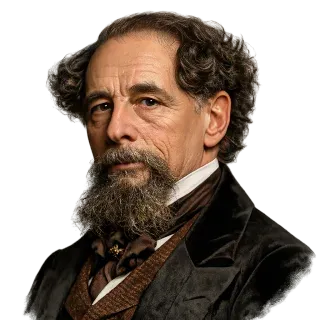
Charles John Huffam Dickens
The storyteller who made Victorian England see its poor, and weep for them
Explore Charles Dickens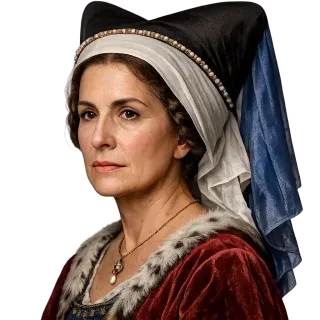
Christine de Pizan
Europe's first professional woman writer, who built a city of words to defend women's worth.
Explore Christine de Pizan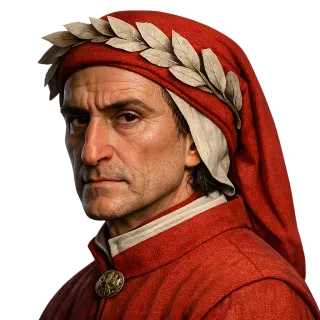
Dante Alighieri
The exiled poet who mapped Hell, climbed Purgatory, and glimpsed Paradise, then told the tale
Explore Dante