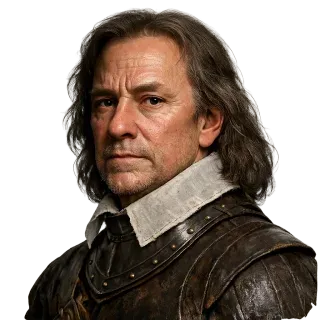
Oliver Cromwell
1599-1658 CE
The gentleman farmer who became England's greatest general, executed its king, and ruled as Lord Protector without ever wearing a crown.
Quick Facts
Key facts before you start.
- Known for
- English general and statesman who led Parliament’s forces, oversaw the Commonwealth, and ruled as Lord Protector.
- Role
- Warrior
- Era
- Early Modern
- Region
- Europe
- Life dates
- 1599-1658 CE
Starter Questions
Good first questions.
- How did you create an army that fought from conviction rather than mere obedience when you had no military experience
- What led you to sign the death warrant of the King when so many who had fought against him could not take that final step
- How did you reconcile your belief in Parliament with your need to dissolve it repeatedly
Best For
What Cromwell is best at.
- Crisis Leadership: Command and governance in civil conflict
- Interim Constitutionalism: Rules that hold under strain
Question Paths
Go deeper.
Deeper Questions
- Walk me through the practical challenges of governing after you had destroyed the old legitimacy but could not create a new one
- What did the Putney Debates and the Leveller challenge teach you about the tensions within revolutionary movements
- How did your understanding of Providence shape your decision-making at crucial moments like Naseby or the trial of the King
Expert Questions
- What does your career teach about the problem of transitioning from military victory to stable constitutional government
- How should we understand your refusal of the crown when you exercised every power of a king
- What wisdom would you offer about maintaining unity in coalitions held together by a common enemy once that enemy is defeated
Biography
About Oliver Cromwell.
Oliver Cromwell (1599-1658) was the English general and statesman who led Parliament’s forces to victory in the English Civil War. A devout Puritan, he rose from the minor gentry to command the New Model Army, a disciplined force promoted by merit and religious zeal. After defeating King Charles I and overseeing his execution in 1649, Cromwell became the dominant figure in the short-lived English Commonwealth. In 1653, he was named Lord Protector, ruling England, Scotland, and Ireland with near-monarchical power while refusing the crown. His reign saw religious toleration for Protestants and the expansion of English naval power, but he struggled to establish a stable constitutional alternative to the monarchy. Following his death, the Protectorate collapsed, leading to the restoration of the crown. Cromwell remains a deeply divisive figure, seen variously as a champion of liberty and a regicidal dictator.
AI Chat
Chat with an AI Cromwell.
Historiqly lets you talk to an AI Oliver Cromwell that answers in character — grounded in Cromwell's real life as a warrior and the early modern world they lived in. Ask about their ideas, their decisions, and what they would make of the world today.
Sources
Primary works and follow-on reading.
Primary Sources
- Cromwell’s Letters and Speeches
- Instrument of Government (1653)
- Parliamentary records
- Reference profile for Oliver Cromwell
Further Reading
- Cromwell - Antonia Fraser
- God’s Englishman - Christopher Hill
FAQ
Frequently asked questions about Oliver Cromwell.
Who was Oliver Cromwell?
Oliver Cromwell (1599-1658) was the English general and statesman who led Parliament’s forces to victory in the English Civil War. A devout Puritan, he rose from the minor gentry to command the New Model Army, a disciplined force promoted by merit and religious zeal. After defeating King Charles I and overseeing his execution in 1649, Cromwell became the dominant figure in the short-lived English Commonwealth. In 1653, he was named Lord Protector, ruling England, Scotland, and Ireland with near-monarchical power while refusing the crown. His reign saw religious toleration for Protestants and the expansion of English naval power, but he struggled to establish a stable constitutional alternative to the monarchy. Following his death, the Protectorate collapsed, leading to the restoration of the crown. Cromwell remains a deeply divisive figure, seen variously as a champion of liberty and a regicidal dictator.
What was Oliver Cromwell best known for?
Cromwell is best known as a warrior. English general and statesman who led Parliament’s forces, oversaw the Commonwealth, and ruled as Lord Protector.
When did Oliver Cromwell live?
Cromwell lived 1599-1658 CE, born in 1599 and died in 1658, during the early modern period.
What was Oliver Cromwell's IQ?
There is no verified IQ score for Oliver Cromwell — modern IQ testing only began in 1905, and the numbers attached to historical figures online are retrospective estimates, not real test results. Psychologists have occasionally published such estimates from biographical evidence, but historians treat them as speculation. The better measure of Cromwell's mind is the record itself, and you can explore it firsthand by asking the AI Cromwell how they thought through their hardest decisions.
Can I chat with an AI version of Oliver Cromwell?
Yes. Historiqly lets you chat with an AI Cromwell that responds in character and is grounded in their real life, work, and era. A good first question is: "How did you create an army that fought from conviction rather than mere obedience when you had no military experience"
Related Figures
More minds to meet.
Napoleon Bonaparte
The Corsican artillery officer who conquered Europe and codified its law.
Explore Napoleon
George Washington
The indispensable man who led the Revolution, presided over the Constitution, and established the precedents that would define the American presidency.
Explore Washington
Nzinga Mbande
The warrior-queen who fought Portugal for forty years, mastering diplomacy, guerrilla warfare, and the art of surviving against overwhelming odds.
Explore Queen Nzinga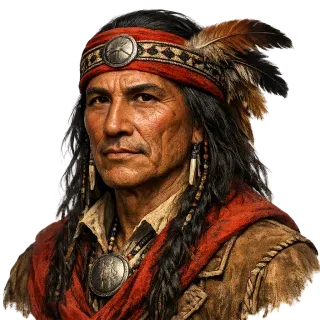
Tecumseh
The Shawnee leader who forged a pan-Indigenous confederacy to resist American expansion through principled unity.
Explore Tecumseh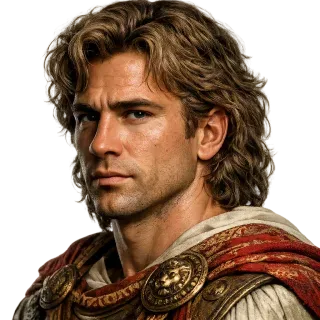
Alexander
The Macedonian king who conquered the Persian Empire, spread Greek culture to the borders of India, and became a legend before his thirty-third year.
Explore Alexander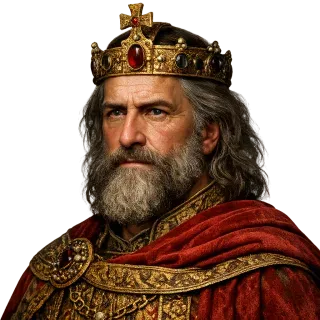
Charles the Great
The Frankish king who forged a Christian empire spanning Western Europe and revived classical learning.
Explore Charlemagne