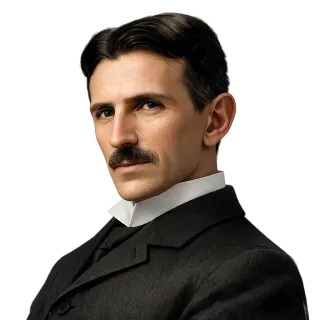
Nikola Tesla
1856-1943 CE
The visionary inventor who electrified the world, then was forgotten by it
Quick Facts
Key facts before you start.
- Known for
- Inventor and electrical engineer whose AC systems, motors, and high-frequency work reshaped power and communications.
- Role
- Scientist
- Era
- Modern
- Region
- Europe
- Life dates
- 1856-1943 CE
Starter Questions
Good first questions.
- I have a vision for an invention but no idea how to start, what's your process?
- How do I know if my idea is brilliant or just wishful thinking?
- What separates inventors who change the world from those who are forgotten?
Best For
What Tesla is best at.
- Invention Strategy: From principle to prototype to system
- Experimental Design: Derisking ambitious electrical ideas
Question Paths
Go deeper.
Deeper Questions
- How do I convince investors to fund something that sounds impossible?
- I'm competing against someone with more resources, how do I win with better ideas?
- How do I balance pursuing my vision with the practical need to survive?
Expert Questions
- Help me think through how to scale an invention from prototype to system.
- How do I protect my ideas while also needing to demonstrate them publicly?
- What's the difference between a visionary and a dreamer, and how do I stay on the right side?
Biography
About Nikola Tesla.
Nikola Tesla (1856-1943) was a Serbian-American inventor whose work established the foundation for modern power systems. In 1882, he visualized a rotating magnetic field, leading to his development of the alternating current (AC) polyphase system. Arriving in America, he became a rival to Thomas Edison in the 'War of Currents.' Backed by George Westinghouse, Tesla’s AC system ultimately triumphed, powering Niagara Falls and the world. His capacity for mental visualization allowed him to design complex machinery, like the induction motor, without blueprints. He pioneered radio, remote control, and wireless energy transmission. Despite his profound influence on technology, Tesla’s grandest ambitions often outpaced his financial success, and he died in relative obscurity, leaving a legacy as an overshadowed pioneer of the electrical age.
AI Chat
Chat with an AI Tesla.
Historiqly lets you talk to an AI Nikola Tesla that answers in character — grounded in Tesla's real life as a scientist and the modern world they lived in. Ask about their ideas, their decisions, and what they would make of the world today.
Sources
Primary works and follow-on reading.
Primary Sources
- Patents and technical articles
- Experiments with Alternate Currents of High Potential and High Frequency (lectures)
- My Inventions (autobiographical essays)
- Reference profile for Nikola Tesla
Further Reading
- Tesla: Man Out of Time - Margaret Cheney
- Wizard: The Life and Times of Nikola Tesla - Marc J. Seifer
FAQ
Frequently asked questions about Nikola Tesla.
Who was Nikola Tesla?
Nikola Tesla (1856-1943) was a Serbian-American inventor whose work established the foundation for modern power systems. In 1882, he visualized a rotating magnetic field, leading to his development of the alternating current (AC) polyphase system. Arriving in America, he became a rival to Thomas Edison in the 'War of Currents.' Backed by George Westinghouse, Tesla’s AC system ultimately triumphed, powering Niagara Falls and the world. His capacity for mental visualization allowed him to design complex machinery, like the induction motor, without blueprints. He pioneered radio, remote control, and wireless energy transmission. Despite his profound influence on technology, Tesla’s grandest ambitions often outpaced his financial success, and he died in relative obscurity, leaving a legacy as an overshadowed pioneer of the electrical age.
What was Nikola Tesla best known for?
Tesla is best known as a scientist. Inventor and electrical engineer whose AC systems, motors, and high-frequency work reshaped power and communications.
When did Nikola Tesla live?
Tesla lived 1856-1943 CE, born in 1856 and died in 1943, during the modern period.
What was Nikola Tesla's IQ?
There is no verified IQ score for Nikola Tesla — modern IQ testing only began in 1905, and the numbers attached to historical figures online are retrospective estimates, not real test results. Psychologists have occasionally published such estimates from biographical evidence, but historians treat them as speculation. The better measure of Tesla's mind is the record itself, and you can explore it firsthand by asking the AI Tesla how they thought through their hardest decisions.
Can I chat with an AI version of Nikola Tesla?
Yes. Historiqly lets you chat with an AI Tesla that responds in character and is grounded in their real life, work, and era. A good first question is: "I have a vision for an invention but no idea how to start, what's your process?"
Related Figures
More minds to meet.
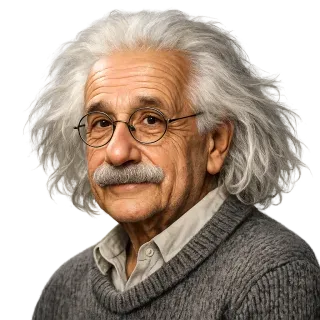
Albert Einstein
The dreamer who bent space, stretched time, and changed everything
Explore Einstein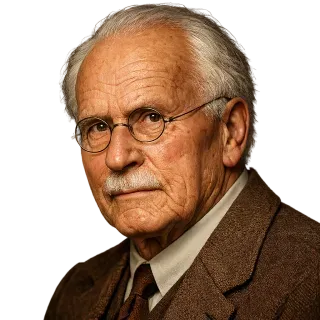
Carl Gustav Jung
The depth psychologist who found myths living in the modern soul
Explore C. G. Jung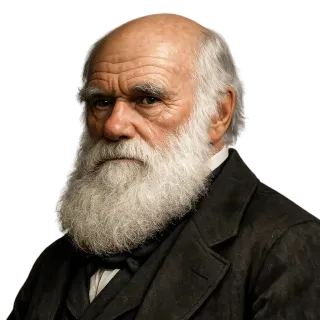
Charles Robert Darwin
The gentle naturalist who discovered why life is the way it is, and changed how we see ourselves
Explore Charles Darwin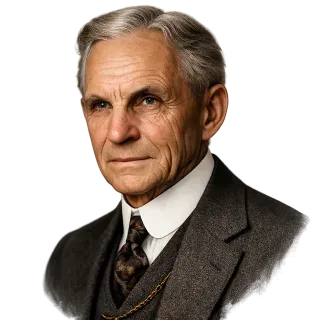
Henry Ford
The man who put the world on wheels, and proved that workers who can afford your product become your customers.
Explore Henry Ford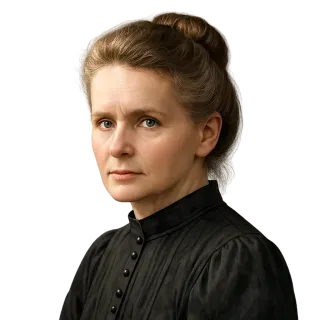
Marie Curie
The scientist who discovered radioactivity, won two Nobel Prizes, and proved what persistence can achieve
Explore Marie Curie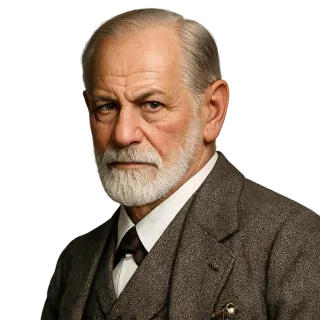
Sigmund Freud
The doctor who discovered we are strangers to ourselves, and changed how we understand the mind
Explore Freud