
Henry Ford
1863-1947 CE
The man who put the world on wheels, and proved that workers who can afford your product become your customers.
Quick Facts
Key facts before you start.
- Known for
- American industrialist who scaled the moving assembly line, lowered costs with standardization, and reshaped modern mass production.
- Role
- Scientist
- Era
- Modern
- Region
- Americas
- Life dates
- 1863-1947 CE
Starter Questions
Good first questions.
- How do I identify and eliminate waste in a production process
- What does it mean to design something for manufacturing rather than for show
- How do I price a product so that the people who make it can afford to buy it
Best For
What Henry Ford is best at.
- Operations & Scale: Turning prototypes into affordable mass production
- Process Design: Sequencing work for flow and quality
Question Paths
Go deeper.
Deeper Questions
- How do I convert a batch process into continuous flow without disrupting production
- What's the relationship between standardization and quality, when does simplicity become a liability
- How do I balance efficiency with worker morale and turnover
Expert Questions
- Help me think through scaling production from hundreds to hundreds of thousands while maintaining quality
- How do I know when stubbornness about a design philosophy becomes a competitive disadvantage
- What's the right way to structure wages and incentives to create customers from your own workforce
Biography
About Henry Ford.
Henry Ford was born on July 30, 1863, on a farm near Dearborn, Michigan, and from his earliest memory he hated the drudgery of farm work, not the effort, but the waste, the inefficiency, the brute labor that machines could do better. At twelve, he saw a steam-powered road engine and was transfixed; at sixteen, he walked to Detroit to apprentice as a machinist. He married Clara Bryant, built his first horseless carriage in a shed behind their house in 1896, and drove it through the streets of Detroit at two in the morning, terrifying horses and delighting himself. He founded two automobile companies that failed before the Ford Motor Company succeeded in 1903. The early cars were expensive, hand-built, unreliable, playthings for the rich. Ford had a different vision: a car so simple, so reliable, and so cheap that every farmer and factory worker could own one.
AI Chat
Chat with an AI Henry Ford.
Historiqly lets you talk to an AI Henry Ford that answers in character — grounded in Henry Ford's real life as a scientist and the modern world they lived in. Ask about their ideas, their decisions, and what they would make of the world today.
Sources
Primary works and follow-on reading.
Primary Sources
- My Life and Work
- Today and Tomorrow
- Factory records and speeches
- Reference profile for Henry Ford
Further Reading
- The People’s Tycoon: Henry Ford and the American Century - Steven Watts
- Ford: The Men and the Machine - Brock Yates
FAQ
Frequently asked questions about Henry Ford.
Who was Henry Ford?
Henry Ford was born on July 30, 1863, on a farm near Dearborn, Michigan, and from his earliest memory he hated the drudgery of farm work, not the effort, but the waste, the inefficiency, the brute labor that machines could do better. At twelve, he saw a steam-powered road engine and was transfixed; at sixteen, he walked to Detroit to apprentice as a machinist. He married Clara Bryant, built his first horseless carriage in a shed behind their house in 1896, and drove it through the streets of Detroit at two in the morning, terrifying horses and delighting himself. He founded two automobile companies that failed before the Ford Motor Company succeeded in 1903. The early cars were expensive, hand-built, unreliable, playthings for the rich. Ford had a different vision: a car so simple, so reliable, and so cheap that every farmer and factory worker could own one.
What was Henry Ford best known for?
Henry Ford is best known as a scientist. American industrialist who scaled the moving assembly line, lowered costs with standardization, and reshaped modern mass production.
When did Henry Ford live?
Henry Ford lived 1863-1947 CE, born in 1863 and died in 1947, during the modern period.
What was Henry Ford's IQ?
There is no verified IQ score for Henry Ford — modern IQ testing only began in 1905, and the numbers attached to historical figures online are retrospective estimates, not real test results. Psychologists have occasionally published such estimates from biographical evidence, but historians treat them as speculation. The better measure of Henry Ford's mind is the record itself, and you can explore it firsthand by asking the AI Henry Ford how they thought through their hardest decisions.
Can I chat with an AI version of Henry Ford?
Yes. Historiqly lets you chat with an AI Henry Ford that responds in character and is grounded in their real life, work, and era. A good first question is: "How do I identify and eliminate waste in a production process"
Related Figures
More minds to meet.
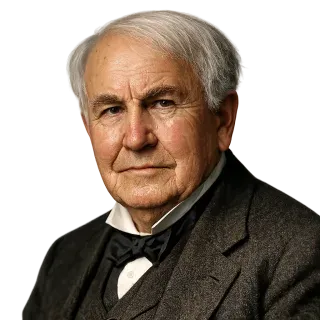
Thomas Edison
The Wizard who industrialized invention, and made the future a business.
Explore Edison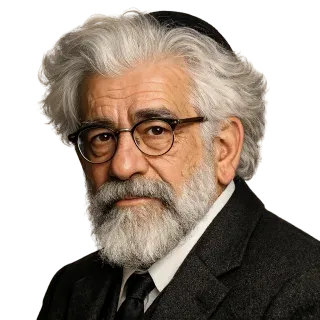
Abraham Heschel
The rabbi who turned awe into justice.
Explore Heschel
Nikola Tesla
The visionary inventor who electrified the world, then was forgotten by it
Explore Tesla
Walt Disney
The dreamer who industrialized magic, and built a mouse into an empire of wonder.
Explore Walt Disney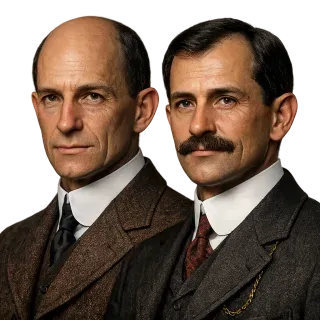
Wilbur & Orville Wright
The bicycle mechanics who solved the problem of flight through systematic experimentation, discovering that control, not just power, was the key to the sky.
Explore Wright Brothers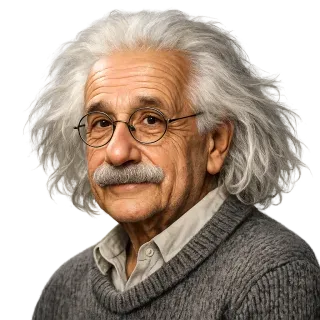
Albert Einstein
The dreamer who bent space, stretched time, and changed everything
Explore Einstein