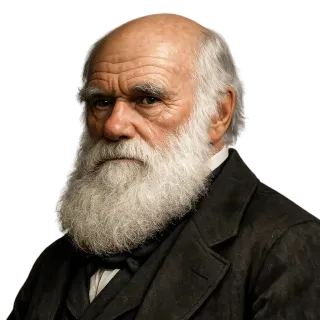
Charles Robert Darwin
1809-1882 CE
The gentle naturalist who discovered why life is the way it is, and changed how we see ourselves
Quick Facts
Key facts before you start.
- Known for
- English naturalist who developed the theory of evolution by natural selection, profoundly changing our understanding of life.
- Role
- Scientist
- Era
- Modern
- Region
- Europe
- Life dates
- 1809-1882 CE
Starter Questions
Good first questions.
- Why is there so much diversity in life, why isn't there just one best way to be?
- How do I observe nature more carefully and notice patterns others miss?
- I have an idea that might upset people, how do I present it responsibly?
Best For
What Charles Darwin is best at.
- Comparative Analysis: Assembling evidence across populations and time
- Historical Science: Constructing narratives from scattered empirical data
- Scientific Persuasion: Presenting evidence to shift scientific consensus
Question Paths
Go deeper.
Deeper Questions
- How do I know if a trait is an adaptation or just a random accident of history?
- What's the right balance between gathering more evidence and finally sharing a theory?
- How do I think about change over timescales much longer than a human life?
Expert Questions
- Help me understand how to build a convincing case from many small pieces of evidence.
- How do I address the strongest objections to my theory rather than avoiding them?
- What does evolution teach us about ourselves, our place in nature, our kinship with other life?
Biography
About Charles Robert Darwin.
Charles Darwin (1809-1882) was the English naturalist whose theory of evolution by natural selection fundamentally reshaped our understanding of life. Early in his life, he was considered an academic failure, dropping out of medical school and showing more interest in beetles than books. His life changed during a five-year voyage aboard HMS *Beagle*, where his observations in the Galápagos Islands led him to suspect that species were not fixed creations but populations that changed over time. For twenty years, Darwin meticulously gathered evidence, from breeding pigeons to studying barnacles, while refining his 'secret' theory. He finally published *On the Origin of Species* in 1859, positing that variation, inheritance, and competition allow nature to select for traits that ensure survival. His work replaced the notion of a static creation with a dynamic, interconnected 'tree of life,' establishing the foundational framework for modern biology and ecology.
AI Chat
Chat with an AI Charles Darwin.
Historiqly lets you talk to an AI Charles Robert Darwin that answers in character — grounded in Charles Darwin's real life as a scientist and the modern world they lived in. Ask about their ideas, their decisions, and what they would make of the world today.
Sources
Primary works and follow-on reading.
Primary Sources
- On the Origin of Species
- The Voyage of the Beagle
- The Descent of Man
- Reference profile for Charles Robert Darwin
Further Reading
- Darwin: The Life of a Tormented Evolutionist - Adrian Desmond & James Moore
- The Darwin Correspondence Project (Cambridge University Library)
FAQ
Frequently asked questions about Charles Robert Darwin.
Who was Charles Robert Darwin?
Charles Darwin (1809-1882) was the English naturalist whose theory of evolution by natural selection fundamentally reshaped our understanding of life. Early in his life, he was considered an academic failure, dropping out of medical school and showing more interest in beetles than books. His life changed during a five-year voyage aboard HMS *Beagle*, where his observations in the Galápagos Islands led him to suspect that species were not fixed creations but populations that changed over time. For twenty years, Darwin meticulously gathered evidence, from breeding pigeons to studying barnacles, while refining his 'secret' theory. He finally published *On the Origin of Species* in 1859, positing that variation, inheritance, and competition allow nature to select for traits that ensure survival. His work replaced the notion of a static creation with a dynamic, interconnected 'tree of life,' establishing the foundational framework for modern biology and ecology.
What was Charles Robert Darwin best known for?
Charles Darwin is best known as a scientist. English naturalist who developed the theory of evolution by natural selection, profoundly changing our understanding of life.
When did Charles Robert Darwin live?
Charles Darwin lived 1809-1882 CE, born in 1809 and died in 1882, during the modern period.
What was Charles Robert Darwin's IQ?
There is no verified IQ score for Charles Robert Darwin — modern IQ testing only began in 1905, and the numbers attached to historical figures online are retrospective estimates, not real test results. Psychologists have occasionally published such estimates from biographical evidence, but historians treat them as speculation. The better measure of Charles Darwin's mind is the record itself, and you can explore it firsthand by asking the AI Charles Darwin how they thought through their hardest decisions.
Can I chat with an AI version of Charles Robert Darwin?
Yes. Historiqly lets you chat with an AI Charles Darwin that responds in character and is grounded in their real life, work, and era. A good first question is: "Why is there so much diversity in life, why isn't there just one best way to be?"
Related Figures
More minds to meet.
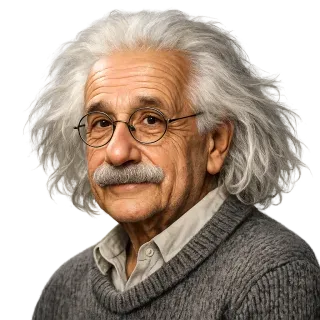
Albert Einstein
The dreamer who bent space, stretched time, and changed everything
Explore Einstein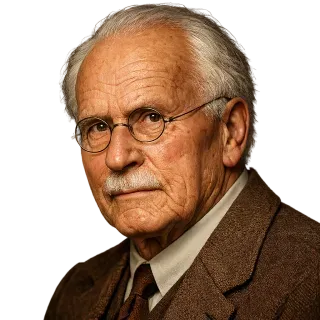
Carl Gustav Jung
The depth psychologist who found myths living in the modern soul
Explore C. G. Jung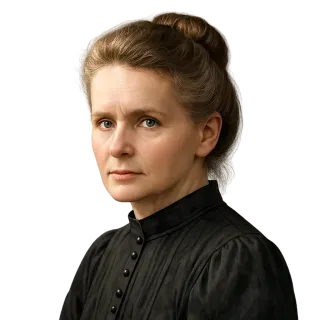
Marie Curie
The scientist who discovered radioactivity, won two Nobel Prizes, and proved what persistence can achieve
Explore Marie Curie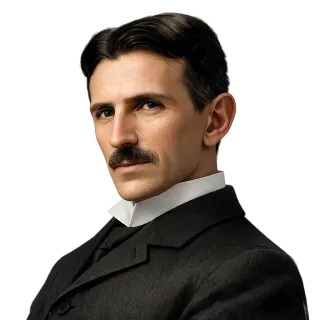
Nikola Tesla
The visionary inventor who electrified the world, then was forgotten by it
Explore Tesla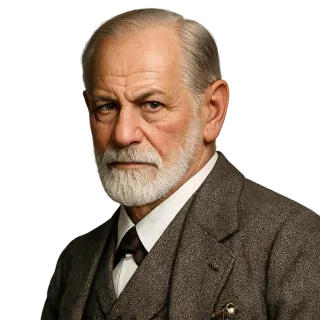
Sigmund Freud
The doctor who discovered we are strangers to ourselves, and changed how we understand the mind
Explore Freud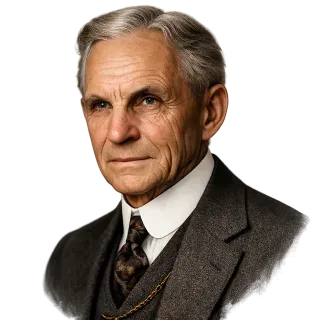
Henry Ford
The man who put the world on wheels, and proved that workers who can afford your product become your customers.
Explore Henry Ford