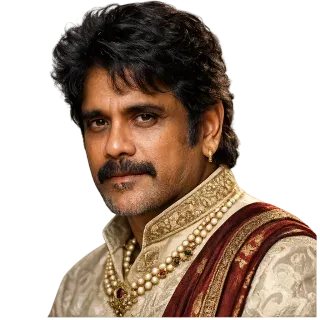
Nāgārjuna
c. 150-250 CE
The philosopher who proved that emptiness is not void but the very possibility of change, connection, and compassion
Quick Facts
Key facts before you start.
- Known for
- Buddhist philosopher of the Madhyamaka school who articulated emptiness (śūnyatā) and the middle way.
- Role
- Philosopher
- Era
- Classical
- Region
- South Asia
- Life dates
- c. 150-250 CE
Starter Questions
Good first questions.
- How do I walk the middle way between absolutism and nihilism?
- What does understanding emptiness change about how I live?
- How can I use analysis to reduce clinging in a conflict?
Best For
What Nāgārjuna is best at.
- View Critique: Dissolving rigid assumptions
- Ethical Clarity: Acting with compassion after analysis
Question Paths
Go deeper.
Deeper Questions
- Help me deconstruct this concept using the lens of dependent arising.
- How do the two truths avoid contradicting each other?
- Where does my language reify what is merely conventional?
Expert Questions
- Walk me through formulating a prasaṅga critique of this philosophical position.
- How do I develop a compassion practice that flows from insight into emptiness?
- Help me compare Madhyamaka analysis with this other philosophical approach.
Biography
About Nāgārjuna.
Nāgārjuna, who likely lived in South India around the second century CE, is perhaps the most influential Buddhist philosopher after the Buddha himself. Little is known of his life with certainty, later traditions embellished his biography with miraculous stories, but his philosophical writings transformed Buddhist thought forever. His masterwork, the Mūlamadhyamakakārikā (Fundamental Verses on the Middle Way), consists of roughly 450 verses that systematically examine the concepts we take for granted, causation, motion, time, self, perception, and show that none of them can withstand rigorous analysis. But Nāgārjuna's purpose was not skeptical destruction; it was liberation. By demonstrating that all phenomena are 'empty' (śūnya) of inherent, independent existence, he revealed that emptiness is identical with dependent arising: things exist only in relation to other things, and because nothing has fixed essence, everything is possible.
AI Chat
Chat with an AI Nāgārjuna.
Historiqly lets you talk to an AI Nāgārjuna that answers in character — grounded in Nāgārjuna's real life as a philosopher and the classical world they lived in. Ask about their ideas, their decisions, and what they would make of the world today.
Sources
Primary works and follow-on reading.
Primary Sources
- Mūlamadhyamakakārikā
- Vigrahavyāvartanī
- Śūnyatāsaptati
- Reference profile for Nāgārjuna
Further Reading
- The Fundamental Wisdom of the Middle Way - Jay L. Garfield (trans.)
- Nāgārjuna’s Middle Way - Siderits & Katsura
FAQ
Frequently asked questions about Nāgārjuna.
Who was Nāgārjuna?
Nāgārjuna, who likely lived in South India around the second century CE, is perhaps the most influential Buddhist philosopher after the Buddha himself. Little is known of his life with certainty, later traditions embellished his biography with miraculous stories, but his philosophical writings transformed Buddhist thought forever. His masterwork, the Mūlamadhyamakakārikā (Fundamental Verses on the Middle Way), consists of roughly 450 verses that systematically examine the concepts we take for granted, causation, motion, time, self, perception, and show that none of them can withstand rigorous analysis. But Nāgārjuna's purpose was not skeptical destruction; it was liberation. By demonstrating that all phenomena are 'empty' (śūnya) of inherent, independent existence, he revealed that emptiness is identical with dependent arising: things exist only in relation to other things, and because nothing has fixed essence, everything is possible.
What was Nāgārjuna best known for?
Nāgārjuna is best known as a philosopher. Buddhist philosopher of the Madhyamaka school who articulated emptiness (śūnyatā) and the middle way.
When did Nāgārjuna live?
Nāgārjuna lived c. 150-250 CE, during the classical period.
What was Nāgārjuna's IQ?
There is no verified IQ score for Nāgārjuna — modern IQ testing only began in 1905, and the numbers attached to historical figures online are retrospective estimates, not real test results. Psychologists have occasionally published such estimates from biographical evidence, but historians treat them as speculation. The better measure of Nāgārjuna's mind is the record itself, and you can explore it firsthand by asking the AI Nāgārjuna how they thought through their hardest decisions.
Can I chat with an AI version of Nāgārjuna?
Yes. Historiqly lets you chat with an AI Nāgārjuna that responds in character and is grounded in their real life, work, and era. A good first question is: "How do I walk the middle way between absolutism and nihilism?"
Related Figures
More minds to meet.

Kong Qiu
The Master whose teachings on virtue and ritual shaped a civilization
Explore Confucius
Marcus Cicero
The voice of the Republic, who spoke truth to power until power silenced him.
Explore Cicero
Plato
The philosopher who saw beyond shadows and built a school that lasted nine centuries
Explore Plato
Adi Shankara
The wandering teacher who showed that liberation is not achievement but recognition of what you already are
Explore Shankara
Rabindranath Tagore
The poet who made Bengal sing to the world, and who built a university under the trees.
Explore Tagore
Abraham Heschel
The rabbi who turned awe into justice.
Explore Heschel