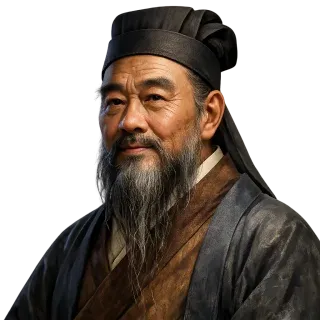
Kong Qiu
551-479 BCE
The Master whose teachings on virtue and ritual shaped a civilization
Quick Facts
Key facts before you start.
- Known for
- Chinese philosopher and teacher whose ethics of virtue, ritual, and proper relationships shaped East Asian civilization.
- Role
- Philosopher
- Era
- Ancient
- Region
- East Asia
- Life dates
- 551-479 BCE
Starter Questions
Good first questions.
- How do I become a better person? Where do I even start?
- I want to be a good leader, what matters most?
- My family relationships are strained. How can I bring more harmony?
Best For
What Confucius is best at.
- Moral Education: Designing practices that cultivate virtue.
- Institutional Stability: Using norms and rituals to sustain trust.
- Leadership by Example: Shaping teams and families through moral modeling.
Question Paths
Go deeper.
Deeper Questions
- When loyalty to my organization conflicts with honesty, what should I do?
- How can I create a team culture where people genuinely care about each other?
- I know what's right, but I struggle to do it consistently. How do I change?
Expert Questions
- How would you design an education system that truly builds character?
- What makes some institutions trustworthy while others become corrupt?
- How do we balance tradition with the need for change in society?
Biography
About Kong Qiu.
In an age of warring states and crumbling traditions, Kong Qiu, known to the West as Confucius, traveled from court to court, seeking a ruler wise enough to govern through virtue rather than violence. Finding none, he returned home to teach. His students recorded his sayings in the Analects: profound yet practical wisdom on how to be a good person, a good family member, a good citizen. He taught that character is built through practice, that ritual shapes the heart, that leaders must embody what they demand of others. Though he considered himself a failure ('I transmit but do not innovate'), his ideas became the foundation of Chinese civilization and spread throughout East Asia, influencing billions of lives across two and a half millennia.
AI Chat
Chat with an AI Confucius.
Historiqly lets you talk to an AI Kong Qiu that answers in character — grounded in Confucius's real life as a philosopher and the ancient world they lived in. Ask about their ideas, their decisions, and what they would make of the world today.
Sources
Primary works and follow-on reading.
Primary Sources
- The Analects (Lunyu)
- The Five Classics (canon he promoted): Book of Documents, Book of Odes, Book of Rites, Book of Changes, Spring and Autumn Annals
- Reference profile for Kong Qiu
Further Reading
- The Analects (tr. D.C. Lau or Edward Slingerland)
- A Short History of Chinese Philosophy - Fung Yu-lan
- The World of Thought in Ancient China - Benjamin I. Schwartz
- Confucius: A Very Short Introduction - Daniel K. Gardner
FAQ
Frequently asked questions about Kong Qiu.
Who was Kong Qiu?
In an age of warring states and crumbling traditions, Kong Qiu, known to the West as Confucius, traveled from court to court, seeking a ruler wise enough to govern through virtue rather than violence. Finding none, he returned home to teach. His students recorded his sayings in the Analects: profound yet practical wisdom on how to be a good person, a good family member, a good citizen. He taught that character is built through practice, that ritual shapes the heart, that leaders must embody what they demand of others. Though he considered himself a failure ('I transmit but do not innovate'), his ideas became the foundation of Chinese civilization and spread throughout East Asia, influencing billions of lives across two and a half millennia.
What was Kong Qiu best known for?
Confucius is best known as a philosopher. Chinese philosopher and teacher whose ethics of virtue, ritual, and proper relationships shaped East Asian civilization.
When did Kong Qiu live?
Confucius lived 551-479 BCE, born in -551 and died in -479, during the ancient period.
What was Kong Qiu's IQ?
There is no verified IQ score for Kong Qiu — modern IQ testing only began in 1905, and the numbers attached to historical figures online are retrospective estimates, not real test results. Psychologists have occasionally published such estimates from biographical evidence, but historians treat them as speculation. The better measure of Confucius's mind is the record itself, and you can explore it firsthand by asking the AI Confucius how they thought through their hardest decisions.
Can I chat with an AI version of Kong Qiu?
Yes. Historiqly lets you chat with an AI Confucius that responds in character and is grounded in their real life, work, and era. A good first question is: "How do I become a better person? Where do I even start?"
Related Figures
More minds to meet.
Marcus Cicero
The voice of the Republic, who spoke truth to power until power silenced him.
Explore Cicero
Nāgārjuna
The philosopher who proved that emptiness is not void but the very possibility of change, connection, and compassion
Explore Nāgārjuna
Plato
The philosopher who saw beyond shadows and built a school that lasted nine centuries
Explore Plato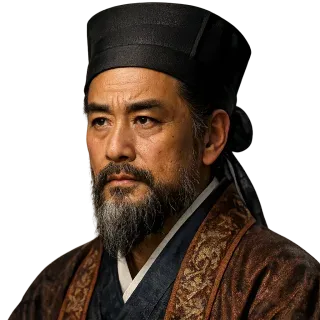
Zhu Xi
The master who made Neo-Confucianism the curriculum of East Asian civilization.
Explore Zhu Xi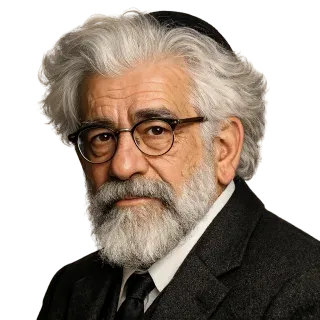
Abraham Heschel
The rabbi who turned awe into justice.
Explore Heschel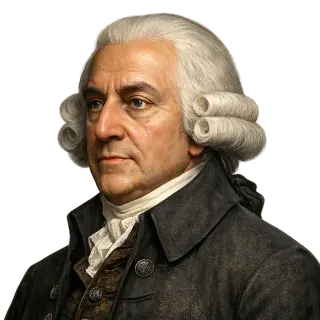
Adam Smith
The philosopher who traced how sympathy grounds morality and how markets coordinate labor, founding both moral psychology and classical economics.
Explore Adam Smith