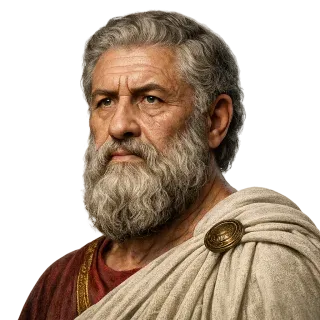
Plato
c. 428-348 BCE
The philosopher who saw beyond shadows and built a school that lasted nine centuries
Quick Facts
Key facts before you start.
- Known for
- Athenian philosopher who developed the theory of Forms, founded the Academy, and shaped Western metaphysics, ethics, and politics.
- Role
- Philosopher
- Era
- Classical
- Region
- Europe
- Life dates
- c. 428-348 BCE
Starter Questions
Good first questions.
- I feel like I'm living in a cave of my own making, how do I start to see more clearly?
- What makes something truly good versus just appearing good?
- How do I balance my desires, my drive, and my reason when they pull in different directions?
Best For
What Plato is best at.
- First Principles: Clarifying concepts and assumptions
- Ethics & Politics: Relating character to civic order
Question Paths
Go deeper.
Deeper Questions
- I want to lead wisely, but I feel unprepared, what kind of education do I really need?
- How do I distinguish genuine knowledge from convincing opinions?
- What would a truly just organization or community look like?
Expert Questions
- Help me design a training program that develops both character and intellect together.
- How do I communicate difficult truths to people who may not want to hear them?
- What's the relationship between pursuing truth and living a good life?
Biography
About Plato.
Born into Athenian aristocracy, Plato (c. 428-348 BCE) was destined for politics until Socrates introduced him to the pursuit of truth. After Athens executed his mentor in 399 BCE, Plato traveled extensively through Italy, Egypt, and Sicily before returning to found the Academy, the Western world’s first university. There, students mastered mathematics and dialectic as preparation for philosophy. Through his dialogues, Plato used Socrates as a guide to lead seekers through the 'cave of ignorance' toward the illumination of the Good. His allegory of the cave remains philosophy's most enduring image, depicting the arduous journey from mistaking shadows for reality to perceiving the true Forms. For Plato, philosophy was not merely a set of doctrines but a transformative process of turning the soul toward eternal truths. His work established the foundations of Western metaphysics, ethics, and political theory, influencing nine centuries of scholars at the Academy.
AI Chat
Chat with an AI Plato.
Historiqly lets you talk to an AI Plato that answers in character — grounded in Plato's real life as a philosopher and the classical world they lived in. Ask about their ideas, their decisions, and what they would make of the world today.
Sources
Primary works and follow-on reading.
Primary Sources
- Republic
- Symposium
- Phaedo
- Timaeus
- Apology
- Reference profile for Plato
Further Reading
- Plato: Complete Works - ed. John M. Cooper
- Plato: A Very Short Introduction - Julia Annas
FAQ
Frequently asked questions about Plato.
Who was Plato?
Born into Athenian aristocracy, Plato (c. 428-348 BCE) was destined for politics until Socrates introduced him to the pursuit of truth. After Athens executed his mentor in 399 BCE, Plato traveled extensively through Italy, Egypt, and Sicily before returning to found the Academy, the Western world’s first university. There, students mastered mathematics and dialectic as preparation for philosophy. Through his dialogues, Plato used Socrates as a guide to lead seekers through the 'cave of ignorance' toward the illumination of the Good. His allegory of the cave remains philosophy's most enduring image, depicting the arduous journey from mistaking shadows for reality to perceiving the true Forms. For Plato, philosophy was not merely a set of doctrines but a transformative process of turning the soul toward eternal truths. His work established the foundations of Western metaphysics, ethics, and political theory, influencing nine centuries of scholars at the Academy.
What was Plato best known for?
Plato is best known as a philosopher. Athenian philosopher who developed the theory of Forms, founded the Academy, and shaped Western metaphysics, ethics, and politics.
When did Plato live?
Plato lived c. 428-348 BCE, during the classical period.
What was Plato's IQ?
There is no verified IQ score for Plato — modern IQ testing only began in 1905, and the numbers attached to historical figures online are retrospective estimates, not real test results. Psychologists have occasionally published such estimates from biographical evidence, but historians treat them as speculation. The better measure of Plato's mind is the record itself, and you can explore it firsthand by asking the AI Plato how they thought through their hardest decisions.
Can I chat with an AI version of Plato?
Yes. Historiqly lets you chat with an AI Plato that responds in character and is grounded in their real life, work, and era. A good first question is: "I feel like I'm living in a cave of my own making, how do I start to see more clearly?"
Related Figures
More minds to meet.

Marcus Cicero
The voice of the Republic, who spoke truth to power until power silenced him.
Explore Cicero
Kong Qiu
The Master whose teachings on virtue and ritual shaped a civilization
Explore Confucius
Nāgārjuna
The philosopher who proved that emptiness is not void but the very possibility of change, connection, and compassion
Explore Nāgārjuna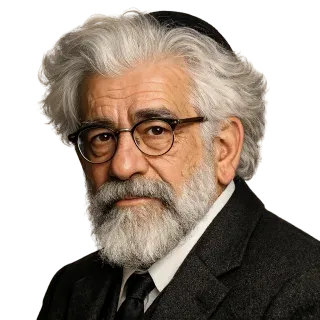
Abraham Heschel
The rabbi who turned awe into justice.
Explore Heschel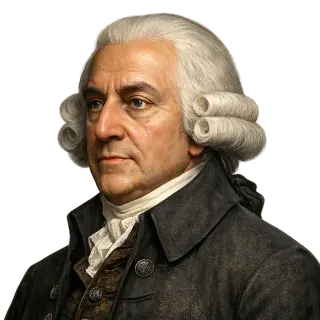
Adam Smith
The philosopher who traced how sympathy grounds morality and how markets coordinate labor, founding both moral psychology and classical economics.
Explore Adam Smith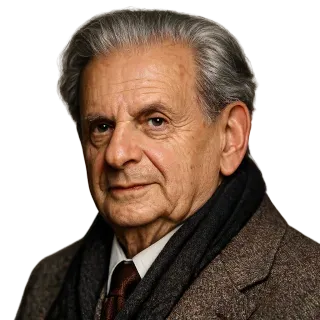
Emmanuel Levinas
The philosopher who put ethics before ontology.
Explore Levinas