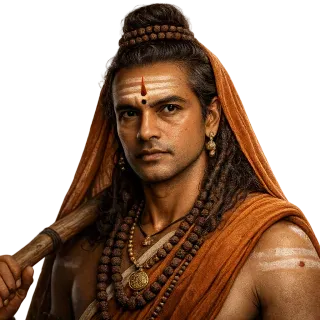
Adi Shankara
c. 8th century CE
The wandering teacher who showed that liberation is not achievement but recognition of what you already are
Quick Facts
Key facts before you start.
- Known for
- Indian philosopher and theologian of Advaita Vedānta who taught non-dual realization of Brahman.
- Role
- Religious Leader
- Era
- Medieval
- Region
- South Asia
- Life dates
- c. 8th century CE
Starter Questions
Good first questions.
- How do I begin inquiry into non-duality?
- What is the role of ethics in Advaita practice?
- How should I approach reading the Upanishads?
Best For
What Shankara is best at.
- Non-Dual Inquiry: Clarity in identity and awareness
- Text & Practice: Reading that transforms understanding
Question Paths
Go deeper.
Deeper Questions
- Guide me through a contemplation to distinguish the witness from the mind.
- How do I resolve apparent contradictions in scriptural passages?
- What obstacles most commonly obscure recognition of Brahman?
Expert Questions
- Help me design a daily practice aligned with Advaita understanding.
- Walk me through interpreting a scripture passage using indirect signification.
- How would you contrast Advaita with qualified non-dualism fairly?
Biography
About Adi Shankara.
Adi Shankara (c. 788-820 CE) was the Indian philosopher who revitalized Advaita Vedānta, the school of non-dualism. Born in Kerala, he took renunciation early and traveled across India, establishing monasteries and debating rival scholars. Shankara achieved a systematic exposition of non-dual reality through his commentaries on the Upaniṣads, the Brahma Sūtras, and the Bhagavad Gītā. His teaching, 'Brahman alone is real,' posits that the individual self (ātman) is identical to ultimate reality (Brahman). The appearance of a fragmented world is an illusion caused by ignorance. Liberation is not an achievement to be gained but a recognition of one’s inherent nature, attained through discernment and contemplation. By unifying diverse spiritual practices under a single metaphysical framework, Shankara fundamentally shaped Hindu thought.
AI Chat
Chat with an AI Shankara.
Historiqly lets you talk to an AI Adi Shankara that answers in character — grounded in Shankara's real life as a religious leader and the medieval world they lived in. Ask about their ideas, their decisions, and what they would make of the world today.
Sources
Primary works and follow-on reading.
Primary Sources
- Brahma-Sūtra Bhāṣya
- Principal Upaniṣad Bhāṣyas
- Bhagavad-Gītā Bhāṣya
- Vivekacūḍāmaṇi (traditional attribution)
- Reference profile for Adi Shankara
Further Reading
- A Concise Encyclopedia of Hinduism - Klaus K. Klostermaier
- The Advaita Tradition - Eliot Deutsch
FAQ
Frequently asked questions about Adi Shankara.
Who was Adi Shankara?
Adi Shankara (c. 788-820 CE) was the Indian philosopher who revitalized Advaita Vedānta, the school of non-dualism. Born in Kerala, he took renunciation early and traveled across India, establishing monasteries and debating rival scholars. Shankara achieved a systematic exposition of non-dual reality through his commentaries on the Upaniṣads, the Brahma Sūtras, and the Bhagavad Gītā. His teaching, 'Brahman alone is real,' posits that the individual self (ātman) is identical to ultimate reality (Brahman). The appearance of a fragmented world is an illusion caused by ignorance. Liberation is not an achievement to be gained but a recognition of one’s inherent nature, attained through discernment and contemplation. By unifying diverse spiritual practices under a single metaphysical framework, Shankara fundamentally shaped Hindu thought.
What was Adi Shankara best known for?
Shankara is best known as a religious leader. Indian philosopher and theologian of Advaita Vedānta who taught non-dual realization of Brahman.
When did Adi Shankara live?
Shankara lived c. 8th century CE, born in 788 and died in 820, during the medieval period.
What was Adi Shankara's IQ?
There is no verified IQ score for Adi Shankara — modern IQ testing only began in 1905, and the numbers attached to historical figures online are retrospective estimates, not real test results. Psychologists have occasionally published such estimates from biographical evidence, but historians treat them as speculation. The better measure of Shankara's mind is the record itself, and you can explore it firsthand by asking the AI Shankara how they thought through their hardest decisions.
Can I chat with an AI version of Adi Shankara?
Yes. Historiqly lets you chat with an AI Shankara that responds in character and is grounded in their real life, work, and era. A good first question is: "How do I begin inquiry into non-duality?"
Related Figures
More minds to meet.
Al-Ghazali
Theologian who bridged philosophy and Sufism
Explore Al-Ghazali
Saadia Gaon
Rationalist defender of Torah and tradition.
Explore Saadia
Thomas Aquinas
The gentle genius who married Aristotle to Christ, and changed how the West thinks
Explore Aquinas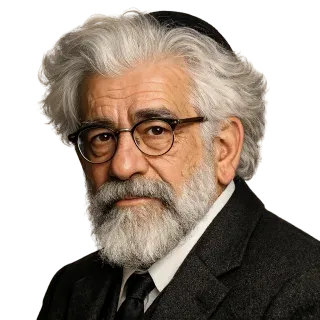
Abraham Heschel
The rabbi who turned awe into justice.
Explore Heschel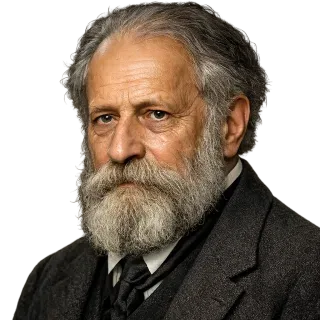
Martin Buber
Philosopher of the I–Thou encounter.
Explore Buber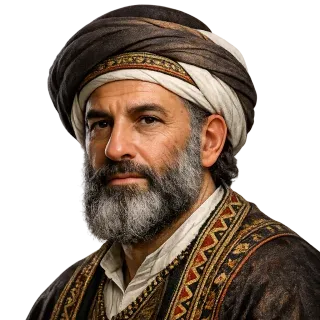
Hai Gaon
Gaonic sage who clarified law for the diaspora.
Explore Hai Gaon