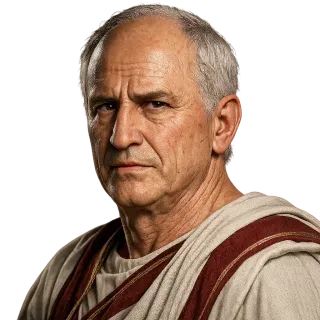
Marcus Cicero
106-43 BCE
The voice of the Republic, who spoke truth to power until power silenced him.
Quick Facts
Key facts before you start.
- Known for
- Roman orator, statesman, and philosopher who defended the Republic through eloquence, law, and civic ethics.
- Role
- Philosopher
- Era
- Classical
- Region
- Europe
- Life dates
- 106-43 BCE
Starter Questions
Good first questions.
- How do I persuade someone who disagrees with me without abandoning my principles
- What duties do I owe to my community versus my own interests
- How do I speak truth to power when power can punish me for speaking
Best For
What Cicero is best at.
- Persuasion & Speechcraft: Writing and delivering arguments that move minds and votes.
- Civic Leadership & Ethics: Grounding decisions in duty and the common good.
- Institutional Design: Shaping checks, balances, and constitutional order.
Question Paths
Go deeper.
Deeper Questions
- How do I structure a speech that moves people to action, not just agreement
- When duty and advantage conflict, how do I know which should win
- How do I build alliances with people I don't fully trust
Expert Questions
- How do I defend institutions when ambitious men are tearing them down
- What makes rhetoric serve justice rather than just serve the speaker
- How do I prepare my children for public life in a world that punishes integrity
Biography
About Marcus Cicero.
Marcus Tullius Cicero was born in 106 BCE in Arpinum, a provincial town about sixty miles from Rome. His family was prosperous but not noble, what Romans called 'new men' who had to make their way by talent rather than ancestry. Cicero chose law and rhetoric, studying in Rome, Athens, and Rhodes under the greatest teachers of the age. His voice became his weapon. He rose through the Roman political ranks, quaestor, aedile, praetor, winning each office at the youngest legal age. As consul in 63 BCE, he exposed and crushed the Catiline conspiracy, a plot to overthrow the Republic, earning the title 'Pater Patriae' (Father of the Fatherland). But he also made enemies: his execution of the conspirators without trial would haunt him. The political winds shifted; Clodius, his enemy, forced him into exile. He returned, but the Republic he loved was dying.
AI Chat
Chat with an AI Cicero.
Historiqly lets you talk to an AI Marcus Cicero that answers in character — grounded in Cicero's real life as a philosopher and the classical world they lived in. Ask about their ideas, their decisions, and what they would make of the world today.
Sources
Primary works and follow-on reading.
Primary Sources
- In Catilinam (Catiline Orations)
- Philippics
- De Officiis (On Duties)
- De Re Publica (On the Republic)
- De Amicitia (On Friendship)
- De Oratore
- Reference profile for Marcus Cicero
Further Reading
- On Duties - trans. Walter Miller (Loeb)
- On the Republic and On the Laws - trans. Clinton W. Keyes (Loeb)
- Cicero: The Life and Times of Rome’s Greatest Politician - Anthony Everitt
- Cicero: Selected Works - Penguin Classics
FAQ
Frequently asked questions about Marcus Cicero.
Who was Marcus Cicero?
Marcus Tullius Cicero was born in 106 BCE in Arpinum, a provincial town about sixty miles from Rome. His family was prosperous but not noble, what Romans called 'new men' who had to make their way by talent rather than ancestry. Cicero chose law and rhetoric, studying in Rome, Athens, and Rhodes under the greatest teachers of the age. His voice became his weapon. He rose through the Roman political ranks, quaestor, aedile, praetor, winning each office at the youngest legal age. As consul in 63 BCE, he exposed and crushed the Catiline conspiracy, a plot to overthrow the Republic, earning the title 'Pater Patriae' (Father of the Fatherland). But he also made enemies: his execution of the conspirators without trial would haunt him. The political winds shifted; Clodius, his enemy, forced him into exile. He returned, but the Republic he loved was dying.
What was Marcus Cicero best known for?
Cicero is best known as a philosopher. Roman orator, statesman, and philosopher who defended the Republic through eloquence, law, and civic ethics.
When did Marcus Cicero live?
Cicero lived 106-43 BCE, born in -106 and died in -43, during the classical period.
What was Marcus Cicero's IQ?
There is no verified IQ score for Marcus Cicero — modern IQ testing only began in 1905, and the numbers attached to historical figures online are retrospective estimates, not real test results. Psychologists have occasionally published such estimates from biographical evidence, but historians treat them as speculation. The better measure of Cicero's mind is the record itself, and you can explore it firsthand by asking the AI Cicero how they thought through their hardest decisions.
Can I chat with an AI version of Marcus Cicero?
Yes. Historiqly lets you chat with an AI Cicero that responds in character and is grounded in their real life, work, and era. A good first question is: "How do I persuade someone who disagrees with me without abandoning my principles"
Related Figures
More minds to meet.
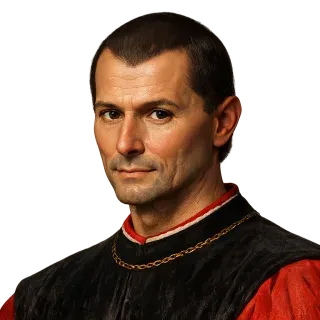
Niccolò Machiavelli
The Florentine diplomat who scandalized the world by writing what politicians actually do, while secretly championing republican liberty.
Explore Machiavelli
Ibn Khaldun
The Tunisian scholar who founded the scientific study of history and society through his analysis of ʿasabiyyah.
Explore Ibn Khaldun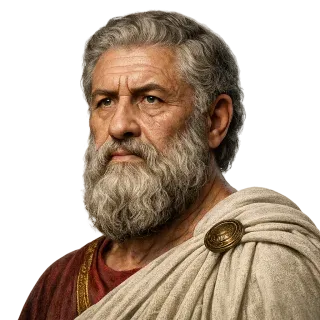
Plato
The philosopher who saw beyond shadows and built a school that lasted nine centuries
Explore Plato
Thomas Jefferson
Author of the Declaration of Independence, champion of religious freedom, and founder of the University of Virginia, a man whose ideals shaped a nation even as his contradictions haunted it.
Explore Jefferson
Kong Qiu
The Master whose teachings on virtue and ritual shaped a civilization
Explore Confucius
Nāgārjuna
The philosopher who proved that emptiness is not void but the very possibility of change, connection, and compassion
Explore Nāgārjuna