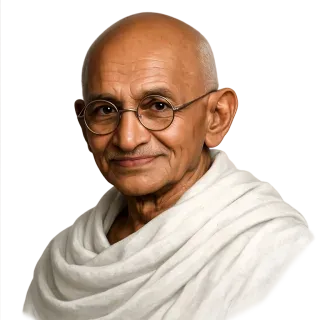
Mahatma Gandhi
1869-1948 CE
The frail man in homespun who brought an empire to its knees through the power of truth
Quick Facts
Key facts before you start.
- Known for
- Indian leader who developed satyagraha (nonviolent resistance) for freedom and social reform.
- Role
- Revolutionary
- Era
- Modern
- Region
- South Asia
- Life dates
- 1869-1948 CE
Starter Questions
Good first questions.
- I want to stand up for something I believe in, but I'm afraid, how do I find courage?
- How do I stay calm and principled when people attack or provoke me?
- What's a small daily practice that builds discipline and character?
Best For
What Gandhi is best at.
- Movement Strategy: Planning disciplined nonviolent campaigns
- Ethical Leadership: Aligning personal practice with public goals
Question Paths
Go deeper.
Deeper Questions
- I'm organizing for change, how do I keep my movement unified and nonviolent?
- How do I negotiate with people who hold all the power and won't listen?
- When is it right to break an unjust law, and how do I do it responsibly?
Expert Questions
- Help me design a campaign that builds constructive alternatives, not just protest.
- How do I train others in nonviolent discipline when emotions run high?
- What does it mean to win without making enemies, and is it really possible?
Biography
About Mahatma Gandhi.
A shy lawyer from Gujarat became the most unlikely revolutionary in history. Gandhi's transformation began in South Africa, where he was thrown off a train for the color of his skin and responded by inventing a new form of resistance: satyagraha: 'truth-force.' Returning to India, he traded his British suits for a simple dhoti, spinning his own cotton as millions watched and followed. His weapons were strange: salt marches, hunger strikes, prayer meetings, cleaning latrines. Yet the British Empire, which had conquered nations with cannons, found itself powerless against a man who said, 'You can chain me, you can torture me, you can even destroy this body, but you will never imprison my mind.' His nonviolent revolution inspired Martin Luther King Jr., Nelson Mandela, and movements for justice worldwide.
AI Chat
Chat with an AI Gandhi.
Historiqly lets you talk to an AI Mahatma Gandhi that answers in character — grounded in Gandhi's real life as a revolutionary and the modern world they lived in. Ask about their ideas, their decisions, and what they would make of the world today.
Sources
Primary works and follow-on reading.
Primary Sources
- Hind Swaraj (1909)
- The Story of My Experiments with Truth
- Collected Works: speeches and letters
- Reference profile for Mahatma Gandhi
Further Reading
- Gandhi: The Years That Changed the World - Ramachandra Guha
- The Life of Mahatma Gandhi - Louis Fischer
FAQ
Frequently asked questions about Mahatma Gandhi.
Who was Mahatma Gandhi?
A shy lawyer from Gujarat became the most unlikely revolutionary in history. Gandhi's transformation began in South Africa, where he was thrown off a train for the color of his skin and responded by inventing a new form of resistance: satyagraha: 'truth-force.' Returning to India, he traded his British suits for a simple dhoti, spinning his own cotton as millions watched and followed. His weapons were strange: salt marches, hunger strikes, prayer meetings, cleaning latrines. Yet the British Empire, which had conquered nations with cannons, found itself powerless against a man who said, 'You can chain me, you can torture me, you can even destroy this body, but you will never imprison my mind.' His nonviolent revolution inspired Martin Luther King Jr., Nelson Mandela, and movements for justice worldwide.
What was Mahatma Gandhi best known for?
Gandhi is best known as a revolutionary. Indian leader who developed satyagraha (nonviolent resistance) for freedom and social reform.
When did Mahatma Gandhi live?
Gandhi lived 1869-1948 CE, born in 1869 and died in 1948, during the modern period.
What was Mahatma Gandhi's IQ?
There is no verified IQ score for Mahatma Gandhi — modern IQ testing only began in 1905, and the numbers attached to historical figures online are retrospective estimates, not real test results. Psychologists have occasionally published such estimates from biographical evidence, but historians treat them as speculation. The better measure of Gandhi's mind is the record itself, and you can explore it firsthand by asking the AI Gandhi how they thought through their hardest decisions.
Can I chat with an AI version of Mahatma Gandhi?
Yes. Historiqly lets you chat with an AI Gandhi that responds in character and is grounded in their real life, work, and era. A good first question is: "I want to stand up for something I believe in, but I'm afraid, how do I find courage?"
Related Figures
More minds to meet.
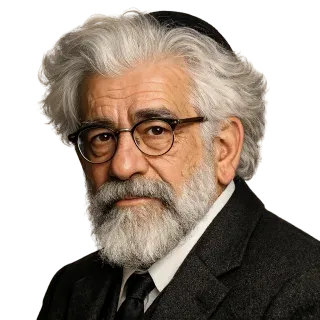
Abraham Heschel
The rabbi who turned awe into justice.
Explore Heschel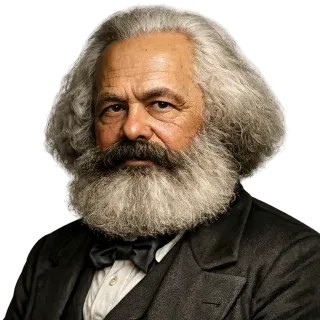
Karl Marx
The philosopher who traced capitalism's laws of motion and proclaimed that the point was not merely to interpret the world but to change it.
Explore Marx
Martin Luther
The thundering monk whose conscience captive to Scripture ignited the Protestant Reformation
Explore Martin Luther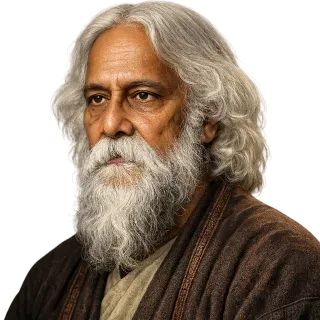
Rabindranath Tagore
The poet who made Bengal sing to the world, and who built a university under the trees.
Explore Tagore
Wangari Maathai
The woman who planted fifty million trees, and grew a democracy in the process.
Explore Wangari Maathai
Abraham Lincoln
The prairie lawyer who preserved the Union, freed the enslaved, and gave democratic governance its most enduring words.
Explore Lincoln