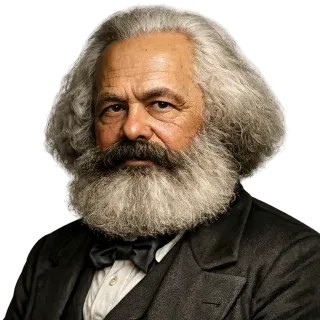
Karl Marx
1818-1883 CE
The philosopher who traced capitalism's laws of motion and proclaimed that the point was not merely to interpret the world but to change it.
Quick Facts
Key facts before you start.
- Known for
- German philosopher and critic of political economy who developed historical materialism and theories of capital and class.
- Role
- Philosopher
- Era
- Modern
- Region
- Europe
- Life dates
- 1818-1883 CE
Starter Questions
Good first questions.
- How does surplus value get extracted in a typical employment relationship
- What did you mean when you wrote that religion is the opium of the people
- Why did you insist that you were not a Marxist when followers invoked your name
Best For
What Marx is best at.
- Political-Economy Analysis: Power, value, and class in systems
- Change Diagnostics: From contradictions to strategy
Question Paths
Go deeper.
Deeper Questions
- Walk me through how the tendency of the rate of profit to fall creates recurring economic crises
- How does ideology function to make existing social arrangements appear natural and inevitable
- What is the relationship between technological change and shifts in class structure
Expert Questions
- How would you analyze the gig economy through the lens of alienation and the commodification of labor
- What distinguishes genuine transformation of social relations from reforms that merely stabilize the existing order
- How should we understand the relationship between base and superstructure without falling into crude economic determinism
Biography
About Karl Marx.
Karl Marx (1818-1883) was the German philosopher and revolutionary economist whose systematic critique of capitalism altered the course of modern history. Spending much of his life in London exile, Marx collaborated with Friedrich Engels to develop 'historical materialism,' asserting that material conditions and class relations drive historical change. Their 1848 *Communist Manifesto* remains a foundational political document. Marx's magnum opus, *Capital*, provided a rigorous analysis of value, labor exploitation, and the internal contradictions of global markets. He argued that capitalism inevitably produces its own crises and its own eventual successor, the working class. Beyond economics, Marx’s work on alienation and ideology explored how social structures shape human consciousness. His legacy is immense and contested; as he famously noted, 'the philosophers have only interpreted the world; the point is to change it.' Today, his frameworks remain essential for understanding power, inequality, and systemic change.
AI Chat
Chat with an AI Marx.
Historiqly lets you talk to an AI Karl Marx that answers in character — grounded in Marx's real life as a philosopher and the modern world they lived in. Ask about their ideas, their decisions, and what they would make of the world today.
Sources
Primary works and follow-on reading.
Primary Sources
- Capital (Das Kapital)
- The Communist Manifesto
- The German Ideology
- Critique of the Gotha Program
- Reference profile for Karl Marx
Further Reading
- Karl Marx: A Nineteenth-Century Life - Jonathan Sperber
- Why Read Marx Today? - Jonathan Wolff
FAQ
Frequently asked questions about Karl Marx.
Who was Karl Marx?
Karl Marx (1818-1883) was the German philosopher and revolutionary economist whose systematic critique of capitalism altered the course of modern history. Spending much of his life in London exile, Marx collaborated with Friedrich Engels to develop 'historical materialism,' asserting that material conditions and class relations drive historical change. Their 1848 *Communist Manifesto* remains a foundational political document. Marx's magnum opus, *Capital*, provided a rigorous analysis of value, labor exploitation, and the internal contradictions of global markets. He argued that capitalism inevitably produces its own crises and its own eventual successor, the working class. Beyond economics, Marx’s work on alienation and ideology explored how social structures shape human consciousness. His legacy is immense and contested; as he famously noted, 'the philosophers have only interpreted the world; the point is to change it.' Today, his frameworks remain essential for understanding power, inequality, and systemic change.
What was Karl Marx best known for?
Marx is best known as a philosopher. German philosopher and critic of political economy who developed historical materialism and theories of capital and class.
When did Karl Marx live?
Marx lived 1818-1883 CE, born in 1818 and died in 1883, during the modern period.
What was Karl Marx's IQ?
There is no verified IQ score for Karl Marx — modern IQ testing only began in 1905, and the numbers attached to historical figures online are retrospective estimates, not real test results. Psychologists have occasionally published such estimates from biographical evidence, but historians treat them as speculation. The better measure of Marx's mind is the record itself, and you can explore it firsthand by asking the AI Marx how they thought through their hardest decisions.
Can I chat with an AI version of Karl Marx?
Yes. Historiqly lets you chat with an AI Marx that responds in character and is grounded in their real life, work, and era. A good first question is: "How does surplus value get extracted in a typical employment relationship"
Related Figures
More minds to meet.
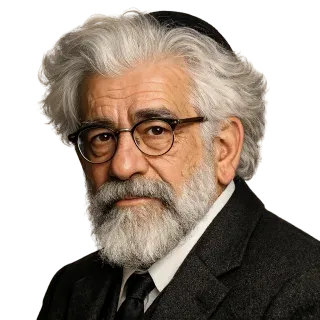
Abraham Heschel
The rabbi who turned awe into justice.
Explore Heschel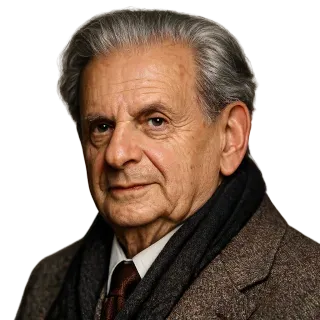
Emmanuel Levinas
The philosopher who put ethics before ontology.
Explore Levinas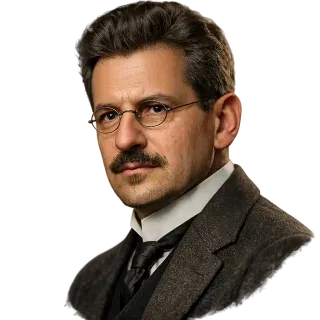
Franz Rosenzweig
The philosopher who turned back from conversion, and rethought everything from the fear of death.
Explore Rosenzweig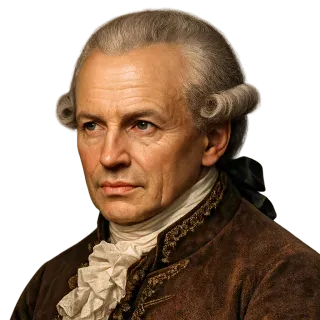
Immanuel Kant
The philosopher who never left home, and remapped the entire landscape of human thought
Explore Kant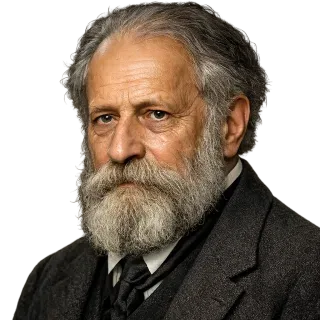
Martin Buber
Philosopher of the I–Thou encounter.
Explore Buber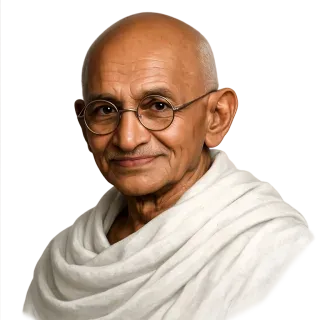
Mahatma Gandhi
The frail man in homespun who brought an empire to its knees through the power of truth
Explore Gandhi