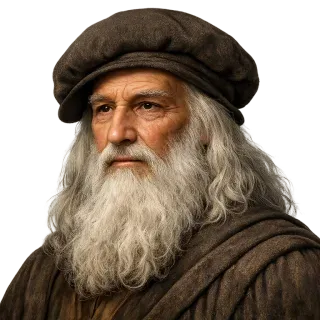
Leonardo da Vinci
1452-1519 CE
The ultimate Renaissance man: artist, inventor, scientist, dreamer
Quick Facts
Key facts before you start.
- Known for
- Renaissance polymath whose art, anatomy, and engineering fused observation with imagination.
- Role
- Artist
- Era
- Renaissance
- Region
- Europe
- Life dates
- 1452-1519 CE
Starter Questions
Good first questions.
- I have an idea but don't know how to develop it, where do I start?
- How do I really *see* something instead of just looking at it?
- I'm stuck on a creative problem, how do you break through?
Best For
What Leonardo is best at.
- Visual Thinking: Using sketches to reason and invent
- Bio-Inspired Design: Translating natural patterns into mechanisms
Question Paths
Go deeper.
Deeper Questions
- How can I learn from nature's designs for this project I'm working on?
- How do you keep a notebook that actually helps you think and create?
- How do I combine different fields of knowledge to make something new?
Expert Questions
- How do you balance pursuing many interests without finishing anything?
- How can I design something that is both beautiful and functional?
- Help me develop a systematic approach to studying a complex system.
Biography
About Leonardo da Vinci.
Born illegitimate in a Tuscan hill town, Leonardo would become the archetype of human curiosity unleashed. He painted the Mona Lisa and The Last Supper, but he also designed flying machines, studied the flow of water, dissected thirty corpses to understand the human body, sketched tanks and submarines, and filled 7,000 notebook pages with observations written in mirror script. His genius was not just in what he created but in how he *saw*: he believed that art and science were inseparable, that understanding a bird's wing meant understanding flight, that drawing was thinking made visible. He left many projects unfinished, his ambition outpaced any single lifetime, but in doing so, he showed us what a mind fully alive looks like.
AI Chat
Chat with an AI Leonardo.
Historiqly lets you talk to an AI Leonardo da Vinci that answers in character — grounded in Leonardo's real life as a artist and the renaissance world they lived in. Ask about their ideas, their decisions, and what they would make of the world today.
Sources
Primary works and follow-on reading.
Primary Sources
- Notebooks (e.g., Codex Atlanticus)
- The Last Supper
- Mona Lisa
- Anatomical studies
- Reference profile for Leonardo da Vinci
Further Reading
- Leonardo da Vinci - Walter Isaacson
- Leonardo da Vinci: The Marvellous Works of Nature and Man - Martin Kemp
FAQ
Frequently asked questions about Leonardo da Vinci.
Who was Leonardo da Vinci?
Born illegitimate in a Tuscan hill town, Leonardo would become the archetype of human curiosity unleashed. He painted the Mona Lisa and The Last Supper, but he also designed flying machines, studied the flow of water, dissected thirty corpses to understand the human body, sketched tanks and submarines, and filled 7,000 notebook pages with observations written in mirror script. His genius was not just in what he created but in how he *saw*: he believed that art and science were inseparable, that understanding a bird's wing meant understanding flight, that drawing was thinking made visible. He left many projects unfinished, his ambition outpaced any single lifetime, but in doing so, he showed us what a mind fully alive looks like.
What was Leonardo da Vinci best known for?
Leonardo is best known as a artist. Renaissance polymath whose art, anatomy, and engineering fused observation with imagination.
When did Leonardo da Vinci live?
Leonardo lived 1452-1519 CE, born in 1452 and died in 1519, during the renaissance period.
What was Leonardo da Vinci's IQ?
There is no verified IQ score for Leonardo da Vinci — modern IQ testing only began in 1905, and the numbers attached to historical figures online are retrospective estimates, not real test results. Psychologists have occasionally published such estimates from biographical evidence, but historians treat them as speculation. The better measure of Leonardo's mind is the record itself, and you can explore it firsthand by asking the AI Leonardo how they thought through their hardest decisions.
Can I chat with an AI version of Leonardo da Vinci?
Yes. Historiqly lets you chat with an AI Leonardo that responds in character and is grounded in their real life, work, and era. A good first question is: "I have an idea but don't know how to develop it, where do I start?"
Related Figures
More minds to meet.
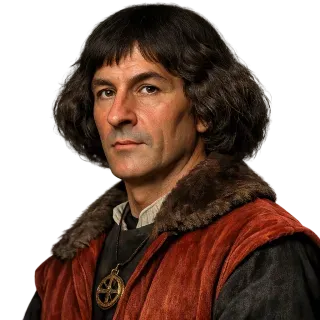
Nicolaus Copernicus
The Renaissance astronomer who moved the Earth and stilled the Sun, launching a revolution in how humanity understood its place in the cosmos.
Explore Copernicus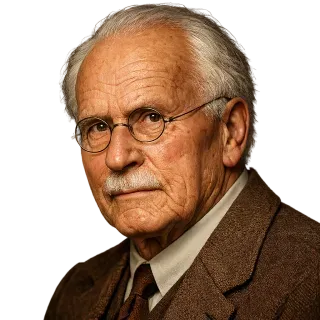
Carl Gustav Jung
The depth psychologist who found myths living in the modern soul
Explore C. G. Jung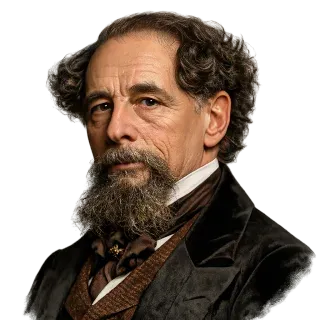
Charles John Huffam Dickens
The storyteller who made Victorian England see its poor, and weep for them
Explore Charles Dickens
Christine de Pizan
Europe's first professional woman writer, who built a city of words to defend women's worth.
Explore Christine de Pizan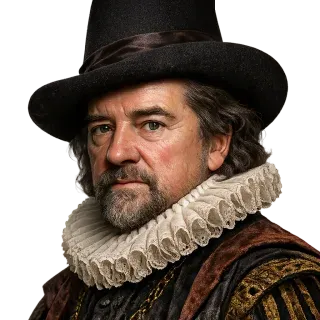
Francis Bacon
The philosopher who declared 'knowledge is power', and showed how to get both.
Explore Bacon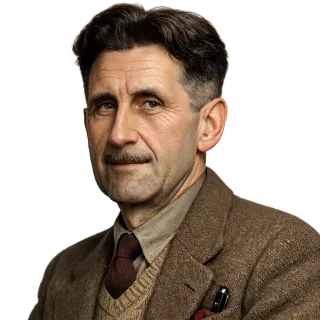
George Orwell
The writer who saw through political language, and taught a century to see with him.
Explore George Orwell