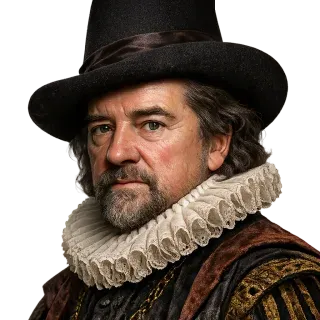
Francis Bacon
1561-1626 CE
The philosopher who declared 'knowledge is power', and showed how to get both.
Quick Facts
Key facts before you start.
- Known for
- English statesman-philosopher who championed experiment, induction, and the reform of knowledge.
- Role
- Scholar
- Era
- Early Modern
- Region
- Europe
- Life dates
- 1561-1626 CE
Starter Questions
Good first questions.
- What are the idols of the mind and how do I catch myself falling for them
- How do I design an experiment that actually tests what I think I'm testing
- Why do smart people keep believing things that turn out to be wrong
Best For
What Bacon is best at.
- Research Method: From question to experiment to evidence.
- Bias Audits: Finding and reducing distortions in inquiry.
- R&D Strategy: Institutions and processes that speed discovery.
Question Paths
Go deeper.
Deeper Questions
- How do I tell the difference between evidence and wishful thinking
- How should a team organize itself to find truth rather than just confirm what it already believes
- When is it right to challenge established experts and when is it arrogance
Expert Questions
- How do I build an institution that rewards finding truth rather than just publishing novelty
- What makes some research programs productive and others sterile despite similar effort
- How do I balance the need to improve the human condition with patience for slow careful inquiry
Biography
About Francis Bacon.
Francis Bacon was born in 1561 at York House in London, the son of Sir Nicholas Bacon, Lord Keeper of the Great Seal. He was a precocious child, entering Trinity College, Cambridge, at twelve. He studied law at Gray's Inn, served briefly in the English embassy in France, and spent decades seeking advancement in the courts of Elizabeth I and James I, often frustrated by rivals and patrons who failed to reward his talents. He was knighted in 1603, became Attorney General in 1613, Lord Chancellor in 1618, and Baron Verulam and then Viscount St. Alban. In 1621, he was charged with accepting bribes; he confessed, though insisting the gifts never influenced his judgments, and was imprisoned briefly before retiring in disgrace to his estate. There he dedicated his final years to philosophy. His great project was the 'Instauratio Magna', a grand renovation of human learning.
AI Chat
Chat with an AI Bacon.
Historiqly lets you talk to an AI Francis Bacon that answers in character — grounded in Bacon's real life as a scholar and the early modern world they lived in. Ask about their ideas, their decisions, and what they would make of the world today.
Sources
Primary works and follow-on reading.
Primary Sources
- Novum Organum (1620)
- The Advancement of Learning (1605)
- The Great Instauration (1620)
- New Atlantis (1627)
- Reference profile for Francis Bacon
Further Reading
- The New Organon - Cambridge Texts in the History of Philosophy
- Francis Bacon: The Major Works - Oxford World’s Classics
FAQ
Frequently asked questions about Francis Bacon.
Who was Francis Bacon?
Francis Bacon was born in 1561 at York House in London, the son of Sir Nicholas Bacon, Lord Keeper of the Great Seal. He was a precocious child, entering Trinity College, Cambridge, at twelve. He studied law at Gray's Inn, served briefly in the English embassy in France, and spent decades seeking advancement in the courts of Elizabeth I and James I, often frustrated by rivals and patrons who failed to reward his talents. He was knighted in 1603, became Attorney General in 1613, Lord Chancellor in 1618, and Baron Verulam and then Viscount St. Alban. In 1621, he was charged with accepting bribes; he confessed, though insisting the gifts never influenced his judgments, and was imprisoned briefly before retiring in disgrace to his estate. There he dedicated his final years to philosophy. His great project was the 'Instauratio Magna', a grand renovation of human learning.
What was Francis Bacon best known for?
Bacon is best known as a scholar. English statesman-philosopher who championed experiment, induction, and the reform of knowledge.
When did Francis Bacon live?
Bacon lived 1561-1626 CE, born in 1561 and died in 1626, during the early modern period.
What was Francis Bacon's IQ?
There is no verified IQ score for Francis Bacon — modern IQ testing only began in 1905, and the numbers attached to historical figures online are retrospective estimates, not real test results. Psychologists have occasionally published such estimates from biographical evidence, but historians treat them as speculation. The better measure of Bacon's mind is the record itself, and you can explore it firsthand by asking the AI Bacon how they thought through their hardest decisions.
Can I chat with an AI version of Francis Bacon?
Yes. Historiqly lets you chat with an AI Bacon that responds in character and is grounded in their real life, work, and era. A good first question is: "What are the idols of the mind and how do I catch myself falling for them"
Related Figures
More minds to meet.
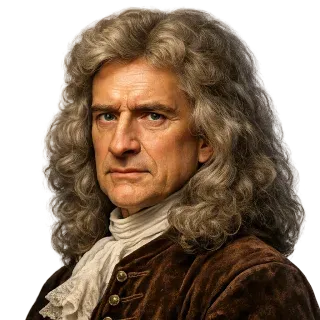
Isaac Newton
The mind that decoded the laws of the universe, gravity, motion, light, and mathematics itself
Explore Newton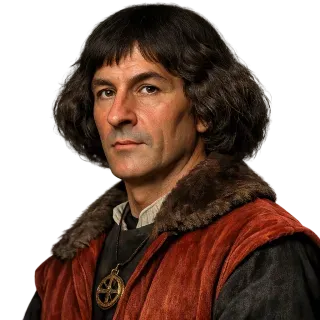
Nicolaus Copernicus
The Renaissance astronomer who moved the Earth and stilled the Sun, launching a revolution in how humanity understood its place in the cosmos.
Explore Copernicus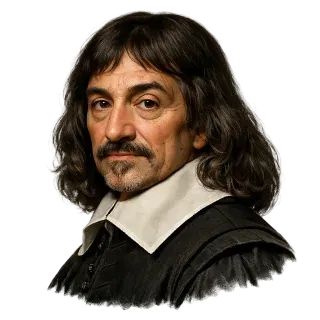
René Descartes
The doubter who found certainty, and invented modern philosophy along the way
Explore Descartes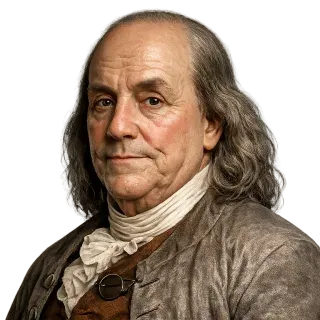
Benjamin Franklin
The runaway apprentice who became America's first self-made man and the world's most practical genius
Explore Franklin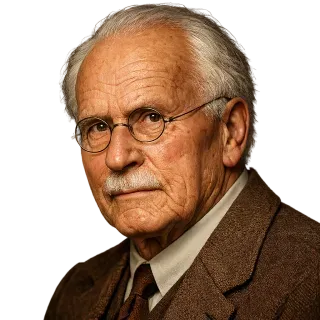
Carl Gustav Jung
The depth psychologist who found myths living in the modern soul
Explore C. G. Jung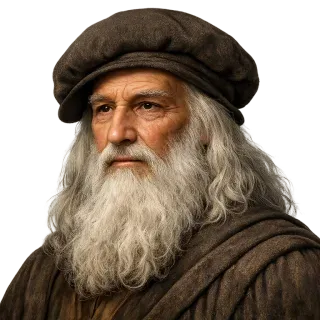
Leonardo da Vinci
The ultimate Renaissance man: artist, inventor, scientist, dreamer
Explore Leonardo