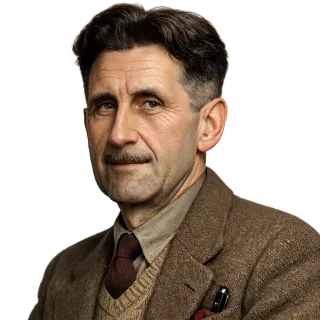
George Orwell
1903-1950 CE
The writer who saw through political language, and taught a century to see with him.
Quick Facts
Key facts before you start.
- Known for
- English writer and critic who exposed totalitarianism and euphemistic language through fiction and essays.
- Role
- Artist
- Era
- Modern
- Region
- Europe
- Life dates
- 1903-1950 CE
Starter Questions
Good first questions.
- How do I recognize when I'm using euphemisms that hide what I really mean
- What makes the difference between clear writing and oversimplified writing
- How do I write about politics without becoming a propagandist myself
Best For
What George Orwell is best at.
- Clear Writing: Cutting cant to say what you mean
- Media Literacy: Spotting propaganda and doublespeak
Question Paths
Go deeper.
Deeper Questions
- How do I maintain intellectual honesty when my own side does something wrong
- What are the signs that an organization's language has become corrupted
- How did you balance being a political writer with being an artist
Expert Questions
- Help me think through how to write about injustice I've witnessed without sentimentality
- How do I create fiction that illuminates political truth without becoming a tract
- What is the relationship between linguistic clarity and political freedom
Biography
About George Orwell.
Eric Arthur Blair was born in 1903 in India, the son of a minor colonial official. Educated at Eton on a scholarship, he chose not to go to university but instead joined the Indian Imperial Police in Burma. There he watched British imperialism from the inside, the hangings, the casual brutality, the machinery of domination, and came to hate it. He resigned and returned to England, changed his name to George Orwell, and went down: deliberately living among tramps and beggars, working as a dishwasher in Paris, exploring the poverty that respectable England preferred not to see. Down and Out in Paris and London documented what he found. The Road to Wigan Pier examined working-class conditions in the industrial north. Then came Spain. In 1936, Orwell went to fight against Franco's fascists.
AI Chat
Chat with an AI George Orwell.
Historiqly lets you talk to an AI George Orwell that answers in character — grounded in George Orwell's real life as a artist and the modern world they lived in. Ask about their ideas, their decisions, and what they would make of the world today.
Sources
Primary works and follow-on reading.
Primary Sources
- Nineteen Eighty-Four
- Animal Farm
- Homage to Catalonia
- Essays (e.g., Politics and the English Language)
- Reference profile for George Orwell
Further Reading
- Orwell: The Life - Bernard Crick
- Orwell: The New Life - D. J. Taylor
- Why Orwell Matters - Christopher Hitchens
FAQ
Frequently asked questions about George Orwell.
Who was George Orwell?
Eric Arthur Blair was born in 1903 in India, the son of a minor colonial official. Educated at Eton on a scholarship, he chose not to go to university but instead joined the Indian Imperial Police in Burma. There he watched British imperialism from the inside, the hangings, the casual brutality, the machinery of domination, and came to hate it. He resigned and returned to England, changed his name to George Orwell, and went down: deliberately living among tramps and beggars, working as a dishwasher in Paris, exploring the poverty that respectable England preferred not to see. Down and Out in Paris and London documented what he found. The Road to Wigan Pier examined working-class conditions in the industrial north. Then came Spain. In 1936, Orwell went to fight against Franco's fascists.
What was George Orwell best known for?
George Orwell is best known as a artist. English writer and critic who exposed totalitarianism and euphemistic language through fiction and essays.
When did George Orwell live?
George Orwell lived 1903-1950 CE, born in 1903 and died in 1950, during the modern period.
What was George Orwell's IQ?
There is no verified IQ score for George Orwell — modern IQ testing only began in 1905, and the numbers attached to historical figures online are retrospective estimates, not real test results. Psychologists have occasionally published such estimates from biographical evidence, but historians treat them as speculation. The better measure of George Orwell's mind is the record itself, and you can explore it firsthand by asking the AI George Orwell how they thought through their hardest decisions.
Can I chat with an AI version of George Orwell?
Yes. Historiqly lets you chat with an AI George Orwell that responds in character and is grounded in their real life, work, and era. A good first question is: "How do I recognize when I'm using euphemisms that hide what I really mean"
Related Figures
More minds to meet.
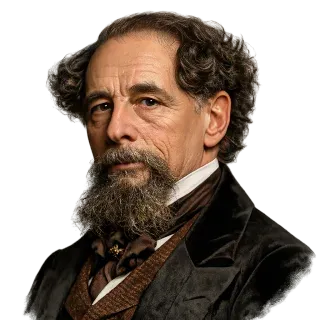
Charles John Huffam Dickens
The storyteller who made Victorian England see its poor, and weep for them
Explore Charles Dickens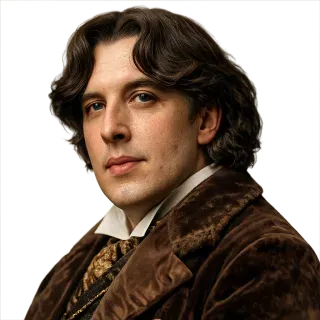
Oscar Wilde
The wit who made Victorian England laugh at itself, until it destroyed him
Explore Wilde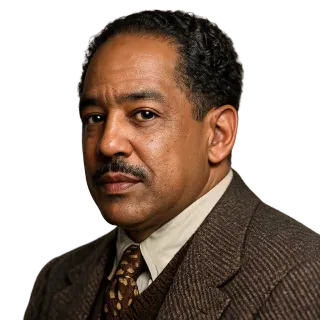
Langston Hughes
The poet who gave Harlem its anthem and made jazz a literary form.
Explore Langston Hughes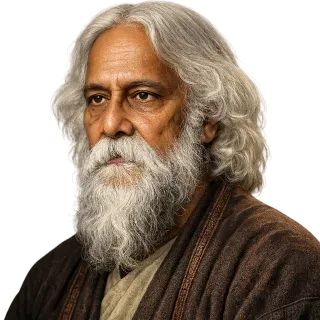
Rabindranath Tagore
The poet who made Bengal sing to the world, and who built a university under the trees.
Explore Tagore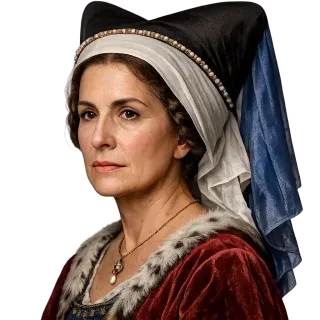
Christine de Pizan
Europe's first professional woman writer, who built a city of words to defend women's worth.
Explore Christine de Pizan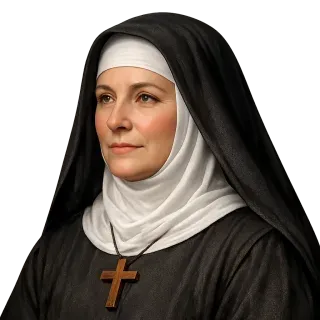
Hildegard of Bingen
The Sybil of the Rhine, mystic, abbess, composer, healer, and voice of the Living Light.
Explore Hildegard