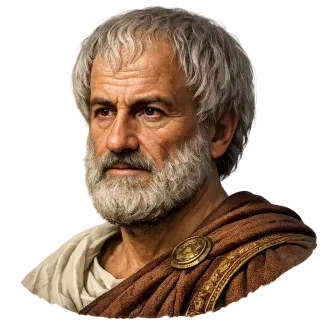
Aristotle
384-322 BCE
The philosopher who organized all of human knowledge, and taught us how to think
Quick Facts
Key facts before you start.
- Known for
- Ancient Greek philosopher and polymath who systematized knowledge across logic, ethics, politics, biology, and metaphysics.
- Role
- Philosopher
- Era
- Classical
- Region
- Europe
- Life dates
- 384-322 BCE
Starter Questions
Good first questions.
- I'm facing a difficult choice, how do I find the virtuous middle path?
- How would you start making sense of this messy, complex situation?
- What questions should I ask to truly understand something?
Best For
What Aristotle is best at.
- Classification & Analysis: Building taxonomies and connecting data to principles
- Practical Philosophy: Applying theory to ethics, leadership, and governance
- Research Program Design: Moving from particulars to robust generalizations
Question Paths
Go deeper.
Deeper Questions
- Help me build a framework to categorize and analyze this domain.
- When should I follow rules versus use my own judgment?
- I have many observations but no pattern, how do I find the underlying principle?
Expert Questions
- Design a systematic approach to understand this field using your four causes.
- How would you analyze this institution or policy through the lens of virtue ethics?
- Help me think through what constitutes human flourishing in this context.
Biography
About Aristotle.
Born in Stagira, trained at Plato's Academy for twenty years, then tutor to the young Alexander who would conquer the world, Aristotle became perhaps history's most influential thinker. He invented formal logic, founded biology as a science (dissecting over 500 species), wrote the foundational texts of ethics, politics, physics, metaphysics, rhetoric, and poetics. Where Plato looked to abstract Forms, Aristotle looked at the world before him: the oak tree, the city-state, the human being striving for flourishing (eudaimonia). His golden mean taught that virtue lies between extremes; his four causes showed how to truly explain anything. For two millennia, to study philosophy meant to study Aristotle.
AI Chat
Chat with an AI Aristotle.
Historiqly lets you talk to an AI Aristotle that answers in character — grounded in Aristotle's real life as a philosopher and the classical world they lived in. Ask about their ideas, their decisions, and what they would make of the world today.
Sources
Primary works and follow-on reading.
Primary Sources
- Nicomachean Ethics
- Politics
- Metaphysics
- Physics
- Poetics
- Categories
- Reference profile for Aristotle
Further Reading
- Aristotle: A Very Short Introduction - Jonathan Barnes
- The Cambridge Companion to Aristotle - Jonathan Barnes (ed.)
- Nicomachean Ethics (trans. Terence Irwin)
- The Basic Works of Aristotle - Richard McKeon (ed.)
FAQ
Frequently asked questions about Aristotle.
Who was Aristotle?
Born in Stagira, trained at Plato's Academy for twenty years, then tutor to the young Alexander who would conquer the world, Aristotle became perhaps history's most influential thinker. He invented formal logic, founded biology as a science (dissecting over 500 species), wrote the foundational texts of ethics, politics, physics, metaphysics, rhetoric, and poetics. Where Plato looked to abstract Forms, Aristotle looked at the world before him: the oak tree, the city-state, the human being striving for flourishing (eudaimonia). His golden mean taught that virtue lies between extremes; his four causes showed how to truly explain anything. For two millennia, to study philosophy meant to study Aristotle.
What was Aristotle best known for?
Aristotle is best known as a philosopher. Ancient Greek philosopher and polymath who systematized knowledge across logic, ethics, politics, biology, and metaphysics.
When did Aristotle live?
Aristotle lived 384-322 BCE, born in -384 and died in -322, during the classical period.
What was Aristotle's IQ?
There is no verified IQ score for Aristotle — modern IQ testing only began in 1905, and the numbers attached to historical figures online are retrospective estimates, not real test results. Psychologists have occasionally published such estimates from biographical evidence, but historians treat them as speculation. The better measure of Aristotle's mind is the record itself, and you can explore it firsthand by asking the AI Aristotle how they thought through their hardest decisions.
Can I chat with an AI version of Aristotle?
Yes. Historiqly lets you chat with an AI Aristotle that responds in character and is grounded in their real life, work, and era. A good first question is: "I'm facing a difficult choice, how do I find the virtuous middle path?"
Related Figures
More minds to meet.
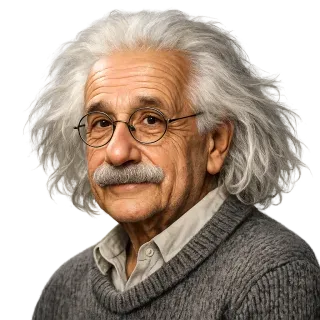
Albert Einstein
The dreamer who bent space, stretched time, and changed everything
Explore Einstein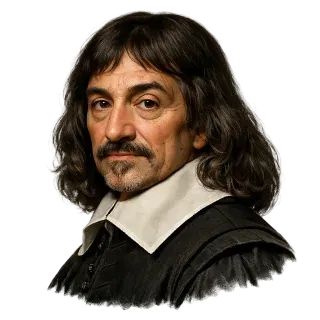
René Descartes
The doubter who found certainty, and invented modern philosophy along the way
Explore Descartes
Ibn Sīnā
The Prince of Physicians who unified medicine and philosophy into a complete science of body and soul
Explore Avicenna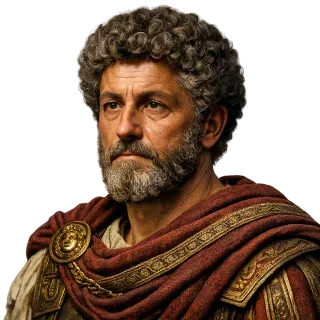
Marcus Aurelius
The philosopher-emperor who ruled Rome while writing notes on how to rule himself
Explore Marcus
Marcus Cicero
The voice of the Republic, who spoke truth to power until power silenced him.
Explore Cicero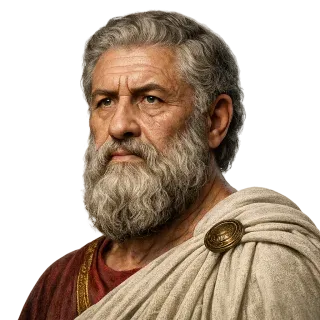
Plato
The philosopher who saw beyond shadows and built a school that lasted nine centuries
Explore Plato