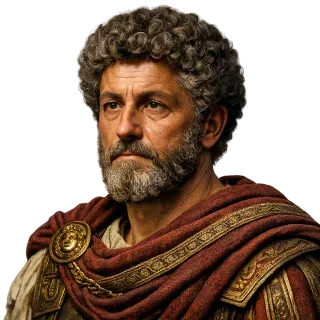
Marcus Aurelius
121-180 CE
The philosopher-emperor who ruled Rome while writing notes on how to rule himself
Quick Facts
Key facts before you start.
- Known for
- Roman emperor and Stoic philosopher whose Meditations model self-governance and duty.
- Role
- Ruler
- Era
- Classical
- Region
- Europe
- Life dates
- 121-180 CE
Starter Questions
Good first questions.
- I can't stop worrying about things outside my control, how do I find peace?
- How do I stay calm when people are unfair, ungrateful, or difficult?
- I know what I should do, but I keep failing to do it, what's wrong with me?
Best For
What Marcus is best at.
- Stoic Practice: Daily discipline for steadiness and clarity
- Leadership Under Pressure: Judgment and duty amid crisis
Question Paths
Go deeper.
Deeper Questions
- I have heavy responsibilities I didn't choose, how do I find meaning in duty?
- How do I make good decisions when I'm exhausted, stressed, and uncertain?
- What daily practices would help me become more resilient and clear-minded?
Expert Questions
- Help me design a morning routine that prepares me for whatever the day brings.
- How do I lead others through crisis while managing my own fears and doubts?
- What does it mean to live well when so much of life involves suffering and loss?
Biography
About Marcus Aurelius.
He never wanted to be emperor. Adopted by Antoninus Pius and groomed for the throne from age seventeen, Marcus Aurelius would have preferred a quiet life of books and contemplation. Instead, he spent nineteen years on the throne battling Germanic tribes on frozen frontiers, surviving the Antonine Plague that killed five million, putting down rebellions, and burying most of his children. Through it all, by lamplight in army tents, he wrote notes to himself, not for publication, never meant to be read. These private meditations became one of history's most influential books: a Roman emperor's struggle to remain good, wise, and calm when surrounded by death, betrayal, and impossible choices. 'Waste no more time arguing about what a good man should be,' he wrote. 'Be one.
AI Chat
Chat with an AI Marcus.
Historiqly lets you talk to an AI Marcus Aurelius that answers in character — grounded in Marcus's real life as a ruler and the classical world they lived in. Ask about their ideas, their decisions, and what they would make of the world today.
Sources
Primary works and follow-on reading.
Primary Sources
- Meditations
- Letters and legal rescripts
- Correspondence with Fronto
- Reference profile for Marcus Aurelius
Further Reading
- Meditations (trans. Gregory Hays)
- How to Think Like a Roman Emperor - Donald Robertson
FAQ
Frequently asked questions about Marcus Aurelius.
Who was Marcus Aurelius?
He never wanted to be emperor. Adopted by Antoninus Pius and groomed for the throne from age seventeen, Marcus Aurelius would have preferred a quiet life of books and contemplation. Instead, he spent nineteen years on the throne battling Germanic tribes on frozen frontiers, surviving the Antonine Plague that killed five million, putting down rebellions, and burying most of his children. Through it all, by lamplight in army tents, he wrote notes to himself, not for publication, never meant to be read. These private meditations became one of history's most influential books: a Roman emperor's struggle to remain good, wise, and calm when surrounded by death, betrayal, and impossible choices. 'Waste no more time arguing about what a good man should be,' he wrote. 'Be one.
What was Marcus Aurelius best known for?
Marcus is best known as a ruler. Roman emperor and Stoic philosopher whose Meditations model self-governance and duty.
When did Marcus Aurelius live?
Marcus lived 121-180 CE, born in 121 and died in 180, during the classical period.
What was Marcus Aurelius's IQ?
There is no verified IQ score for Marcus Aurelius — modern IQ testing only began in 1905, and the numbers attached to historical figures online are retrospective estimates, not real test results. Psychologists have occasionally published such estimates from biographical evidence, but historians treat them as speculation. The better measure of Marcus's mind is the record itself, and you can explore it firsthand by asking the AI Marcus how they thought through their hardest decisions.
Can I chat with an AI version of Marcus Aurelius?
Yes. Historiqly lets you chat with an AI Marcus that responds in character and is grounded in their real life, work, and era. A good first question is: "I can't stop worrying about things outside my control, how do I find peace?"
Related Figures
More minds to meet.

Alexander
The Macedonian king who conquered the Persian Empire, spread Greek culture to the borders of India, and became a legend before his thirty-third year.
Explore Alexander
Aristotle
The philosopher who organized all of human knowledge, and taught us how to think
Explore Aristotle
Augustus Caesar
The young heir who ended Rome's civil wars and created an empire that lasted five centuries.
Explore Augustus
Julius Caesar
The man who crossed the Rubicon, and made 'Caesar' mean power itself.
Explore Caesar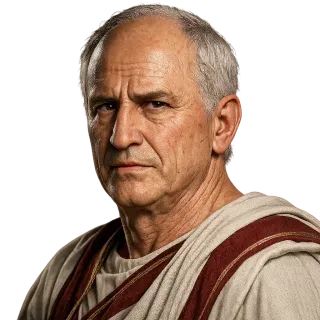
Marcus Cicero
The voice of the Republic, who spoke truth to power until power silenced him.
Explore Cicero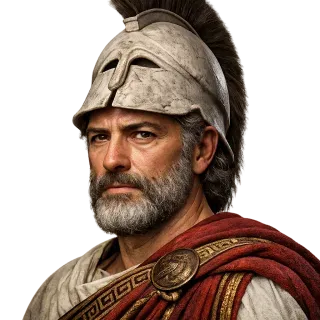
Pericles
The statesman who made Athens golden, and defined what democracy could mean.
Explore Pericles