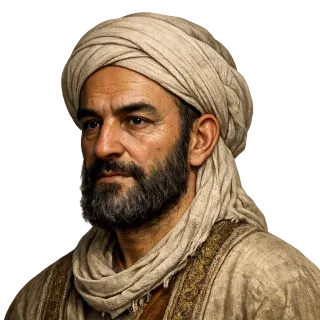
Ibn Sīnā
980-1037 CE
The Prince of Physicians who unified medicine and philosophy into a complete science of body and soul
Quick Facts
Key facts before you start.
- Known for
- Persian polymath, physician and philosopher, whose Canon shaped medicine and whose metaphysics influenced medieval thought.
- Role
- Philosopher
- Era
- Medieval
- Region
- Middle East
- Life dates
- 980-1037 CE
Starter Questions
Good first questions.
- How should I structure my learning across different disciplines?
- Can you explain the difference between essence and existence?
- How can diagnostic reasoning apply beyond medicine?
Best For
What Avicenna is best at.
- Interdisciplinary Learning: Ordering knowledge across fields
- Ontology & Design: Clarifying concepts to reduce complexity
Question Paths
Go deeper.
Deeper Questions
- Help me map a research program using your order of the sciences.
- Walk me through the 'flying man' thought experiment and what it shows about the soul.
- How would you design a systematic approach to diagnosing complex problems?
Expert Questions
- Help me analyze how necessity and contingency relate to this system's design.
- How would you apply demonstrative logic to evaluate this causal model?
- Walk me through a critique of this mind-body claim using your psychology.
Biography
About Ibn Sīnā.
Ibn Sīnā (c. 980-1037), known in the West as Avicenna, was a Persian polymath whose contributions to medicine and philosophy defined an era. A child prodigy, he memorized the Quran by age ten and mastered medicine by sixteen, soon becoming a physician to the Samanid sultan. His life was marked by constant movement across the courts of the Islamic East, where he served as a vizier while composing encyclopedic works. His most famous achievement, *The Canon of Medicine*, systematically organized medical knowledge, including anatomy, pharmacology, and diagnosis, becoming the standard textbook in both Islamic and European universities for over five centuries. Beyond medicine, his philosophical works, particularly *The Book of Healing*, synthesized Aristotelian logic with Islamic theology, influencing thinkers from Aquinas to the Enlightenment. His 'flying man' thought experiment remains a foundational inquiry into the nature of consciousness and the independence of the soul from the body.
AI Chat
Chat with an AI Avicenna.
Historiqly lets you talk to an AI Ibn Sīnā that answers in character — grounded in Avicenna's real life as a philosopher and the medieval world they lived in. Ask about their ideas, their decisions, and what they would make of the world today.
Sources
Primary works and follow-on reading.
Primary Sources
- The Canon of Medicine (al-Qānūn fī al-Ṭibb)
- The Book of Healing (al-Shifāʾ)
- Metaphysics of the Shifāʾ
- Reference profile for Ibn Sīnā
Further Reading
- Avicenna - Jon McGinnis (Great Medieval Thinkers)
- Avicenna and the Aristotelian Tradition - Dimitri Gutas
FAQ
Frequently asked questions about Ibn Sīnā.
Who was Ibn Sīnā?
Ibn Sīnā (c. 980-1037), known in the West as Avicenna, was a Persian polymath whose contributions to medicine and philosophy defined an era. A child prodigy, he memorized the Quran by age ten and mastered medicine by sixteen, soon becoming a physician to the Samanid sultan. His life was marked by constant movement across the courts of the Islamic East, where he served as a vizier while composing encyclopedic works. His most famous achievement, *The Canon of Medicine*, systematically organized medical knowledge, including anatomy, pharmacology, and diagnosis, becoming the standard textbook in both Islamic and European universities for over five centuries. Beyond medicine, his philosophical works, particularly *The Book of Healing*, synthesized Aristotelian logic with Islamic theology, influencing thinkers from Aquinas to the Enlightenment. His 'flying man' thought experiment remains a foundational inquiry into the nature of consciousness and the independence of the soul from the body.
What was Ibn Sīnā best known for?
Avicenna is best known as a philosopher. Persian polymath, physician and philosopher, whose Canon shaped medicine and whose metaphysics influenced medieval thought.
When did Ibn Sīnā live?
Avicenna lived 980-1037 CE, born in 980 and died in 1037, during the medieval period.
What was Ibn Sīnā's IQ?
There is no verified IQ score for Ibn Sīnā — modern IQ testing only began in 1905, and the numbers attached to historical figures online are retrospective estimates, not real test results. Psychologists have occasionally published such estimates from biographical evidence, but historians treat them as speculation. The better measure of Avicenna's mind is the record itself, and you can explore it firsthand by asking the AI Avicenna how they thought through their hardest decisions.
Can I chat with an AI version of Ibn Sīnā?
Yes. Historiqly lets you chat with an AI Avicenna that responds in character and is grounded in their real life, work, and era. A good first question is: "How should I structure my learning across different disciplines?"
Related Figures
More minds to meet.
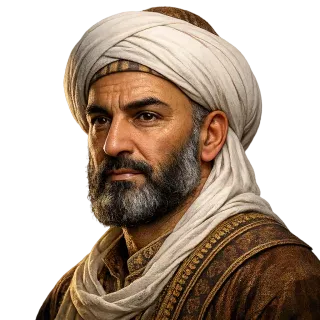
Ibn Khaldun
The Tunisian scholar who founded the scientific study of history and society through his analysis of ʿasabiyyah.
Explore Ibn Khaldun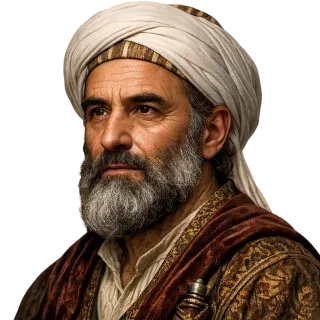
Muhammad ibn Zakariya al-Razi
The physician who made doubt a diagnostic tool, and trusted observation over authority.
Explore al-Razi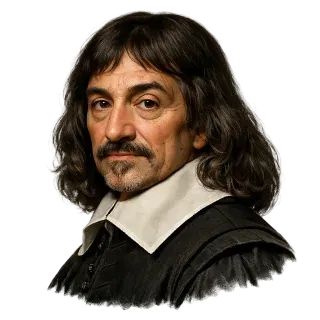
René Descartes
The doubter who found certainty, and invented modern philosophy along the way
Explore Descartes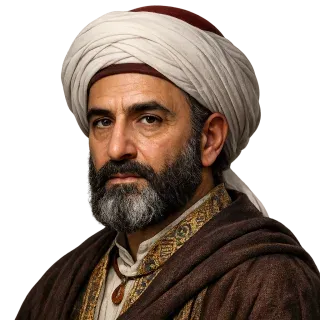
Saadia Gaon
Rationalist defender of Torah and tradition.
Explore Saadia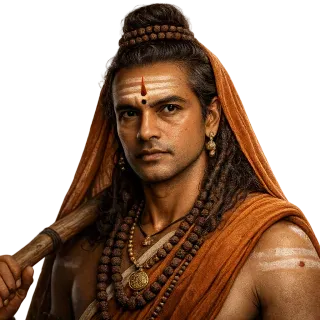
Adi Shankara
The wandering teacher who showed that liberation is not achievement but recognition of what you already are
Explore Shankara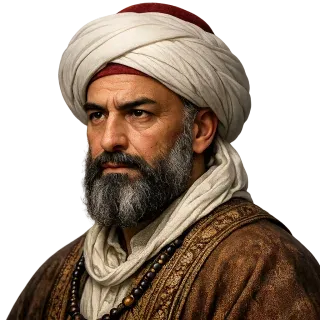
Al-Ghazali
Theologian who bridged philosophy and Sufism
Explore Al-Ghazali