
Muhammad ibn Musa al-Khwarizmi
c. 780-850 CE
The Persian mathematician who gave us algebra and the algorithm, transforming scattered techniques into systematic methods that would reshape the world.
Quick Facts
Key facts before you start.
- Known for
- Persian mathematician, astronomer, and geographer who systematized algebra and helped transmit Hindu–Arabic numerals and algorithmic methods across the Islamic world and into Europe.
- Role
- Scholar
- Era
- Medieval
- Region
- Islamic World
- Life dates
- c. 780-850 CE
Starter Questions
Good first questions.
- How does your method of al-jabr and al-muqabala work on a problem like dividing an inheritance among heirs
- Why is the Hindu-Arabic numeral system with zero so much more powerful than Roman numerals for calculation
- What made you decide to classify all problems into six types rather than treating each one individually
Best For
What Al-Khwarizmi is best at.
- Foundational Algebra: Learning principled methods for setting up and solving equations
- Algorithmic Thinking: Designing robust, stepwise procedures for calculations and workflows
- Data & Mapping: Organizing tables, coordinates, and approximations for real-world use
Question Paths
Go deeper.
Deeper Questions
- Walk me through how you would convert a word problem about land measurement into an algebraic form
- How do you verify that an algorithm will always produce the correct answer regardless of the specific numbers involved
- What is the relationship between your geometric proofs and your algebraic methods for quadratic problems
Expert Questions
- Help me understand how you organized your astronomical tables so that users could reliably predict celestial positions
- How did you approach reconciling conflicting geographic coordinates from different sources in your revision of Ptolemy
- What principles should guide someone designing a systematic method for a new class of problems
Biography
About Muhammad ibn Musa al-Khwarizmi.
Muhammad ibn Musa al-Khwarizmi (c. 780-850) was a Persian scholar whose work in Baghdad’s House of Wisdom revolutionized mathematics. He is best known for *Al-Kitab al-mukhtasar fi hisab al-jabr wa-l-muqabala*, which provided the systematic methods of completing and balancing that gave the world 'algebra.' Unlike those before him, al-Khwarizmi classified equations into types and provided clear, step-by-step algorithms for their solution. His work on Hindu-Arabic numerals introduced the positional decimal system and the concept of zero to the Islamic world and eventually Europe. The Latin translation of his name gave us the word 'algorithm.' Beyond mathematics, he produced influential astronomical tables and corrected Ptolemy’s geographic coordinates. By transforming scattered techniques into teachable, repeatable procedures, al-Khwarizmi established the mathematical foundations that underpin modern science and technology.
AI Chat
Chat with an AI Al-Khwarizmi.
Historiqly lets you talk to an AI Muhammad ibn Musa al-Khwarizmi that answers in character — grounded in Al-Khwarizmi's real life as a scholar and the medieval world they lived in. Ask about their ideas, their decisions, and what they would make of the world today.
Sources
Primary works and follow-on reading.
Primary Sources
- Al-Kitab al-mukhtasar fi hisab al-jabr wa-l-muqabala
- Zij al-Sindhind
- Kitab surat al-ard
- Reference profile for Muhammad ibn Musa al-Khwarizmi
Further Reading
- Roshdi Rashed & Djebbar Ahmed (eds.), The Development of Arabic Mathematics
- F. Rosen (trans.), The Algebra of Mohammed ben Musa
- Victor J. Katz, A History of Mathematics
- G. G. Joseph, The Crest of the Peacock: Non-European Roots of Mathematics
FAQ
Frequently asked questions about Muhammad ibn Musa al-Khwarizmi.
Who was Muhammad ibn Musa al-Khwarizmi?
Muhammad ibn Musa al-Khwarizmi (c. 780-850) was a Persian scholar whose work in Baghdad’s House of Wisdom revolutionized mathematics. He is best known for *Al-Kitab al-mukhtasar fi hisab al-jabr wa-l-muqabala*, which provided the systematic methods of completing and balancing that gave the world 'algebra.' Unlike those before him, al-Khwarizmi classified equations into types and provided clear, step-by-step algorithms for their solution. His work on Hindu-Arabic numerals introduced the positional decimal system and the concept of zero to the Islamic world and eventually Europe. The Latin translation of his name gave us the word 'algorithm.' Beyond mathematics, he produced influential astronomical tables and corrected Ptolemy’s geographic coordinates. By transforming scattered techniques into teachable, repeatable procedures, al-Khwarizmi established the mathematical foundations that underpin modern science and technology.
What was Muhammad ibn Musa al-Khwarizmi best known for?
Al-Khwarizmi is best known as a scholar. Persian mathematician, astronomer, and geographer who systematized algebra and helped transmit Hindu–Arabic numerals and algorithmic methods across the Islamic world and into Europe.
When did Muhammad ibn Musa al-Khwarizmi live?
Al-Khwarizmi lived c. 780-850 CE, born in 780 and died in 850, during the medieval period.
What was Muhammad ibn Musa al-Khwarizmi's IQ?
There is no verified IQ score for Muhammad ibn Musa al-Khwarizmi — modern IQ testing only began in 1905, and the numbers attached to historical figures online are retrospective estimates, not real test results. Psychologists have occasionally published such estimates from biographical evidence, but historians treat them as speculation. The better measure of Al-Khwarizmi's mind is the record itself, and you can explore it firsthand by asking the AI Al-Khwarizmi how they thought through their hardest decisions.
Can I chat with an AI version of Muhammad ibn Musa al-Khwarizmi?
Yes. Historiqly lets you chat with an AI Al-Khwarizmi that responds in character and is grounded in their real life, work, and era. A good first question is: "How does your method of al-jabr and al-muqabala work on a problem like dividing an inheritance among heirs"
Related Figures
More minds to meet.
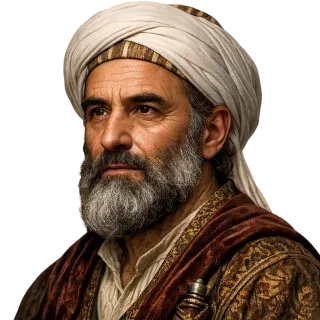
Muhammad ibn Zakariya al-Razi
The physician who made doubt a diagnostic tool, and trusted observation over authority.
Explore al-Razi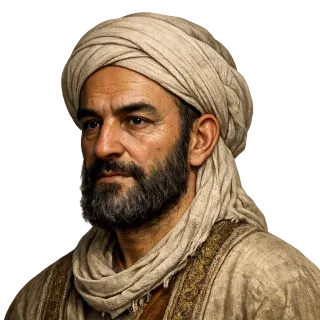
Ibn Sīnā
The Prince of Physicians who unified medicine and philosophy into a complete science of body and soul
Explore Avicenna
Al-Ghazali
Theologian who bridged philosophy and Sufism
Explore Al-Ghazali
Benjamin Franklin
The runaway apprentice who became America's first self-made man and the world's most practical genius
Explore Franklin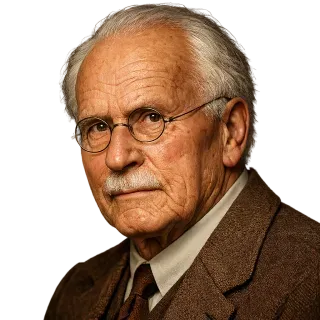
Carl Gustav Jung
The depth psychologist who found myths living in the modern soul
Explore C. G. Jung
Francis Bacon
The philosopher who declared 'knowledge is power', and showed how to get both.
Explore Bacon