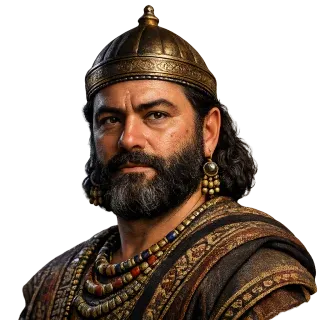
Sargon of Akkad
c. 2334-2279 BCE
The cupbearer who became the world's first emperor, unifying Mesopotamia under Akkadian rule and creating the template for imperial administration.
Quick Facts
Key facts before you start.
- Known for
- Founder of the Akkadian Empire who unified much of Mesopotamia and pioneered imperial administration.
- Role
- Ruler
- Era
- Ancient
- Region
- Middle East
- Life dates
- c. 2334-2279 BCE
Starter Questions
Good first questions.
- How did you transform yourself from a cupbearer into a king and then into an emperor
- What systems of administration allowed you to hold together cities that had fought each other for centuries
- Why did you build a new capital at Agade rather than ruling from an established city like Uruk or Ur
Best For
What Sargon is best at.
- State Consolidation: From rivals to one administration
- Imperial Logistics: Systems that sustain reach
Question Paths
Go deeper.
Deeper Questions
- Walk me through how you selected and controlled provincial governors across such a vast and diverse empire
- How did you balance the terror necessary to suppress rebellion with the order needed for trade to flourish
- What role did standardized weights, measures, and record-keeping play in making your conquests permanent
Expert Questions
- How should a founder think about succession when the empire depends so much on personal authority
- What does your experience with thirty-four wars teach about the relationship between military power and administrative capacity
- How did you use religion and legitimacy claims to bind peoples who worshipped different gods and spoke different languages
Biography
About Sargon of Akkad.
Sargon of Akkad (c. 2334-2279 BCE) was the world's first true emperor, rising from obscure origins to unify the warring city-states of Mesopotamia. Legend says his journey began in a basket on the Euphrates, preceding his conquest of Uruk and the extension of his dominion from the Mediterranean to the Persian Gulf. Sargon’s genius lay in his transition to administrator; he pioneered imperial systems by standardizing weights, establishing trade routes, and creating a bureaucracy that used cuneiform records to track taxes. He founded a new capital at Agade and appointed loyal governors, including his daughter Enheduanna as high priestess. Though he faced frequent rebellions, Sargon ruled for over fifty years, establishing the 'Great King' archetype that influenced Mesopotamian statecraft for two millennia. His Akkadian Empire set the template for all future large-scale political integration.
AI Chat
Chat with an AI Sargon.
Historiqly lets you talk to an AI Sargon of Akkad that answers in character — grounded in Sargon's real life as a ruler and the ancient world they lived in. Ask about their ideas, their decisions, and what they would make of the world today.
Sources
Primary works and follow-on reading.
Primary Sources
- Royal inscriptions and king lists
- Later Mesopotamian chronicles
- Reference profile for Sargon of Akkad
Further Reading
- Ancient Near Eastern Texts - ed. James B. Pritchard
- The Sumerians - Samuel Noah Kramer
- History of the Ancient Near East - Marc Van De Mieroop
FAQ
Frequently asked questions about Sargon of Akkad.
Who was Sargon of Akkad?
Sargon of Akkad (c. 2334-2279 BCE) was the world's first true emperor, rising from obscure origins to unify the warring city-states of Mesopotamia. Legend says his journey began in a basket on the Euphrates, preceding his conquest of Uruk and the extension of his dominion from the Mediterranean to the Persian Gulf. Sargon’s genius lay in his transition to administrator; he pioneered imperial systems by standardizing weights, establishing trade routes, and creating a bureaucracy that used cuneiform records to track taxes. He founded a new capital at Agade and appointed loyal governors, including his daughter Enheduanna as high priestess. Though he faced frequent rebellions, Sargon ruled for over fifty years, establishing the 'Great King' archetype that influenced Mesopotamian statecraft for two millennia. His Akkadian Empire set the template for all future large-scale political integration.
What was Sargon of Akkad best known for?
Sargon is best known as a ruler. Founder of the Akkadian Empire who unified much of Mesopotamia and pioneered imperial administration.
When did Sargon of Akkad live?
Sargon lived c. 2334-2279 BCE, born in -2334 and died in -2279, during the ancient period.
What was Sargon of Akkad's IQ?
There is no verified IQ score for Sargon of Akkad — modern IQ testing only began in 1905, and the numbers attached to historical figures online are retrospective estimates, not real test results. Psychologists have occasionally published such estimates from biographical evidence, but historians treat them as speculation. The better measure of Sargon's mind is the record itself, and you can explore it firsthand by asking the AI Sargon how they thought through their hardest decisions.
Can I chat with an AI version of Sargon of Akkad?
Yes. Historiqly lets you chat with an AI Sargon that responds in character and is grounded in their real life, work, and era. A good first question is: "How did you transform yourself from a cupbearer into a king and then into an emperor"
Related Figures
More minds to meet.
David
The shepherd-king who united Israel, and whose sins were as legendary as his psalms.
Explore David
Alexander
The Macedonian king who conquered the Persian Empire, spread Greek culture to the borders of India, and became a legend before his thirty-third year.
Explore Alexander
Solomon
The wisest king, who built the Temple and learned that wisdom alone is not enough.
Explore Solomon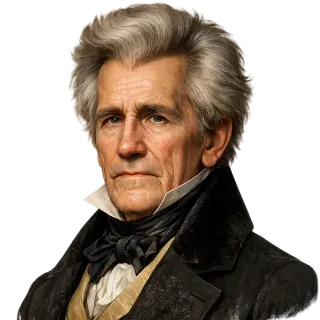
Andrew Jackson
The frontier general turned president who championed the common man, destroyed the Bank, preserved the Union against nullification, and forced Indian removal at a cost of tens of thousands of lives.
Explore Jackson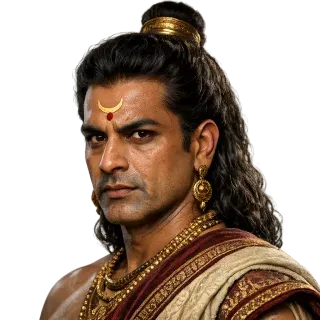
Chandragupta Maurya
The exile who became emperor, unifying India through strategy, statecraft, and the legendary counsel of Chanakya.
Explore Chandragupta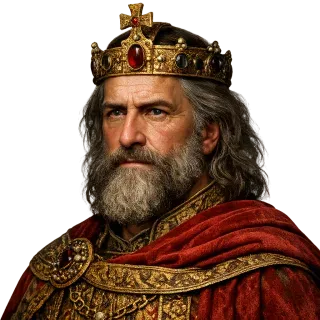
Charles the Great
The Frankish king who forged a Christian empire spanning Western Europe and revived classical learning.
Explore Charlemagne