
Biography
Overview
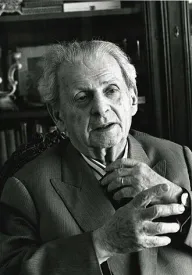
Levinas redirected phenomenology from the structures of Being to the primacy of ethics. Marked by 20th-century catastrophe, he argued that the encounter with the Other imposes an infinite, asymmetrical responsibility. Through philosophical and Talmudic writings, he elaborated an ethics of hospitality, justice, and vigilance against reducing persons to categories.
Levinas’s world, year by year
19061995
Drag the needle, or use the arrow keys, to move through Levinas’s life.
Dated facts
Account · checked against Wikipedia Read the source
- 1906Emmanuel Levinas was born on 12 January 1906 into a middle-class Litvak family in Kaunas, then in the Russian Empire.
- 1923He began studying philosophy at Strasbourg in 1923, and in 1928 studied phenomenology under Edmund Husserl at Freiburg, where he met Martin Heidegger.
- 1929Strasbourg awarded him a doctorate in 1929 for a thesis on intuition in Husserl, and in 1931 he translated Husserl's Cartesian Meditations.
- 1939Naturalized French in 1939, he was captured in 1940 and spent the rest of the war as a prisoner of war near Hanover.
- 1961His major works are Totality and Infinity (1961) and Otherwise than Being or Beyond Essence (1974).
- 1961He taught at Poitiers from 1961, at Paris-Nanterre from 1967 and at the Sorbonne from 1973 until retiring in 1979.
- 1995He died on 25 December 1995.
Alive at the same time
Overlap Same years; not influence
Wars during this life
- World War I
- World War II
- Eritrean War of Independence
- Indo-Pakistani Wars
- South African Border War
- Chinese Civil War
Sources
Primary works and follow-on reading.
Primary Sources
- Totality and Infinity (1961)
- Otherwise than Being, or Beyond Essence (1974)
- Difficult Freedom (1963)
- Nine Talmudic Readings (1968)
- Reference profile for Emmanuel Levinas
Further Reading
- Emmanuel Levinas: Basic Philosophical Writings - ed. Peperzak et al.
- Ethics and Infinity - Emmanuel Levinas
- Levinas: A Philosophy of the Other - Adriaan Peperzak
FAQ
Frequently asked questions about Emmanuel Levinas.
Who was Emmanuel Levinas?
Levinas redirected phenomenology from the structures of Being to the primacy of ethics. Marked by 20th-century catastrophe, he argued that the encounter with the Other imposes an infinite, asymmetrical responsibility. Through philosophical and Talmudic writings, he elaborated an ethics of hospitality, justice, and vigilance against reducing persons to categories.
What was Emmanuel Levinas best known for?
Levinas is best known as a philosopher. Philosopher who grounded ethics in responsibility to the Other and reoriented phenomenology toward ethics.
When did Emmanuel Levinas live?
Levinas lived 1906-1995 CE, born in 1906 and died in 1995, during the modern period.
Can I chat with an AI version of Emmanuel Levinas?
Yes, free. Anyone can ask Levinas, and a first question needs no account. Every answer is a Simulation in character, grounded in Levinas’s real life, work and era. A good first question is: "What do you mean by 'ethics is first philosophy'?"
Explore this history
Related Figures
Related historical figures
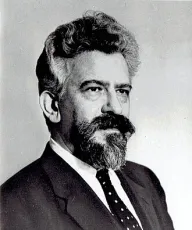
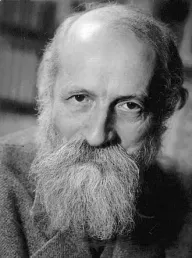
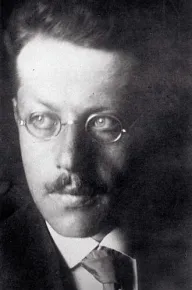
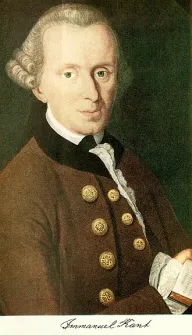
AI conversationPlan: Free
Explore this life through conversation
Ask about Levinas’s life, ideas, and world.
Ask here while you explore, or continue on the full chat website.
Chat on this page
Starter Questions
Good first questions.
Tap a question to put it in the chat box. Nothing is sent until you press Send.
More conversation ideas
Best For
What Levinas is best at.
- Ethical Leadership: Centering responsibility in decisions and culture.
- Conflict Mediation: Seeing the Other beyond roles and labels.
- Product & Policy Ethics: Embedding hospitality and non-reduction in systems.
Question Paths
Go deeper.
Deeper Questions
An optional simulation inspired by this life. Responses may contain mistakes and are not historical testimony.
Cite this page
“Emmanuel Levinas.” HistorIQly. https://historiqly.com/ai-historical-figures/emmanuel-levinas/
Add the date you accessed this page if your citation style requires it.