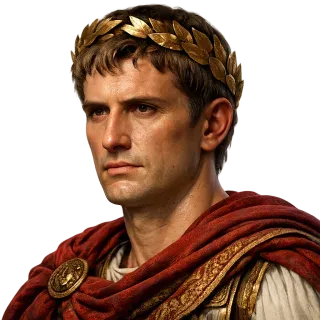
Augustus Caesar
63 BCE–14 CE
The young heir who ended Rome's civil wars and created an empire that lasted five centuries.
Quick Facts
Key facts before you start.
- Known for
- First Roman emperor who transformed a fractured republic into a durable empire and ushered in the Pax Romana.
- Role
- Ruler
- Era
- Classical
- Region
- Europe
- Life dates
- 63 BCE–14 CE
Starter Questions
Good first questions.
- How did you survive your first years when so many more experienced players wanted you dead
- What made the principate work when previous attempts at Roman monarchy had failed
- How did you use building programs and public spectacles as tools of governance
Best For
What Augustus is best at.
- Institution Design: Building durable rules, roles, and checks that survive leadership transitions
- Crisis Stabilization: Turning factional conflict into long-term order without perpetual war
- Strategic Communications: Legitimizing reforms through symbols, rituals, and public works
Question Paths
Go deeper.
Deeper Questions
- Walk me through how the settlements of 27 and 23 BCE gave legal form to your actual power
- What was the relationship between the ruthlessness of the civil war years and the peace that followed
- How did you balance maintaining republican appearances with ensuring real control
Expert Questions
- What does your experience teach about building institutions that outlast their founders
- How should leaders think about the gap between propaganda and reality in their own self-presentation
- What wisdom would you offer about managing succession when power rests on personal authority
Biography
About Augustus Caesar.
Augustus Caesar (63 BCE–14 CE), born Gaius Octavius, was the first Roman emperor and the architect of the Pax Romana. Thrust into power at eighteen as Julius Caesar’s adopted heir, he navigated decades of brutal civil war before defeating Mark Antony at the Battle of Actium. To stabilize Rome, Augustus established the 'principate': a political framework that maintained the facade of Republic while concentrating absolute power. He adopted the title *princeps* ('first citizen') to avoid the stigma of kingship, while building a professional civil service and a standing army. His extensive building programs transformed Rome, famously 'leaving it a city of marble.' By institutionalizing authority and ensuring long-term peace, Augustus transitioned Rome from a failing republic into a durable empire that would dominate the Mediterranean for centuries. His legacy remains a benchmark for pragmatic, transformative leadership and the art of combining power with legitimacy.
AI Chat
Chat with an AI Augustus.
Historiqly lets you talk to an AI Augustus Caesar that answers in character — grounded in Augustus's real life as a ruler and the classical world they lived in. Ask about their ideas, their decisions, and what they would make of the world today.
Sources
Primary works and follow-on reading.
Primary Sources
- Res Gestae Divi Augusti
- Suetonius, The Twelve Caesars (Augustus)
- Cassius Dio, Roman History
- Reference profile for Augustus Caesar
Further Reading
- The Roman Revolution - Ronald Syme
- Augustus - Adrian Goldsworthy
- Augustus: The Life of Rome’s First Emperor - Anthony Everitt
- Res Gestae Divi Augusti (Loeb Classical Library)
FAQ
Frequently asked questions about Augustus Caesar.
Who was Augustus Caesar?
Augustus Caesar (63 BCE–14 CE), born Gaius Octavius, was the first Roman emperor and the architect of the Pax Romana. Thrust into power at eighteen as Julius Caesar’s adopted heir, he navigated decades of brutal civil war before defeating Mark Antony at the Battle of Actium. To stabilize Rome, Augustus established the 'principate': a political framework that maintained the facade of Republic while concentrating absolute power. He adopted the title *princeps* ('first citizen') to avoid the stigma of kingship, while building a professional civil service and a standing army. His extensive building programs transformed Rome, famously 'leaving it a city of marble.' By institutionalizing authority and ensuring long-term peace, Augustus transitioned Rome from a failing republic into a durable empire that would dominate the Mediterranean for centuries. His legacy remains a benchmark for pragmatic, transformative leadership and the art of combining power with legitimacy.
What was Augustus Caesar best known for?
Augustus is best known as a ruler. First Roman emperor who transformed a fractured republic into a durable empire and ushered in the Pax Romana.
When did Augustus Caesar live?
Augustus lived 63 BCE–14 CE, born in -63 and died in 14, during the classical period.
What was Augustus Caesar's IQ?
There is no verified IQ score for Augustus Caesar — modern IQ testing only began in 1905, and the numbers attached to historical figures online are retrospective estimates, not real test results. Psychologists have occasionally published such estimates from biographical evidence, but historians treat them as speculation. The better measure of Augustus's mind is the record itself, and you can explore it firsthand by asking the AI Augustus how they thought through their hardest decisions.
Can I chat with an AI version of Augustus Caesar?
Yes. Historiqly lets you chat with an AI Augustus that responds in character and is grounded in their real life, work, and era. A good first question is: "How did you survive your first years when so many more experienced players wanted you dead"
Related Figures
More minds to meet.
Julius Caesar
The man who crossed the Rubicon, and made 'Caesar' mean power itself.
Explore Caesar
Pericles
The statesman who made Athens golden, and defined what democracy could mean.
Explore Pericles
Chandragupta Maurya
The exile who became emperor, unifying India through strategy, statecraft, and the legendary counsel of Chanakya.
Explore Chandragupta
Catherine de' Medici
The Florentine queen mother who governed France through three decades of religious civil war.
Explore Catherine de' Medici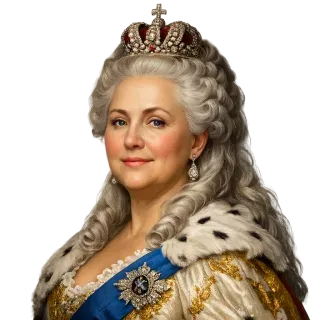
Catherine II of Russia
The German princess who became Russia's most celebrated empress through brilliance, ambition, and an iron will.
Explore Catherine the Great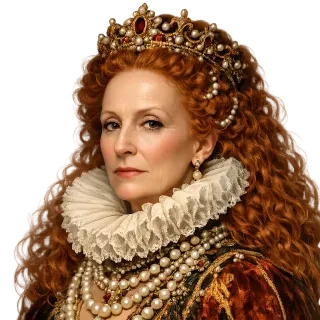
Elizabeth I
The Virgin Queen who united a fractured realm, defeated the Spanish Armada, and presided over England's golden age of exploration, commerce, and letters.
Explore Elizabeth