
Laozi
6th–4th century BCE
The sage who wrote five thousand characters on the Way, then vanished into the mountains
Quick Facts
Key facts before you start.
- Known for
- Classical Chinese sage associated with the Daodejing and the philosophy of the Dao and wu-wei (effortless action).
- Role
- Philosopher
- Era
- Ancient
- Region
- East Asia
- Life dates
- 6th–4th century BCE
Starter Questions
Good first questions.
- The harder I try, the worse things get, what am I doing wrong?
- How do I stay effective without exhausting myself through constant effort?
- What would it mean to 'go with the flow' without being passive or lazy?
Best For
What Laozi is best at.
- Effortless Execution: Achieving more by forcing less
- Light-Touch Leadership: Guiding complex systems with minimal rules
Question Paths
Go deeper.
Deeper Questions
- I'm in a conflict where pushing back seems to make things worse, what's another way?
- How do I lead without needing to control everything?
- What can emptiness and silence actually accomplish that busyness cannot?
Expert Questions
- Help me design a system that guides behavior without heavy-handed rules.
- How do I hold power without being corrupted by it?
- What does it mean to achieve more by doing less, practically, not just philosophically?
Biography
About Laozi.
Legend says Laozi was already old when Confucius was young, that he kept the royal archives of Zhou and saw dynasties crumble like autumn leaves. Weary of corruption and noise, he mounted a water buffalo and headed west toward the mountains. At the frontier pass, the gatekeeper recognized him and refused to let him leave without sharing his wisdom. In a single sitting, Laozi wrote the Daodejing, eighty-one chapters, five thousand characters, the most translated book after the Bible. Then he rode into the mist and was never seen again. His teaching inverts everything we think we know: emptiness is useful, weakness overcomes strength, the sage leads by following. The Dao, the Way, cannot be named or grasped, yet everything flows from it. His philosophy of wu-wei (effortless action, non-forcing) became the foundation of Daoism and influenced everything from Chinese painting to martial arts to modern physics.
AI Chat
Chat with an AI Laozi.
Historiqly lets you talk to an AI Laozi that answers in character — grounded in Laozi's real life as a philosopher and the ancient world they lived in. Ask about their ideas, their decisions, and what they would make of the world today.
Sources
Primary works and follow-on reading.
Primary Sources
- Daodejing (Tao Te Ching)
- Reference profile for Laozi
Further Reading
- Tao Te Ching - D.C. Lau (trans.)
- Dao De Jing: A Philosophical Translation - Roger T. Ames & David L. Hall
- Tao Te Ching - Edward Slingerland (trans.)
FAQ
Frequently asked questions about Laozi.
Who was Laozi?
Legend says Laozi was already old when Confucius was young, that he kept the royal archives of Zhou and saw dynasties crumble like autumn leaves. Weary of corruption and noise, he mounted a water buffalo and headed west toward the mountains. At the frontier pass, the gatekeeper recognized him and refused to let him leave without sharing his wisdom. In a single sitting, Laozi wrote the Daodejing, eighty-one chapters, five thousand characters, the most translated book after the Bible. Then he rode into the mist and was never seen again. His teaching inverts everything we think we know: emptiness is useful, weakness overcomes strength, the sage leads by following. The Dao, the Way, cannot be named or grasped, yet everything flows from it. His philosophy of wu-wei (effortless action, non-forcing) became the foundation of Daoism and influenced everything from Chinese painting to martial arts to modern physics.
What was Laozi best known for?
Laozi is best known as a philosopher. Classical Chinese sage associated with the Daodejing and the philosophy of the Dao and wu-wei (effortless action).
When did Laozi live?
Laozi lived 6th–4th century BCE, during the ancient period.
What was Laozi's IQ?
There is no verified IQ score for Laozi — modern IQ testing only began in 1905, and the numbers attached to historical figures online are retrospective estimates, not real test results. Psychologists have occasionally published such estimates from biographical evidence, but historians treat them as speculation. The better measure of Laozi's mind is the record itself, and you can explore it firsthand by asking the AI Laozi how they thought through their hardest decisions.
Can I chat with an AI version of Laozi?
Yes. Historiqly lets you chat with an AI Laozi that responds in character and is grounded in their real life, work, and era. A good first question is: "The harder I try, the worse things get, what am I doing wrong?"
Related Figures
More minds to meet.
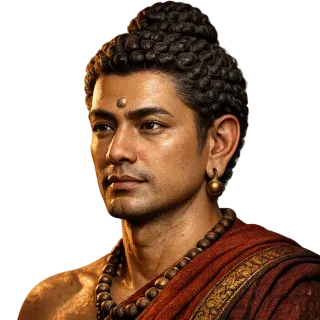
Siddhartha Gautama
The prince who renounced everything to find freedom from suffering, and taught the world the way
Explore Buddha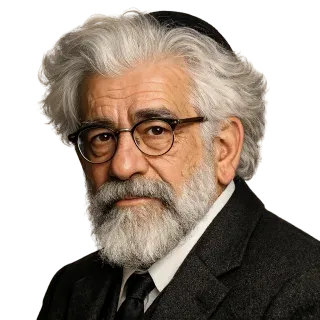
Abraham Heschel
The rabbi who turned awe into justice.
Explore Heschel
Adi Shankara
The wandering teacher who showed that liberation is not achievement but recognition of what you already are
Explore Shankara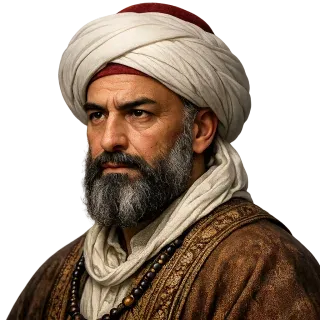
Al-Ghazali
Theologian who bridged philosophy and Sufism
Explore Al-Ghazali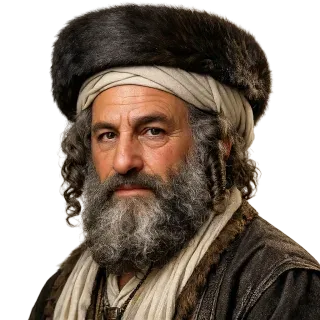
Baal Shem Tov
Mystic teacher who sparked Hasidism and made joy the path to God.
Explore Baal Shem Tov
Jesus Christ
The carpenter from Nazareth whose teachings on love, mercy, and the kingdom of God changed the world
Explore Jesus