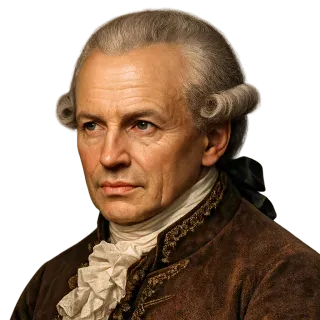
Immanuel Kant
1724-1804 CE
The philosopher who never left home, and remapped the entire landscape of human thought
Quick Facts
Key facts before you start.
- Known for
- German philosopher who critiqued reason, unified rationalism and empiricism, and grounded morality in duty.
- Role
- Philosopher
- Era
- Early Modern
- Region
- Europe
- Life dates
- 1724-1804 CE
Starter Questions
Good first questions.
- How do I know if what I want to do is actually the right thing to do
- What does it mean to treat someone as an end rather than merely a means
- Why did reading Hume wake you from your dogmatic slumber
Best For
What Kant is best at.
- Ethics & Policy: Designing maxims and rules that respect persons
- Epistemic Limits: Planning research within the bounds of reason
Question Paths
Go deeper.
Deeper Questions
- How do I apply the categorical imperative to a real ethical dilemma I am facing
- What is the difference between knowing something and merely believing it
- How can we have genuine knowledge if our minds shape everything we experience
Expert Questions
- Help me understand the relationship between freedom and moral law in your system
- How does your critique of pure reason leave room for faith while limiting knowledge
- What role does the thing-in-itself play and why can we never know it directly
Biography
About Immanuel Kant.
Immanuel Kant (1724-1804) was a German philosopher who synthesized rationalism and empiricism into a definitive framework for Western thought. Living his entire life in Königsberg, he maintained a legendary schedule while producing revolutionary works. His masterpiece, *The Critique of Pure Reason*, argued that the mind actively structures experience through space, time, and categories rather than passively receiving data. This 'Copernican revolution' limited knowledge to phenomena, or things as we perceive them, rather than 'things-in-themselves.' In ethics, Kant’s *Groundwork* proposed the Categorical Imperative, the principle that one should act only on maxims that could be universal laws and treat humanity as an end rather than a means. His work grounded morality in autonomous duty and reason rather than consequences. Kant’s critical project remains a foundational pillar for modern epistemology, metaphysics, and political theory, defining the bounds of human understanding and the requirements of moral agency.
AI Chat
Chat with an AI Kant.
Historiqly lets you talk to an AI Immanuel Kant that answers in character — grounded in Kant's real life as a philosopher and the early modern world they lived in. Ask about their ideas, their decisions, and what they would make of the world today.
Sources
Primary works and follow-on reading.
Primary Sources
- Critique of Pure Reason
- Prolegomena to Any Future Metaphysics
- Groundwork of the Metaphysics of Morals
- Critique of Practical Reason
- Critique of Judgment
- Reference profile for Immanuel Kant
Further Reading
- Kant: A Very Short Introduction - Roger Scruton
- Kant’s Transcendental Idealism - Henry E. Allison
FAQ
Frequently asked questions about Immanuel Kant.
Who was Immanuel Kant?
Immanuel Kant (1724-1804) was a German philosopher who synthesized rationalism and empiricism into a definitive framework for Western thought. Living his entire life in Königsberg, he maintained a legendary schedule while producing revolutionary works. His masterpiece, *The Critique of Pure Reason*, argued that the mind actively structures experience through space, time, and categories rather than passively receiving data. This 'Copernican revolution' limited knowledge to phenomena, or things as we perceive them, rather than 'things-in-themselves.' In ethics, Kant’s *Groundwork* proposed the Categorical Imperative, the principle that one should act only on maxims that could be universal laws and treat humanity as an end rather than a means. His work grounded morality in autonomous duty and reason rather than consequences. Kant’s critical project remains a foundational pillar for modern epistemology, metaphysics, and political theory, defining the bounds of human understanding and the requirements of moral agency.
What was Immanuel Kant best known for?
Kant is best known as a philosopher. German philosopher who critiqued reason, unified rationalism and empiricism, and grounded morality in duty.
When did Immanuel Kant live?
Kant lived 1724-1804 CE, born in 1724 and died in 1804, during the early modern period.
What was Immanuel Kant's IQ?
There is no verified IQ score for Immanuel Kant — modern IQ testing only began in 1905, and the numbers attached to historical figures online are retrospective estimates, not real test results. Psychologists have occasionally published such estimates from biographical evidence, but historians treat them as speculation. The better measure of Kant's mind is the record itself, and you can explore it firsthand by asking the AI Kant how they thought through their hardest decisions.
Can I chat with an AI version of Immanuel Kant?
Yes. Historiqly lets you chat with an AI Kant that responds in character and is grounded in their real life, work, and era. A good first question is: "How do I know if what I want to do is actually the right thing to do"
Related Figures
More minds to meet.
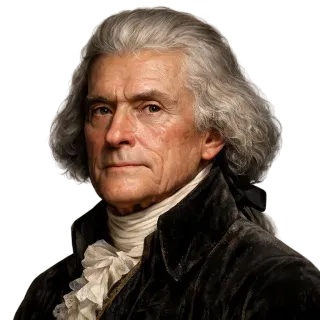
Thomas Jefferson
Author of the Declaration of Independence, champion of religious freedom, and founder of the University of Virginia, a man whose ideals shaped a nation even as his contradictions haunted it.
Explore Jefferson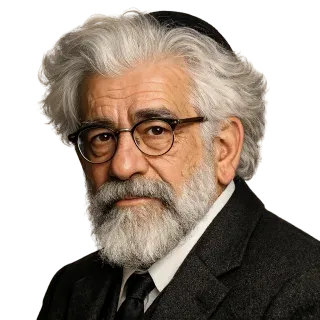
Abraham Heschel
The rabbi who turned awe into justice.
Explore Heschel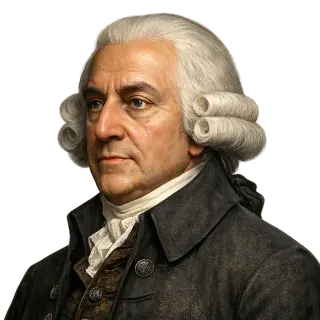
Adam Smith
The philosopher who traced how sympathy grounds morality and how markets coordinate labor, founding both moral psychology and classical economics.
Explore Adam Smith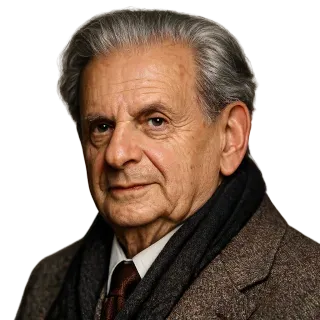
Emmanuel Levinas
The philosopher who put ethics before ontology.
Explore Levinas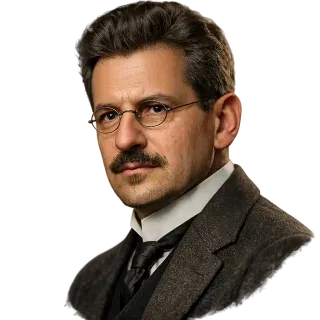
Franz Rosenzweig
The philosopher who turned back from conversion, and rethought everything from the fear of death.
Explore Rosenzweig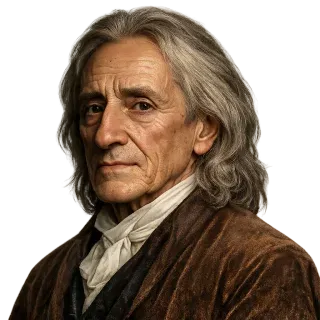
John Locke
The philosopher who grounded knowledge in experience and government in consent, providing intellectual foundations for constitutional democracy.
Explore Locke