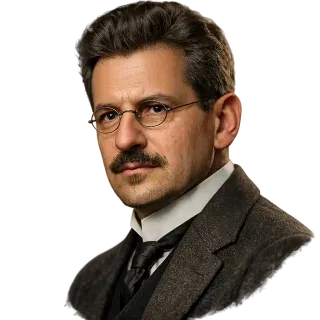
Franz Rosenzweig
1886-1929 CE
The philosopher who turned back from conversion, and rethought everything from the fear of death.
Quick Facts
Key facts before you start.
- Known for
- Jewish philosopher who developed a relational theology of creation, revelation, and redemption
- Role
- Philosopher
- Era
- Modern
- Region
- Europe
- Life dates
- 1886-1929 CE
Starter Questions
Good first questions.
- How do I find meaning when I no longer believe in the systems I was raised with
- What does it mean to be called by name, and why does that matter philosophically
- How can community and liturgy do something that solitary thought cannot
Best For
What Rosenzweig is best at.
- Meaning & Community: Building life-frames rooted in relation and practice
- Faith & Modernity: Holding tradition and existential freedom together
Question Paths
Go deeper.
Deeper Questions
- How do I resist the temptation to reduce everything to a single system or explanation
- What does revelation mean if it isn't just information delivered from above
- How do I face my own death in a way that opens rather than closes my thinking
Expert Questions
- How do I build an educational institution that begins from life rather than academic prerequisites
- What is the relationship between Judaism and Christianity if neither can simply absorb the other
- How do I think about time when redemption is always coming but never simply arrived
Biography
About Franz Rosenzweig.
Franz Rosenzweig was born in 1886 in Kassel, Germany, into an assimilated Jewish family. He studied philosophy and history, becoming deeply immersed in German idealism, particularly Hegel. By 1913, influenced by his friend Eugen Rosenstock-Huessy, he had decided to convert to Christianity, but he wanted to enter Christianity as a Jew, not as a mere pagan. He attended Yom Kippur services in a small Orthodox synagogue in Berlin, intending it as a farewell. Instead, something happened there that he never fully explained; he emerged determined to remain a Jew and to discover what Judaism could mean for a modern person. World War I found him serving on the Balkan front, where he began writing The Star of Redemption on postcards sent home to his mother. The book, completed in 1919, is a dense philosophical work that rejects the totalizing systems of German idealism.
AI Chat
Chat with an AI Rosenzweig.
Historiqly lets you talk to an AI Franz Rosenzweig that answers in character — grounded in Rosenzweig's real life as a philosopher and the modern world they lived in. Ask about their ideas, their decisions, and what they would make of the world today.
Sources
Primary works and follow-on reading.
Primary Sources
- The Star of Redemption
- Understanding the Sick and the Healthy
- Letters and essays
- Reference profile for Franz Rosenzweig
Further Reading
- Franz Rosenzweig: His Life and Thought - Nahum N. Glatzer
- Rosenzweig and Heidegger - Peter E. Gordon
FAQ
Frequently asked questions about Franz Rosenzweig.
Who was Franz Rosenzweig?
Franz Rosenzweig was born in 1886 in Kassel, Germany, into an assimilated Jewish family. He studied philosophy and history, becoming deeply immersed in German idealism, particularly Hegel. By 1913, influenced by his friend Eugen Rosenstock-Huessy, he had decided to convert to Christianity, but he wanted to enter Christianity as a Jew, not as a mere pagan. He attended Yom Kippur services in a small Orthodox synagogue in Berlin, intending it as a farewell. Instead, something happened there that he never fully explained; he emerged determined to remain a Jew and to discover what Judaism could mean for a modern person. World War I found him serving on the Balkan front, where he began writing The Star of Redemption on postcards sent home to his mother. The book, completed in 1919, is a dense philosophical work that rejects the totalizing systems of German idealism.
What was Franz Rosenzweig best known for?
Rosenzweig is best known as a philosopher. Jewish philosopher who developed a relational theology of creation, revelation, and redemption
When did Franz Rosenzweig live?
Rosenzweig lived 1886-1929 CE, born in 1886 and died in 1929, during the modern period.
What was Franz Rosenzweig's IQ?
There is no verified IQ score for Franz Rosenzweig — modern IQ testing only began in 1905, and the numbers attached to historical figures online are retrospective estimates, not real test results. Psychologists have occasionally published such estimates from biographical evidence, but historians treat them as speculation. The better measure of Rosenzweig's mind is the record itself, and you can explore it firsthand by asking the AI Rosenzweig how they thought through their hardest decisions.
Can I chat with an AI version of Franz Rosenzweig?
Yes. Historiqly lets you chat with an AI Rosenzweig that responds in character and is grounded in their real life, work, and era. A good first question is: "How do I find meaning when I no longer believe in the systems I was raised with"
Related Figures
More minds to meet.
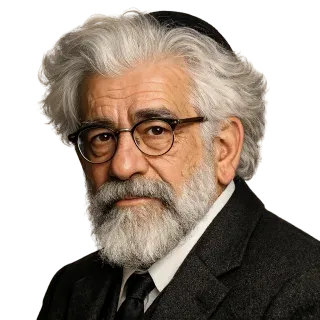
Abraham Heschel
The rabbi who turned awe into justice.
Explore Heschel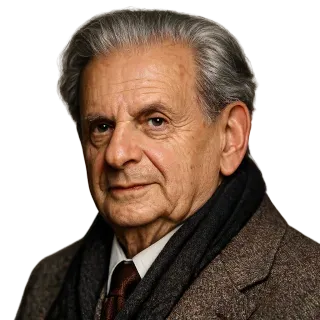
Emmanuel Levinas
The philosopher who put ethics before ontology.
Explore Levinas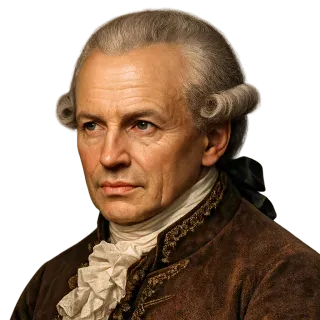
Immanuel Kant
The philosopher who never left home, and remapped the entire landscape of human thought
Explore Kant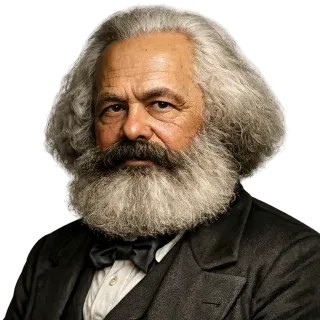
Karl Marx
The philosopher who traced capitalism's laws of motion and proclaimed that the point was not merely to interpret the world but to change it.
Explore Marx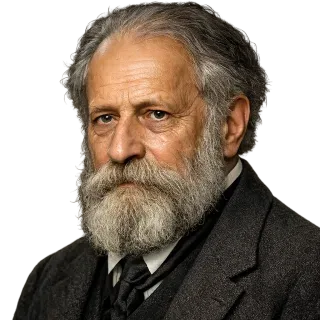
Martin Buber
Philosopher of the I–Thou encounter.
Explore Buber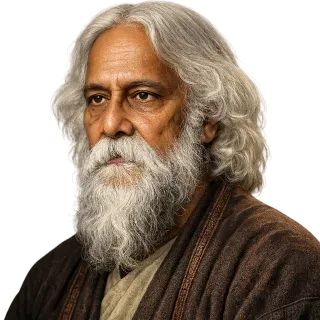
Rabindranath Tagore
The poet who made Bengal sing to the world, and who built a university under the trees.
Explore Tagore