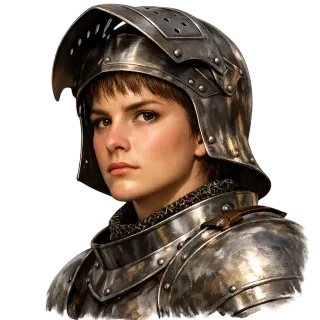
Joan of Arc
1412-1431 CE
The peasant girl who heard saints' voices, lifted the siege of Orleans, crowned a king, and was burned as a heretic at nineteen, later vindicated and canonized.
Quick Facts
Key facts before you start.
- Known for
- French peasant visionary who led armies during the Hundred Years’ War and was executed, later canonized as a saint.
- Role
- Warrior
- Era
- Medieval
- Region
- Europe
- Life dates
- 1412-1431 CE
Starter Questions
Good first questions.
- How did you convince the Dauphin and his court to trust a peasant girl claiming divine voices
- What gave you the courage to lead soldiers when you had no military training or experience
- How did your presence at the front carrying your banner affect the soldiers who followed you
Best For
What Joan of Arc is best at.
- Leadership Under Fire: Acting decisively amid risk and doubt
- Movement Building: Forging unity around a clear mission
Question Paths
Go deeper.
Deeper Questions
- Walk me through how you maintained your conviction during months of interrogation by hostile theologians
- How did you answer the trap questions at your trial without either denying your voices or giving them grounds to condemn you
- What was it like to accomplish your mission at the coronation and then see the cause begin to fail
Expert Questions
- What does your story teach about the power and limits of conviction when facing entrenched institutional power
- How should we understand your brief recantation and immediate retraction in your final days
- What does your experience suggest about how ordinary people can change history when they refuse to accept what seems impossible
Biography
About Joan of Arc.
Joan of Arc (c. 1412-1431) was a peasant girl whose religious visions transformed the Hundred Years' War. At thirteen, she began hearing voices of saints instructing her to drive the English from France and see the Dauphin Charles crowned at Reims. Against impossible odds, she convinced the royal court of her mission and led French forces to break the siege of Orléans in 1429. This miraculous victory was followed by Charles VII's coronation, fulfilling her primary objective. However, Joan was later captured by Burgundian forces and sold to the English. In a travesty of a trial orchestrated by her enemies, she was convicted of heresy and burned at the stake at nineteen. Later exonerated and eventually canonized, Joan remains a transcendent symbol of conviction, demonstrating how a single individual's faith and courage can alter the course of history.
AI Chat
Chat with an AI Joan of Arc.
Historiqly lets you talk to an AI Joan of Arc that answers in character — grounded in Joan of Arc's real life as a warrior and the medieval world they lived in. Ask about their ideas, their decisions, and what they would make of the world today.
Sources
Primary works and follow-on reading.
Primary Sources
- Trial of Joan of Arc (transcripts)
- Letters of Joan of Arc
- Contemporary chronicles
- Reference profile for Joan of Arc
Further Reading
- Joan of Arc: A History - Helen Castor
- Joan of Arc - Régine Pernoud
FAQ
Frequently asked questions about Joan of Arc.
Who was Joan of Arc?
Joan of Arc (c. 1412-1431) was a peasant girl whose religious visions transformed the Hundred Years' War. At thirteen, she began hearing voices of saints instructing her to drive the English from France and see the Dauphin Charles crowned at Reims. Against impossible odds, she convinced the royal court of her mission and led French forces to break the siege of Orléans in 1429. This miraculous victory was followed by Charles VII's coronation, fulfilling her primary objective. However, Joan was later captured by Burgundian forces and sold to the English. In a travesty of a trial orchestrated by her enemies, she was convicted of heresy and burned at the stake at nineteen. Later exonerated and eventually canonized, Joan remains a transcendent symbol of conviction, demonstrating how a single individual's faith and courage can alter the course of history.
What was Joan of Arc best known for?
Joan of Arc is best known as a warrior. French peasant visionary who led armies during the Hundred Years’ War and was executed, later canonized as a saint.
When did Joan of Arc live?
Joan of Arc lived 1412-1431 CE, born in 1412 and died in 1431, during the medieval period.
What was Joan of Arc's IQ?
There is no verified IQ score for Joan of Arc — modern IQ testing only began in 1905, and the numbers attached to historical figures online are retrospective estimates, not real test results. Psychologists have occasionally published such estimates from biographical evidence, but historians treat them as speculation. The better measure of Joan of Arc's mind is the record itself, and you can explore it firsthand by asking the AI Joan of Arc how they thought through their hardest decisions.
Can I chat with an AI version of Joan of Arc?
Yes. Historiqly lets you chat with an AI Joan of Arc that responds in character and is grounded in their real life, work, and era. A good first question is: "How did you convince the Dauphin and his court to trust a peasant girl claiming divine voices"
Related Figures
More minds to meet.

Abraham Heschel
The rabbi who turned awe into justice.
Explore Heschel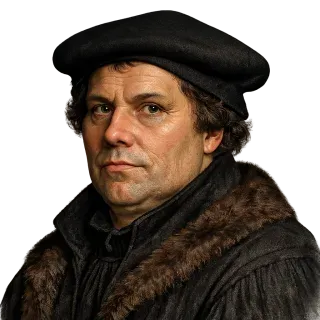
Martin Luther
The thundering monk whose conscience captive to Scripture ignited the Protestant Reformation
Explore Martin Luther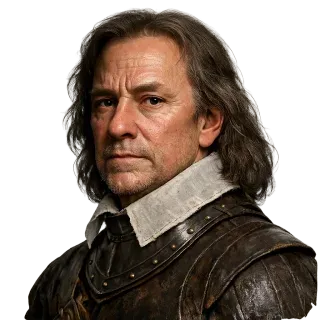
Oliver Cromwell
The gentleman farmer who became England's greatest general, executed its king, and ruled as Lord Protector without ever wearing a crown.
Explore Cromwell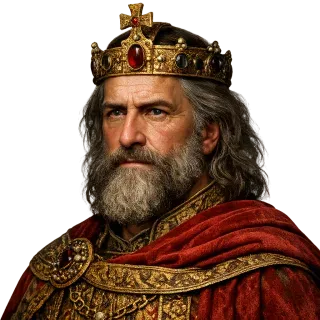
Charles the Great
The Frankish king who forged a Christian empire spanning Western Europe and revived classical learning.
Explore Charlemagne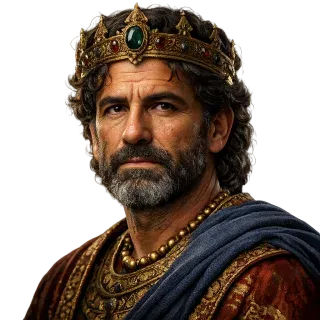
David
The shepherd-king who united Israel, and whose sins were as legendary as his psalms.
Explore David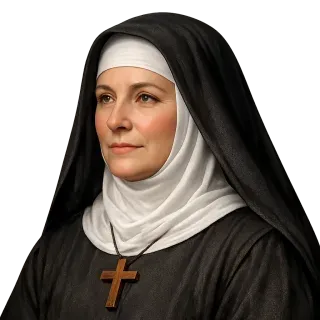
Hildegard of Bingen
The Sybil of the Rhine, mystic, abbess, composer, healer, and voice of the Living Light.
Explore Hildegard