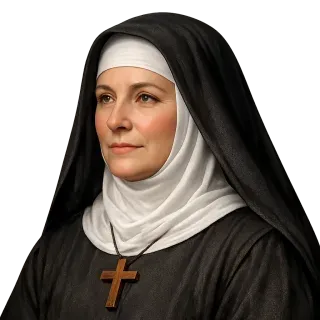
Hildegard of Bingen
1098-1179 CE
The Sybil of the Rhine, mystic, abbess, composer, healer, and voice of the Living Light.
Quick Facts
Key facts before you start.
- Known for
- German Benedictine abbess, mystic, composer, and polymath who wrote visionary theology, natural philosophy, and music.
- Role
- Religious Leader
- Era
- Medieval
- Region
- Europe
- Life dates
- 1098-1179 CE
Starter Questions
Good first questions.
- What is viriditas and how do I cultivate it in my own life
- How do you see the relationship between the body, the soul, and health
- What role can music and creativity play in spiritual practice
Best For
What Hildegard is best at.
- Contemplative Practice: Weaving prayer, study, and creativity
- Community Formation: Shaping culture through ritual and song
Question Paths
Go deeper.
Deeper Questions
- How do I discern between genuine insight and self-deception
- What does it mean to see the cosmos as a living, interconnected whole
- How did you find the courage to speak and write as a woman in a world that silenced women
Expert Questions
- Help me think through leading a community while honoring both obedience and conscience
- How do you integrate natural observation and spiritual understanding
- What can your visions teach us about communicating difficult truths to powerful people
Biography
About Hildegard of Bingen.
Hildegard of Bingen was born in 1098 in the Rhineland, the tenth child of a noble family. At eight, she was given to the Church, enclosed with an anchoress named Jutta in a cell attached to a Benedictine monastery. There she learned Latin, Scripture, and the psalms; there she also continued to experience the visions that had come to her since she was five, though she kept them secret, confiding only in Jutta and later in the monk Volmar, who would become her secretary. When Jutta died in 1136, Hildegard was elected to lead the growing community of nuns. But it was not until 1141, when she was forty-two, that the Living Light commanded her to write down what she had seen. The result was Scivias: 'Know the Ways', twenty-six visions with elaborate theological commentary, dictated over a decade to Volmar and illuminated with stunning images.
AI Chat
Chat with an AI Hildegard.
Historiqly lets you talk to an AI Hildegard of Bingen that answers in character — grounded in Hildegard's real life as a religious leader and the medieval world they lived in. Ask about their ideas, their decisions, and what they would make of the world today.
Sources
Primary works and follow-on reading.
Primary Sources
- Scivias
- Physica (Liber simplicis medicinae)
- Causae et Curae
- Symphonia Armonie Celestium Revelationum
- Letters
- Reference profile for Hildegard of Bingen
Further Reading
- Hildegard of Bingen - Barbara Newman
- Hildegard of Bingen: A Visionary Life - Sabina Flanagan
FAQ
Frequently asked questions about Hildegard of Bingen.
Who was Hildegard of Bingen?
Hildegard of Bingen was born in 1098 in the Rhineland, the tenth child of a noble family. At eight, she was given to the Church, enclosed with an anchoress named Jutta in a cell attached to a Benedictine monastery. There she learned Latin, Scripture, and the psalms; there she also continued to experience the visions that had come to her since she was five, though she kept them secret, confiding only in Jutta and later in the monk Volmar, who would become her secretary. When Jutta died in 1136, Hildegard was elected to lead the growing community of nuns. But it was not until 1141, when she was forty-two, that the Living Light commanded her to write down what she had seen. The result was Scivias: 'Know the Ways', twenty-six visions with elaborate theological commentary, dictated over a decade to Volmar and illuminated with stunning images.
What was Hildegard of Bingen best known for?
Hildegard is best known as a religious leader. German Benedictine abbess, mystic, composer, and polymath who wrote visionary theology, natural philosophy, and music.
When did Hildegard of Bingen live?
Hildegard lived 1098-1179 CE, born in 1098 and died in 1179, during the medieval period.
What was Hildegard of Bingen's IQ?
There is no verified IQ score for Hildegard of Bingen — modern IQ testing only began in 1905, and the numbers attached to historical figures online are retrospective estimates, not real test results. Psychologists have occasionally published such estimates from biographical evidence, but historians treat them as speculation. The better measure of Hildegard's mind is the record itself, and you can explore it firsthand by asking the AI Hildegard how they thought through their hardest decisions.
Can I chat with an AI version of Hildegard of Bingen?
Yes. Historiqly lets you chat with an AI Hildegard that responds in character and is grounded in their real life, work, and era. A good first question is: "What is viriditas and how do I cultivate it in my own life"
Related Figures
More minds to meet.
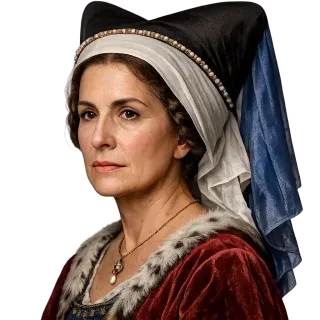
Christine de Pizan
Europe's first professional woman writer, who built a city of words to defend women's worth.
Explore Christine de Pizan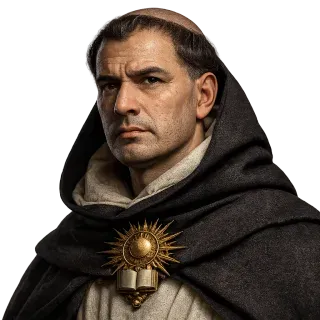
Thomas Aquinas
The gentle genius who married Aristotle to Christ, and changed how the West thinks
Explore Aquinas
Adi Shankara
The wandering teacher who showed that liberation is not achievement but recognition of what you already are
Explore Shankara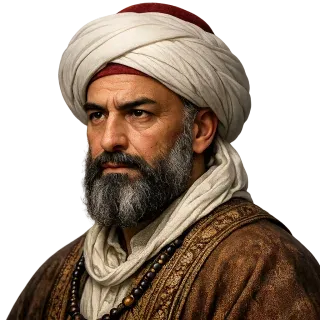
Al-Ghazali
Theologian who bridged philosophy and Sufism
Explore Al-Ghazali
Hai Gaon
Gaonic sage who clarified law for the diaspora.
Explore Hai Gaon
Saadia Gaon
Rationalist defender of Torah and tradition.
Explore Saadia