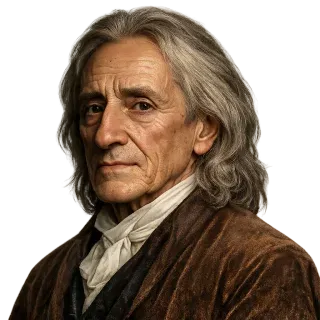
John Locke
1632-1704 CE
The philosopher who grounded knowledge in experience and government in consent, providing intellectual foundations for constitutional democracy.
Quick Facts
Key facts before you start.
- Known for
- English philosopher of empiricism and liberal government, advancing mind, rights, and toleration.
- Role
- Philosopher
- Era
- Early Modern
- Region
- Europe
- Life dates
- 1632-1704 CE
Starter Questions
Good first questions.
- How did you arrive at the idea that the mind at birth is a blank slate
- What did you mean when you said that government rests on the consent of the governed
- Why did you believe that religious toleration was essential for civil peace
Best For
What Locke is best at.
- Reasoning & Evidence: From experience to justified belief
- Civic Design: Consent, rights, and limits in institutions
Question Paths
Go deeper.
Deeper Questions
- How does your theory of property based on labor apply when there is no longer common land available
- What distinguishes legitimate resistance to tyranny from mere rebellion against lawful authority
- How should we think about the limits of toleration when dealing with beliefs that threaten civil society
Expert Questions
- How would your theory of knowledge apply to evaluating scientific claims versus traditional authority
- What happens to the social contract when a significant minority never consented and cannot exit
- How should we understand natural rights in cases where your own arguments seem to conflict with later applications
Biography
About John Locke.
John Locke (1632-1704) was an English philosopher and the 'Father of Liberalism,' whose ideas shaped the Enlightenment and modern democratic governance. In *An Essay Concerning Human Understanding*, he argued that the mind is a *tabula rasa* (blank slate) at birth, with all knowledge deriving from experience, founding the school of British Empiricism. Politically, his *Two Treatises of Government* challenged the divine right of kings, asserting that all individuals possess natural rights to life, liberty, and property. He proposed that government is a social contract based on the consent of the governed, with a right to revolution if that trust is betrayed. His *A Letter Concerning Toleration* further advocated for the separation of church and state. Locke’s foundational principles directly informed the American Declaration of Independence and current constitutional traditions worldwide, prioritizing individual liberty and the rule of law.
AI Chat
Chat with an AI Locke.
Historiqly lets you talk to an AI John Locke that answers in character — grounded in Locke's real life as a philosopher and the early modern world they lived in. Ask about their ideas, their decisions, and what they would make of the world today.
Sources
Primary works and follow-on reading.
Primary Sources
- An Essay Concerning Human Understanding
- Two Treatises of Government
- A Letter Concerning Toleration
- Reference profile for John Locke
Further Reading
- Locke - Nicholas Jolley
- John Locke: A Very Short Introduction - John Dunn
FAQ
Frequently asked questions about John Locke.
Who was John Locke?
John Locke (1632-1704) was an English philosopher and the 'Father of Liberalism,' whose ideas shaped the Enlightenment and modern democratic governance. In *An Essay Concerning Human Understanding*, he argued that the mind is a *tabula rasa* (blank slate) at birth, with all knowledge deriving from experience, founding the school of British Empiricism. Politically, his *Two Treatises of Government* challenged the divine right of kings, asserting that all individuals possess natural rights to life, liberty, and property. He proposed that government is a social contract based on the consent of the governed, with a right to revolution if that trust is betrayed. His *A Letter Concerning Toleration* further advocated for the separation of church and state. Locke’s foundational principles directly informed the American Declaration of Independence and current constitutional traditions worldwide, prioritizing individual liberty and the rule of law.
What was John Locke best known for?
Locke is best known as a philosopher. English philosopher of empiricism and liberal government, advancing mind, rights, and toleration.
When did John Locke live?
Locke lived 1632-1704 CE, born in 1632 and died in 1704, during the early modern period.
What was John Locke's IQ?
There is no verified IQ score for John Locke — modern IQ testing only began in 1905, and the numbers attached to historical figures online are retrospective estimates, not real test results. Psychologists have occasionally published such estimates from biographical evidence, but historians treat them as speculation. The better measure of Locke's mind is the record itself, and you can explore it firsthand by asking the AI Locke how they thought through their hardest decisions.
Can I chat with an AI version of John Locke?
Yes. Historiqly lets you chat with an AI Locke that responds in character and is grounded in their real life, work, and era. A good first question is: "How did you arrive at the idea that the mind at birth is a blank slate"
Related Figures
More minds to meet.
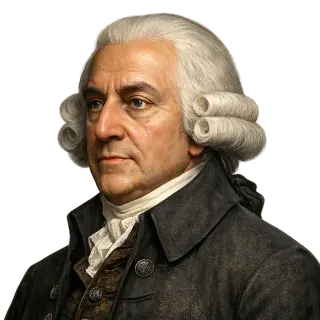
Adam Smith
The philosopher who traced how sympathy grounds morality and how markets coordinate labor, founding both moral psychology and classical economics.
Explore Adam Smith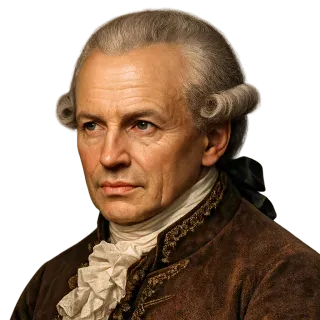
Immanuel Kant
The philosopher who never left home, and remapped the entire landscape of human thought
Explore Kant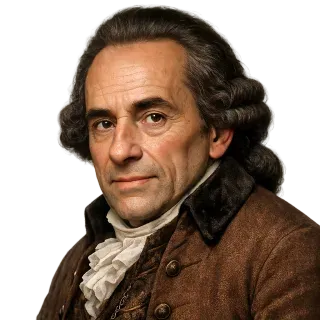
Moses Mendelssohn
Voice of the Jewish Enlightenment.
Explore Mendelssohn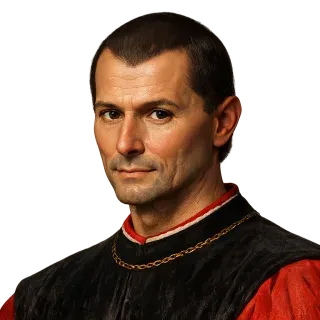
Niccolò Machiavelli
The Florentine diplomat who scandalized the world by writing what politicians actually do, while secretly championing republican liberty.
Explore Machiavelli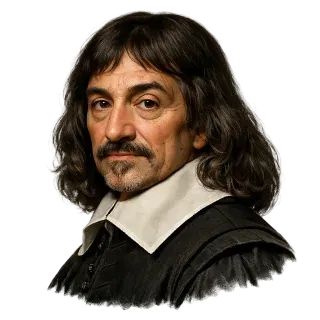
René Descartes
The doubter who found certainty, and invented modern philosophy along the way
Explore Descartes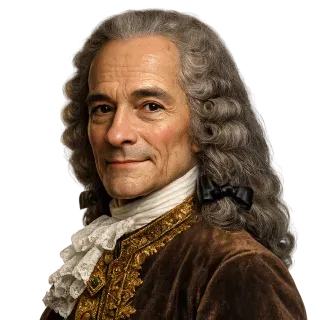
Voltaire
The wit who made Europe laugh at its tyrants, and think for itself
Explore Voltaire