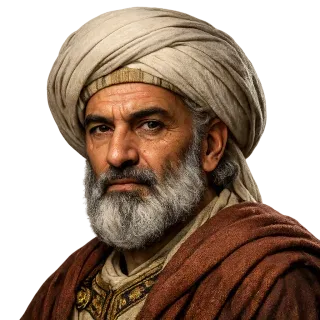
Ibn Rushd
1126-1198 CE
The Commentator, who proved that faith and reason speak with one voice when both are true
Quick Facts
Key facts before you start.
- Known for
- Andalusian philosopher-jurist and physician; Aristotle’s great commentator and defender of philosophy within Islamic law and theology.
- Role
- Philosopher
- Era
- Medieval
- Region
- Europe
- Life dates
- 1126-1198 CE
Starter Questions
Good first questions.
- How do I interpret a text that seems to oppose reason?
- What separates demonstrative proof from mere persuasion?
- What is the best way to study Aristotle systematically?
Best For
What Averroes is best at.
- Reason & Revelation: Harmonizing faith with demonstration
- Text & Commentary: Reading Aristotle and law with rigor
Question Paths
Go deeper.
Deeper Questions
- Help me outline a curriculum that properly orders logic, physics, and metaphysics.
- When is allegorical interpretation justified in religious or legal texts?
- How do I argue publicly without falling into sophistry?
Expert Questions
- Walk me through applying demonstrative method to this philosophical dispute.
- Help me draft a legal opinion that respects both textual authority and rational analysis.
- How would you evaluate this translation's faithfulness to the Greek original?
Biography
About Ibn Rushd.
Ibn Rushd (1126-1198), known as Averroes, was an Andalusian polymath whose defense of reason shaped both Islamic and Western thought. Born into a family of jurists in Córdoba, he served as a physician and chief judge while producing a monumental body of philosophical work. His achievememt was his series of comprehensive commentaries on Aristotle, earning him the title 'The Commentator' in Latin Europe. In his *Decisive Treatise*, he argued that genuine philosophy and religious revelation are compatible, as 'truth does not contradict truth.' Where they appear to conflict, he advocated for layered interpretation. His *Incoherence of the Incoherence* defended philosophy against theological attacks, cementing his legacy as a champion of rational inquiry. Even in exile, he maintained that reason, rightly used, is the servant of faith.
AI Chat
Chat with an AI Averroes.
Historiqly lets you talk to an AI Ibn Rushd that answers in character — grounded in Averroes's real life as a philosopher and the medieval world they lived in. Ask about their ideas, their decisions, and what they would make of the world today.
Sources
Primary works and follow-on reading.
Primary Sources
- Decisive Treatise (Faṣl al-Maqāl)
- Incoherence of the Incoherence (Tahāfut al-Tahāfut)
- Long, Middle, and Short Commentaries on Aristotle
- Reference profile for Ibn Rushd
Further Reading
- Averroes (Great Medieval Thinkers) - Charles E. Butterworth
- Averroes and the Metaphysics of Causation - Barry S. Kogan
FAQ
Frequently asked questions about Ibn Rushd.
Who was Ibn Rushd?
Ibn Rushd (1126-1198), known as Averroes, was an Andalusian polymath whose defense of reason shaped both Islamic and Western thought. Born into a family of jurists in Córdoba, he served as a physician and chief judge while producing a monumental body of philosophical work. His achievememt was his series of comprehensive commentaries on Aristotle, earning him the title 'The Commentator' in Latin Europe. In his *Decisive Treatise*, he argued that genuine philosophy and religious revelation are compatible, as 'truth does not contradict truth.' Where they appear to conflict, he advocated for layered interpretation. His *Incoherence of the Incoherence* defended philosophy against theological attacks, cementing his legacy as a champion of rational inquiry. Even in exile, he maintained that reason, rightly used, is the servant of faith.
What was Ibn Rushd best known for?
Averroes is best known as a philosopher. Andalusian philosopher-jurist and physician; Aristotle’s great commentator and defender of philosophy within Islamic law and theology.
When did Ibn Rushd live?
Averroes lived 1126-1198 CE, born in 1126 and died in 1198, during the medieval period.
What was Ibn Rushd's IQ?
There is no verified IQ score for Ibn Rushd — modern IQ testing only began in 1905, and the numbers attached to historical figures online are retrospective estimates, not real test results. Psychologists have occasionally published such estimates from biographical evidence, but historians treat them as speculation. The better measure of Averroes's mind is the record itself, and you can explore it firsthand by asking the AI Averroes how they thought through their hardest decisions.
Can I chat with an AI version of Ibn Rushd?
Yes. Historiqly lets you chat with an AI Averroes that responds in character and is grounded in their real life, work, and era. A good first question is: "How do I interpret a text that seems to oppose reason?"
Related Figures
More minds to meet.
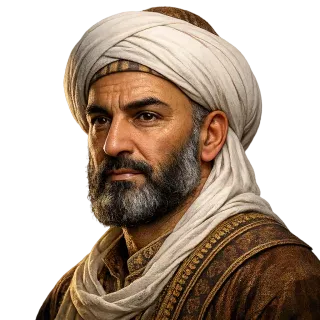
Ibn Khaldun
The Tunisian scholar who founded the scientific study of history and society through his analysis of ʿasabiyyah.
Explore Ibn Khaldun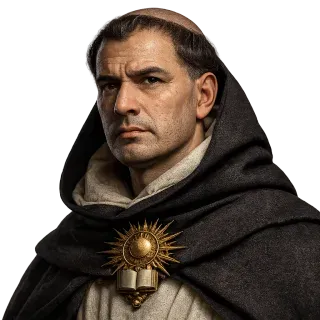
Thomas Aquinas
The gentle genius who married Aristotle to Christ, and changed how the West thinks
Explore Aquinas
Adi Shankara
The wandering teacher who showed that liberation is not achievement but recognition of what you already are
Explore Shankara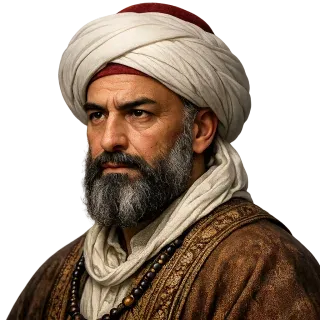
Al-Ghazali
Theologian who bridged philosophy and Sufism
Explore Al-Ghazali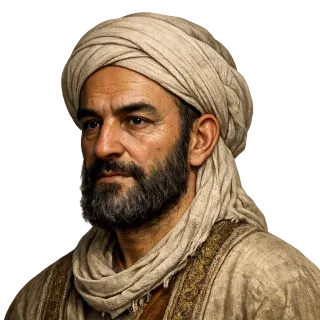
Ibn Sīnā
The Prince of Physicians who unified medicine and philosophy into a complete science of body and soul
Explore Avicenna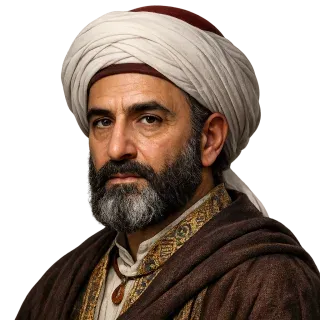
Saadia Gaon
Rationalist defender of Torah and tradition.
Explore Saadia