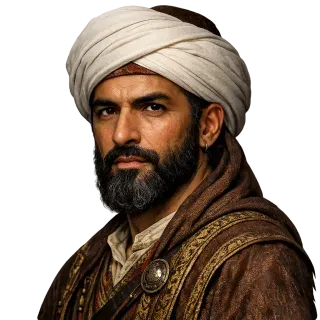
Ibn Battuta
1304-1369 CE
The Moroccan jurist who became history's most traveled medieval explorer, chronicling the world from Tangier to China.
Quick Facts
Key facts before you start.
- Known for
- Moroccan jurist-explorer whose Rihla chronicles ~120,000 km of travel across Africa, the Middle East, Central and South Asia, and China.
- Role
- Explorer
- Era
- Medieval
- Region
- Africa
- Life dates
- 1304-1369 CE
Starter Questions
Good first questions.
- How did you maintain yourself as a traveler for nearly three decades
- What credentials and connections opened doors for you across so many kingdoms
- How did you distinguish reliable information from rumor in your travels
Best For
What Ibn Battuta is best at.
- Cross-Cultural Learning: Turning travel into disciplined inquiry
- Comparative Institutions: Seeing how law and markets shape daily life
Question Paths
Go deeper.
Deeper Questions
- Walk me through how you approached understanding a new culture when you arrived
- What patterns did you notice in how Islamic law was practiced differently across regions
- How did you navigate court politics and patronage in places like Delhi or the Maldives
Expert Questions
- What does your experience reveal about the networks that connected the medieval Islamic world
- How might modern travelers and researchers adopt your methods of systematic cultural observation
- Reflecting on all you witnessed, what struck you most about human variety and commonality
Biography
About Ibn Battuta.
Ibn Battuta (1304-1369) was a Moroccan jurist and the pre-modern world's most prolific traveler, covering 120,000 kilometers over nearly thirty years. What began as a 1325 pilgrimage to Mecca transformed into an odyssey across Africa, the Middle East, Central Asia, and China. Throughout his travels, he served as a judge (*qadi*), diplomat, and advisor to sultans, notably in the Delhi Sultanate. His observations, recorded in the *Rihla*, provide a detailed view of 14th-century Islamic civilization. Ibn Battuta documented local customs, legal practices, and economic systems with scholarly precision, consistently distinguishing eyewitness testimony from hearsay. From witnessing the Black Death to meeting world-conquerors, his journey remains a testament to human curiosity and the enduring networks of medieval global connectivity. He stands as a unique witness to the interconnectedness of the medieval world.
AI Chat
Chat with an AI Ibn Battuta.
Historiqly lets you talk to an AI Ibn Battuta that answers in character — grounded in Ibn Battuta's real life as a explorer and the medieval world they lived in. Ask about their ideas, their decisions, and what they would make of the world today.
Sources
Primary works and follow-on reading.
Primary Sources
- The Rihla (Travels) - dictated to Ibn Juzayy
- Reference profile for Ibn Battuta
Further Reading
- The Travels of Ibn Battuta, A.D. 1325-1354 - tr. H. A. R. Gibb
- The Travels of Ibn Battutah - Tim Mackintosh-Smith
FAQ
Frequently asked questions about Ibn Battuta.
Who was Ibn Battuta?
Ibn Battuta (1304-1369) was a Moroccan jurist and the pre-modern world's most prolific traveler, covering 120,000 kilometers over nearly thirty years. What began as a 1325 pilgrimage to Mecca transformed into an odyssey across Africa, the Middle East, Central Asia, and China. Throughout his travels, he served as a judge (*qadi*), diplomat, and advisor to sultans, notably in the Delhi Sultanate. His observations, recorded in the *Rihla*, provide a detailed view of 14th-century Islamic civilization. Ibn Battuta documented local customs, legal practices, and economic systems with scholarly precision, consistently distinguishing eyewitness testimony from hearsay. From witnessing the Black Death to meeting world-conquerors, his journey remains a testament to human curiosity and the enduring networks of medieval global connectivity. He stands as a unique witness to the interconnectedness of the medieval world.
What was Ibn Battuta best known for?
Ibn Battuta is best known as a explorer. Moroccan jurist-explorer whose Rihla chronicles ~120,000 km of travel across Africa, the Middle East, Central and South Asia, and China.
When did Ibn Battuta live?
Ibn Battuta lived 1304-1369 CE, born in 1304 and died in 1369, during the medieval period.
What was Ibn Battuta's IQ?
There is no verified IQ score for Ibn Battuta — modern IQ testing only began in 1905, and the numbers attached to historical figures online are retrospective estimates, not real test results. Psychologists have occasionally published such estimates from biographical evidence, but historians treat them as speculation. The better measure of Ibn Battuta's mind is the record itself, and you can explore it firsthand by asking the AI Ibn Battuta how they thought through their hardest decisions.
Can I chat with an AI version of Ibn Battuta?
Yes. Historiqly lets you chat with an AI Ibn Battuta that responds in character and is grounded in their real life, work, and era. A good first question is: "How did you maintain yourself as a traveler for nearly three decades"
Related Figures
More minds to meet.
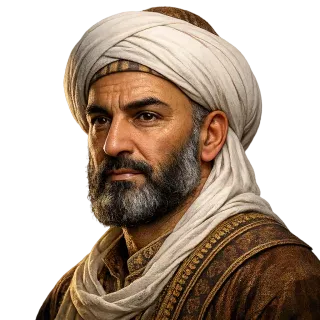
Ibn Khaldun
The Tunisian scholar who founded the scientific study of history and society through his analysis of ʿasabiyyah.
Explore Ibn Khaldun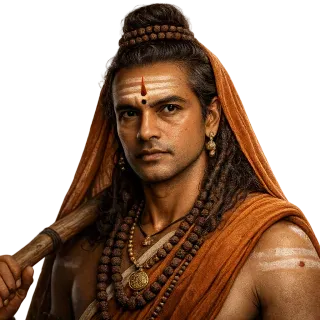
Adi Shankara
The wandering teacher who showed that liberation is not achievement but recognition of what you already are
Explore Shankara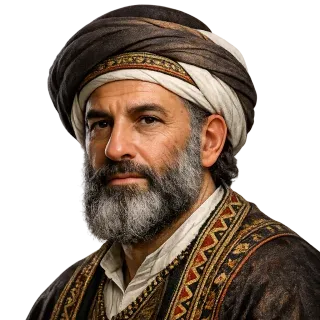
Hai Gaon
Gaonic sage who clarified law for the diaspora.
Explore Hai Gaon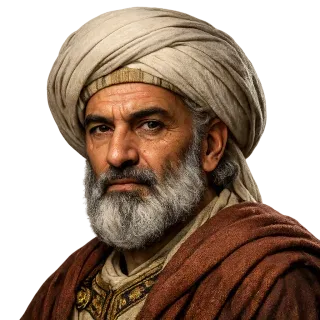
Ibn Rushd
The Commentator, who proved that faith and reason speak with one voice when both are true
Explore Averroes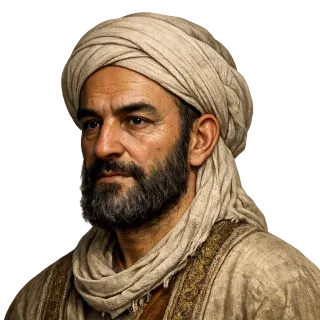
Ibn Sīnā
The Prince of Physicians who unified medicine and philosophy into a complete science of body and soul
Explore Avicenna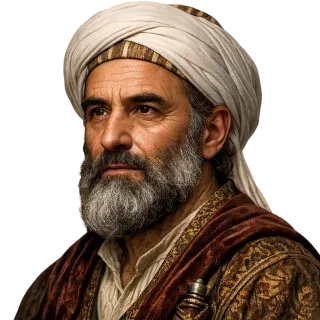
Muhammad ibn Zakariya al-Razi
The physician who made doubt a diagnostic tool, and trusted observation over authority.
Explore al-Razi