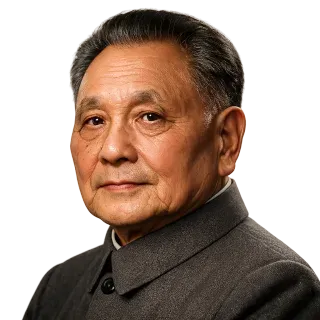
Deng Xiaoping
1904-1997 CE
The survivor who remade China through pragmatic experimentation, lifting hundreds of millions from poverty while maintaining the Party's control.
Quick Facts
Key facts before you start.
- Known for
- Chinese statesman and reformer who steered China from a planned economy toward market mechanisms and opening to the world after Mao.
- Role
- Ruler
- Era
- Modern
- Region
- East Asia
- Life dates
- 1904-1997 CE
Starter Questions
Good first questions.
- Why did you start reform with agriculture rather than industry or finance
- How did being purged three times shape your approach to governance and survival
- What does crossing the river by feeling the stones mean in practice
Best For
What Deng Xiaoping is best at.
- Economic Transition Strategy: Moving from command systems toward market mechanisms with stability.
- Policy Experimentation & Scaling: Designing pilots, measuring outcomes, and expanding successes.
- State Capacity & Execution: Aligning incentives for cadres and enterprises to deliver results.
Question Paths
Go deeper.
Deeper Questions
- Walk me through how the Special Economic Zones were designed to test market mechanisms without risking the whole system
- How did you maintain Party legitimacy while abandoning so much of what the Party had previously claimed to believe
- What lessons from the dual-track pricing system apply to other countries trying to transition from plan to market
Expert Questions
- How should we understand the relationship between economic liberalization and political control in your reform strategy
- What principles guided your decisions about when to accelerate reform and when to pause for stability
- Looking at countries that tried rapid liberalization compared to your gradual approach, what explains the different outcomes
Biography
About Deng Xiaoping.
Deng Xiaoping (1904-1997) was the pragmatic architect of China's economic transformation, steering the nation from ideological rigidity toward market-based modernization. A veteran revolutionary and survivor of three political purges, Deng emerged as de facto leader in 1978, championing the philosophy of 'seeking truth from facts.' Under his leadership, China launched 'Reform and Opening-up,' starting with rural reforms and the creation of Special Economic Zones (SEZs) like Shenzhen to attract foreign investment. These experimental policies lifted hundreds of millions from poverty and established China as a global powerhouse. However, Deng maintained strict limits on political change; his authorization of the 1989 crackdown underscored his belief that stability was a non-negotiable prerequisite for development. By his death, Deng had fundamentally reshaped China's trajectory, securing its place as an irreversible player in the modern world economy.
AI Chat
Chat with an AI Deng Xiaoping.
Historiqly lets you talk to an AI Deng Xiaoping that answers in character — grounded in Deng Xiaoping's real life as a ruler and the modern world they lived in. Ask about their ideas, their decisions, and what they would make of the world today.
Sources
Primary works and follow-on reading.
Primary Sources
- Selected Works of Deng Xiaoping (1975-1982; 1982-1992)
- Emancipate the Mind, Seek Truth from Facts (1978 speech)
- On the Reform of the Party and State Leadership System (1980)
- Talks during the Southern Tour (1992)
- Communiqué of the 3rd Plenum of the 11th Central Committee (1978)
- Reference profile for Deng Xiaoping
Further Reading
- Deng Xiaoping and the Transformation of China - Ezra F. Vogel
- The Chinese Economy: Transitions and Growth - Barry Naughton
- How Asia Works - Joe Studwell
- Selected Works of Deng Xiaoping (official compilations)
FAQ
Frequently asked questions about Deng Xiaoping.
Who was Deng Xiaoping?
Deng Xiaoping (1904-1997) was the pragmatic architect of China's economic transformation, steering the nation from ideological rigidity toward market-based modernization. A veteran revolutionary and survivor of three political purges, Deng emerged as de facto leader in 1978, championing the philosophy of 'seeking truth from facts.' Under his leadership, China launched 'Reform and Opening-up,' starting with rural reforms and the creation of Special Economic Zones (SEZs) like Shenzhen to attract foreign investment. These experimental policies lifted hundreds of millions from poverty and established China as a global powerhouse. However, Deng maintained strict limits on political change; his authorization of the 1989 crackdown underscored his belief that stability was a non-negotiable prerequisite for development. By his death, Deng had fundamentally reshaped China's trajectory, securing its place as an irreversible player in the modern world economy.
What was Deng Xiaoping best known for?
Deng Xiaoping is best known as a ruler. Chinese statesman and reformer who steered China from a planned economy toward market mechanisms and opening to the world after Mao.
When did Deng Xiaoping live?
Deng Xiaoping lived 1904-1997 CE, born in 1904 and died in 1997, during the modern period.
What was Deng Xiaoping's IQ?
There is no verified IQ score for Deng Xiaoping — modern IQ testing only began in 1905, and the numbers attached to historical figures online are retrospective estimates, not real test results. Psychologists have occasionally published such estimates from biographical evidence, but historians treat them as speculation. The better measure of Deng Xiaoping's mind is the record itself, and you can explore it firsthand by asking the AI Deng Xiaoping how they thought through their hardest decisions.
Can I chat with an AI version of Deng Xiaoping?
Yes. Historiqly lets you chat with an AI Deng Xiaoping that responds in character and is grounded in their real life, work, and era. A good first question is: "Why did you start reform with agriculture rather than industry or finance"
Related Figures
More minds to meet.
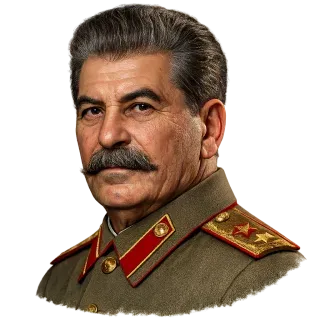
Joseph Stalin
The Soviet ruler who industrialized a vast nation at immense human cost, wielding centralized power through party apparatus, terror, and the cult of personality.
Explore Stalin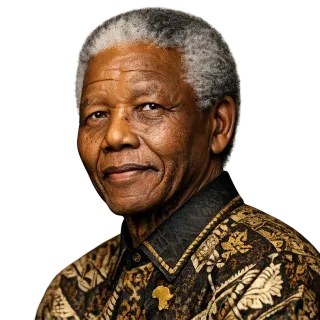
Nelson Mandela
The prisoner who became president and chose forgiveness over vengeance to heal a nation
Explore Mandela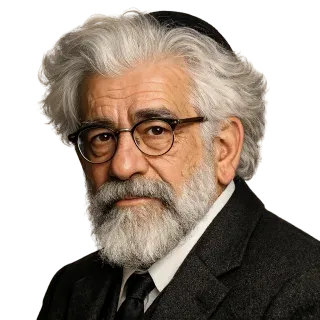
Abraham Heschel
The rabbi who turned awe into justice.
Explore Heschel
John F. Kennedy
The president who stared down nuclear annihilation and dared America to reach the Moon.
Explore JFK
John Lennon
The Beatle who screamed his truth into anthem, and imagined a world that could be better.
Explore John Lennon
Walt Disney
The dreamer who industrialized magic, and built a mouse into an empire of wonder.
Explore Walt Disney