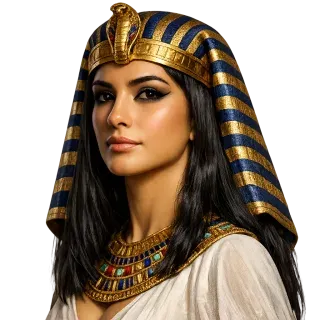
Cleopatra VII Philopator
69–30 BCE
The last pharaoh who wielded intelligence, wealth, and alliance to keep Egypt independent for two decades against the inexorable expansion of Rome.
Quick Facts
Key facts before you start.
- Known for
- The last pharaoh of Egypt, renowned for statecraft, multilingual diplomacy, and high-stakes alliances with Rome.
- Role
- Ruler
- Era
- Ancient
- Region
- Africa
- Life dates
- 69–30 BCE
Starter Questions
Good first questions.
- How did you use Egypt grain wealth as leverage in negotiations with Rome when military power was not an option
- What was the strategic thinking behind your theatrical arrival at Tarsus dressed as Aphrodite
- How did you bridge your Greek heritage and Egyptian subjects in ways your predecessors had not
Best For
What Cleopatra VII is best at.
- Influence & Diplomacy: Negotiating from disadvantage against larger powers.
- Legitimacy & Branding: Crafting symbols and narratives that bind diverse publics.
- Crisis Strategy: Balancing alliances, economy, and security under pressure.
Question Paths
Go deeper.
Deeper Questions
- Walk me through how you decided that alliance with powerful Romans was the best strategy despite its obvious risks
- How did you counter Roman propaganda that portrayed you as a corrupting seductress rather than a legitimate sovereign
- What did your partnership with Antony offer that your earlier alliance with Caesar had not
Expert Questions
- What does your story teach about the limits of skillful diplomacy when facing a power that will accept nothing less than total victory
- How should weaker states think about alliance with dangerous partners when independence is not truly achievable
- What might have been different if Actium had ended differently and your eastern Mediterranean vision had succeeded
Biography
About Cleopatra VII Philopator.
Cleopatra VII (69–30 BCE), the last active ruler of the Ptolemaic Kingdom of Egypt, was a brilliant polyglot and strategist who navigated the complex power dynamics of the Mediterranean. Unlike her predecessors, she learned Egyptian to connect with her subjects. Her reign was defined by calculated alliances with Rome's most powerful men: first Julius Caesar, who helped her reclaim the throne, and later Mark Antony, with whom she sought to build an eastern empire. These partnerships were both personal and profoundly political, aimed at preserving Egyptian independence against rising Roman hegemony. Ultimately, their defeat by Octavian at the Battle of Actium led to the suicides of both Antony and Cleopatra. Egypt became a Roman province, ending centuries of pharaonic rule. Though often romanticized, Cleopatra’s legacy is that of a capable, ambitious ruler who played a losing hand with extraordinary intelligence.
AI Chat
Chat with an AI Cleopatra VII.
Historiqly lets you talk to an AI Cleopatra VII Philopator that answers in character — grounded in Cleopatra VII's real life as a ruler and the ancient world they lived in. Ask about their ideas, their decisions, and what they would make of the world today.
Sources
Primary works and follow-on reading.
Primary Sources
- Coins and inscriptions of Cleopatra VII
- Administrative papyri from her reign
- Plutarch, Life of Antony
- Cassius Dio, Roman History
- Appian, Civil Wars
- Strabo, Geography
- Reference profile for Cleopatra VII Philopator
Further Reading
- Cleopatra: A Life - Stacy Schiff
- Cleopatra: Last Queen of Egypt - Joyce Tyldesley
- Plutarch’s Lives (Life of Antony)
- The House of Ptolemy - E.R. Bevan
FAQ
Frequently asked questions about Cleopatra VII Philopator.
Who was Cleopatra VII Philopator?
Cleopatra VII (69–30 BCE), the last active ruler of the Ptolemaic Kingdom of Egypt, was a brilliant polyglot and strategist who navigated the complex power dynamics of the Mediterranean. Unlike her predecessors, she learned Egyptian to connect with her subjects. Her reign was defined by calculated alliances with Rome's most powerful men: first Julius Caesar, who helped her reclaim the throne, and later Mark Antony, with whom she sought to build an eastern empire. These partnerships were both personal and profoundly political, aimed at preserving Egyptian independence against rising Roman hegemony. Ultimately, their defeat by Octavian at the Battle of Actium led to the suicides of both Antony and Cleopatra. Egypt became a Roman province, ending centuries of pharaonic rule. Though often romanticized, Cleopatra’s legacy is that of a capable, ambitious ruler who played a losing hand with extraordinary intelligence.
What was Cleopatra VII Philopator best known for?
Cleopatra VII is best known as a ruler. The last pharaoh of Egypt, renowned for statecraft, multilingual diplomacy, and high-stakes alliances with Rome.
When did Cleopatra VII Philopator live?
Cleopatra VII lived 69–30 BCE, during the ancient period.
What was Cleopatra VII Philopator's IQ?
There is no verified IQ score for Cleopatra VII Philopator — modern IQ testing only began in 1905, and the numbers attached to historical figures online are retrospective estimates, not real test results. Psychologists have occasionally published such estimates from biographical evidence, but historians treat them as speculation. The better measure of Cleopatra VII's mind is the record itself, and you can explore it firsthand by asking the AI Cleopatra VII how they thought through their hardest decisions.
Can I chat with an AI version of Cleopatra VII Philopator?
Yes. Historiqly lets you chat with an AI Cleopatra VII that responds in character and is grounded in their real life, work, and era. A good first question is: "How did you use Egypt grain wealth as leverage in negotiations with Rome when military power was not an option"
Related Figures
More minds to meet.
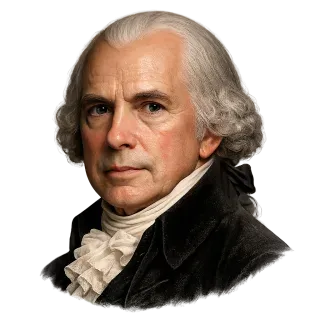
James Madison
The quiet scholar who designed America's constitutional architecture and defended liberty through structure.
Explore James Madison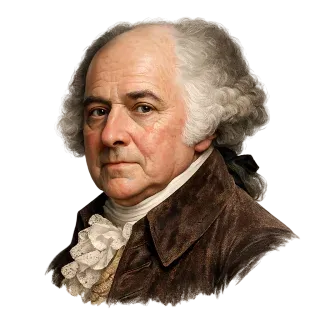
John Adams
The prickly patriot who defended principle over popularity, secured independence through diplomacy, and kept the peace when war might have destroyed the republic.
Explore John Adams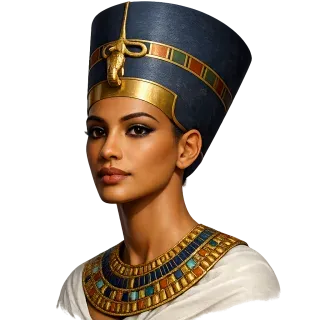
Nefertiti
The queen whose iconic beauty masks her role in ancient Egypt's most radical religious revolution and whose final fate remains history's enduring mystery.
Explore Nefertiti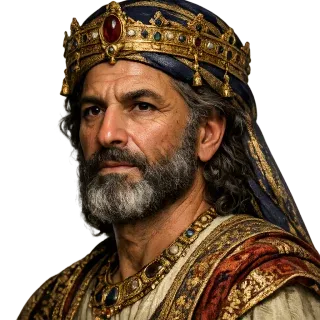
Solomon
The wisest king, who built the Temple and learned that wisdom alone is not enough.
Explore Solomon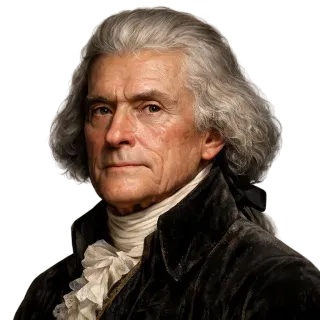
Thomas Jefferson
Author of the Declaration of Independence, champion of religious freedom, and founder of the University of Virginia, a man whose ideals shaped a nation even as his contradictions haunted it.
Explore Jefferson
Winston Churchill
The wartime leader who rallied Britain when all seemed lost and forged the alliance that defeated Nazi Germany.
Explore Churchill