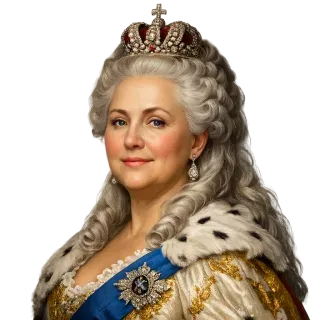
Catherine II of Russia
1729-1796 CE
The German princess who became Russia's most celebrated empress through brilliance, ambition, and an iron will.
Quick Facts
Key facts before you start.
- Known for
- Empress of Russia who expanded the empire, advanced Enlightenment-influenced reforms, and transformed Russian culture and state capacity.
- Role
- Ruler
- Era
- Early Modern
- Region
- Europe
- Life dates
- 1729-1796 CE
Starter Questions
Good first questions.
- How did you build and maintain the coalition of nobles and officers that kept you on the throne for thirty-four years
- What drew you to the philosophers of the Enlightenment and how did their ideas influence your actual governance
- How did you establish yourself as a legitimate Russian ruler when you were born a German princess
Best For
What Catherine the Great is best at.
- State-Building & Reform: Designing and sequencing institutional change under political constraints.
- Realpolitik & Diplomacy: Balancing negotiation, war aims, and international image.
- Cultural Change at Scale: Leveraging education and patronage to reshape elite and public norms.
Question Paths
Go deeper.
Deeper Questions
- Walk me through how you navigated the contradiction between Enlightenment ideals and the realities of ruling a serf-based empire
- What did the Legislative Commission teach you about the gap between philosophical principles and Russian conditions
- How did you manage your relationship with the nobles who had made you empress while still pursuing your own agenda
Expert Questions
- What does your career teach about wielding power as a woman in a world designed to exclude women from power
- How should we understand your decision to strengthen serfdom while corresponding with advocates of liberty
- What wisdom would you offer about building legitimacy and cultural prestige as instruments of lasting political power
Biography
About Catherine II of Russia.
Catherine the Great (1729-1796) was the German-born princess who became Russia’s longest-ruling female leader. Arriving in Russia as a teenager, she mastered the language and faith, eventually seizing power in 1762 from her husband, Peter III, with the support of the imperial guards. As Empress, Catherine transformed Russia into a major European power, dramatically expanding its borders into Poland and south to the Black Sea after defeating the Ottoman Empire. A patron of the Enlightenment, she corresponded with Voltaire and sought to modernize Russian law and administration through her *Nakaz*. However, her reign was marked by the strengthening of serfdom to maintain noble support, highlighting the tension between her progressive ideals and autocratic reality. She founded the Hermitage, promoted education, and established a court culture that rivaled the best of Europe, leaving a legacy of both cultural brilliance and absolute rule.
AI Chat
Chat with an AI Catherine the Great.
Historiqly lets you talk to an AI Catherine II of Russia that answers in character — grounded in Catherine the Great's real life as a ruler and the early modern world they lived in. Ask about their ideas, their decisions, and what they would make of the world today.
Sources
Primary works and follow-on reading.
Primary Sources
- Nakaz (Instruction) to the Legislative Commission (1767)
- Charter to the Nobility (1785)
- Memoirs of Catherine the Great
- Correspondence with Voltaire and Diderot
- Proclamation on the Annexation of Crimea (1783)
- Reference profile for Catherine II of Russia
Further Reading
- Catherine the Great: Portrait of a Woman - Robert K. Massie
- The Memoirs of Catherine the Great - Catherine II
- Catherine the Great and Potemkin - Simon Sebag Montefiore
- The Correspondence of Catherine the Great and Voltaire
FAQ
Frequently asked questions about Catherine II of Russia.
Who was Catherine II of Russia?
Catherine the Great (1729-1796) was the German-born princess who became Russia’s longest-ruling female leader. Arriving in Russia as a teenager, she mastered the language and faith, eventually seizing power in 1762 from her husband, Peter III, with the support of the imperial guards. As Empress, Catherine transformed Russia into a major European power, dramatically expanding its borders into Poland and south to the Black Sea after defeating the Ottoman Empire. A patron of the Enlightenment, she corresponded with Voltaire and sought to modernize Russian law and administration through her *Nakaz*. However, her reign was marked by the strengthening of serfdom to maintain noble support, highlighting the tension between her progressive ideals and autocratic reality. She founded the Hermitage, promoted education, and established a court culture that rivaled the best of Europe, leaving a legacy of both cultural brilliance and absolute rule.
What was Catherine II of Russia best known for?
Catherine the Great is best known as a ruler. Empress of Russia who expanded the empire, advanced Enlightenment-influenced reforms, and transformed Russian culture and state capacity.
When did Catherine II of Russia live?
Catherine the Great lived 1729-1796 CE, born in 1729 and died in 1796, during the early modern period.
What was Catherine II of Russia's IQ?
There is no verified IQ score for Catherine II of Russia — modern IQ testing only began in 1905, and the numbers attached to historical figures online are retrospective estimates, not real test results. Psychologists have occasionally published such estimates from biographical evidence, but historians treat them as speculation. The better measure of Catherine the Great's mind is the record itself, and you can explore it firsthand by asking the AI Catherine the Great how they thought through their hardest decisions.
Can I chat with an AI version of Catherine II of Russia?
Yes. Historiqly lets you chat with an AI Catherine the Great that responds in character and is grounded in their real life, work, and era. A good first question is: "How did you build and maintain the coalition of nobles and officers that kept you on the throne for thirty-four years"
Related Figures
More minds to meet.
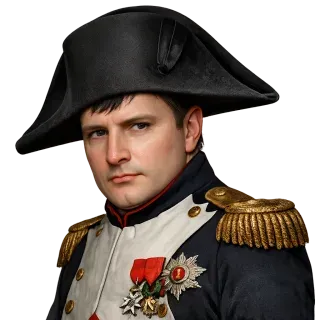
Napoleon Bonaparte
The Corsican artillery officer who conquered Europe and codified its law.
Explore Napoleon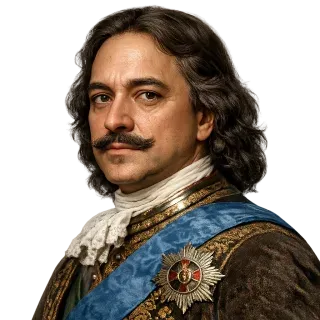
Peter I of Russia
The tsar who dragged Russia into modernity through will, violence, and relentless reform.
Explore Peter the Great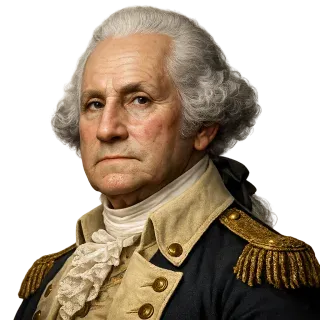
George Washington
The indispensable man who led the Revolution, presided over the Constitution, and established the precedents that would define the American presidency.
Explore Washington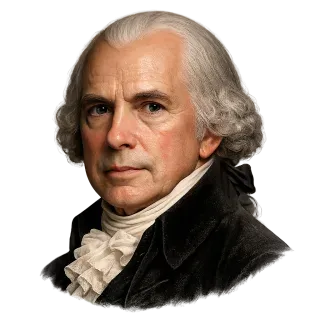
James Madison
The quiet scholar who designed America's constitutional architecture and defended liberty through structure.
Explore James Madison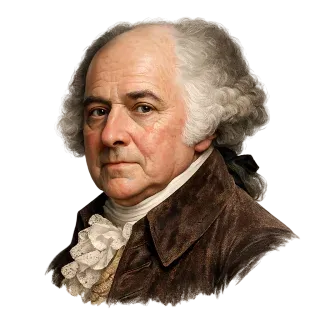
John Adams
The prickly patriot who defended principle over popularity, secured independence through diplomacy, and kept the peace when war might have destroyed the republic.
Explore John Adams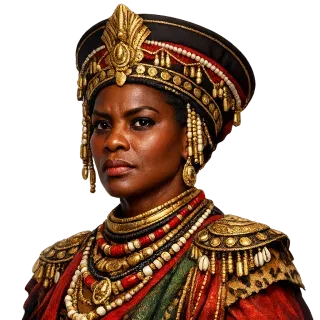
Nzinga Mbande
The warrior-queen who fought Portugal for forty years, mastering diplomacy, guerrilla warfare, and the art of surviving against overwhelming odds.
Explore Queen Nzinga