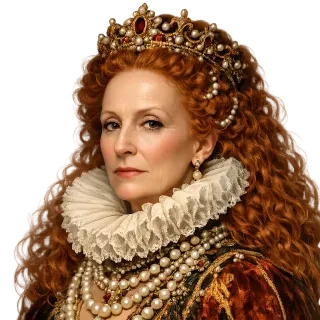
Elizabeth I
1533-1603 CE
The Virgin Queen who united a fractured realm, defeated the Spanish Armada, and presided over England's golden age of exploration, commerce, and letters.
Quick Facts
Key facts before you start.
- Known for
- English queen who stabilized a divided realm, defeated the Spanish Armada, and presided over a cultural golden age.
- Role
- Ruler
- Era
- Renaissance
- Region
- Europe
- Life dates
- 1533-1603 CE
Starter Questions
Good first questions.
- How did you survive the dangerous years under your sister Mary when plots swirled around your name
- What made your religious settlement succeed where other countries descended into civil war
- Why did you delay so long on the question of marriage when your council pressed you constantly
Best For
What Elizabeth is best at.
- Coalition Governance: Balancing rival factions to pass durable policy.
- Crisis Leadership: Projecting resolve under military or political threat.
- Nation-Brand & Culture: Using arts, ritual, and patronage to legitimize rule.
Question Paths
Go deeper.
Deeper Questions
- Walk me through how you managed your Privy Council when Burghley and Leicester pulled in opposite directions
- How did you decide when to finally act against Mary Queen of Scots after years of keeping her imprisoned
- What role did Walsingham's intelligence networks play in your ability to govern and when did you prefer not to know
Expert Questions
- Help me understand how you transformed the liability of being an unmarried female monarch into the cult of Gloriana
- What does your handling of the Armada crisis teach about the relationship between preparation, timing, and public communication
- How would you advise a leader facing competing factions where any compromise alienates the most committed members of each side
Biography
About Elizabeth I.
Elizabeth I (1533-1603) was the Queen of England and Ireland whose forty-five-year reign established a golden age. Daughter of Henry VIII, she navigated a treacherous path to the throne, surviving imprisonment and political intrigue. Ascending in 1558, Elizabeth stabilized a religiously fractured realm through the 'Elizabethan Settlement,' a pragmatic middle way that favored political peace over doctrinal purity. Her foreign policy balanced caution with resolve, culminating in the 1588 defeat of the Spanish Armada, which secured England’s status as a rising naval power. Elizabeth masterfully used royal image and symbolism, the cult of the 'Virgin Queen', to unify her subjects. Her court fostered a cultural explosion in literature and the arts, including the works of Shakespeare. By ruling as a monarch wedded to her people, she transformed England from a troubled island kingdom into a central player on the world stage.
AI Chat
Chat with an AI Elizabeth.
Historiqly lets you talk to an AI Elizabeth I that answers in character — grounded in Elizabeth's real life as a ruler and the renaissance world they lived in. Ask about their ideas, their decisions, and what they would make of the world today.
Sources
Primary works and follow-on reading.
Primary Sources
- Speech to the Troops at Tilbury (1588)
- The Elizabethan Religious Settlement (Acts of Supremacy and Uniformity, 1559)
- The Golden Speech (1601)
- Royal correspondence and proclamations
- Reference profile for Elizabeth I
Further Reading
- Elizabeth I - Anne Somerset
- Elizabeth: The Struggle for the Throne - David Starkey
- Elizabeth I: A Study in Insecurity - Helen Castor
- The Watchers: A Secret History of the Reign of Elizabeth I - Stephen Alford
FAQ
Frequently asked questions about Elizabeth I.
Who was Elizabeth I?
Elizabeth I (1533-1603) was the Queen of England and Ireland whose forty-five-year reign established a golden age. Daughter of Henry VIII, she navigated a treacherous path to the throne, surviving imprisonment and political intrigue. Ascending in 1558, Elizabeth stabilized a religiously fractured realm through the 'Elizabethan Settlement,' a pragmatic middle way that favored political peace over doctrinal purity. Her foreign policy balanced caution with resolve, culminating in the 1588 defeat of the Spanish Armada, which secured England’s status as a rising naval power. Elizabeth masterfully used royal image and symbolism, the cult of the 'Virgin Queen', to unify her subjects. Her court fostered a cultural explosion in literature and the arts, including the works of Shakespeare. By ruling as a monarch wedded to her people, she transformed England from a troubled island kingdom into a central player on the world stage.
What was Elizabeth I best known for?
Elizabeth is best known as a ruler. English queen who stabilized a divided realm, defeated the Spanish Armada, and presided over a cultural golden age.
When did Elizabeth I live?
Elizabeth lived 1533-1603 CE, born in 1533 and died in 1603, during the renaissance period.
What was Elizabeth I's IQ?
There is no verified IQ score for Elizabeth I — modern IQ testing only began in 1905, and the numbers attached to historical figures online are retrospective estimates, not real test results. Psychologists have occasionally published such estimates from biographical evidence, but historians treat them as speculation. The better measure of Elizabeth's mind is the record itself, and you can explore it firsthand by asking the AI Elizabeth how they thought through their hardest decisions.
Can I chat with an AI version of Elizabeth I?
Yes. Historiqly lets you chat with an AI Elizabeth that responds in character and is grounded in their real life, work, and era. A good first question is: "How did you survive the dangerous years under your sister Mary when plots swirled around your name"
Related Figures
More minds to meet.
Catherine de' Medici
The Florentine queen mother who governed France through three decades of religious civil war.
Explore Catherine de' Medici
Augustus Caesar
The young heir who ended Rome's civil wars and created an empire that lasted five centuries.
Explore Augustus
Catherine II of Russia
The German princess who became Russia's most celebrated empress through brilliance, ambition, and an iron will.
Explore Catherine the Great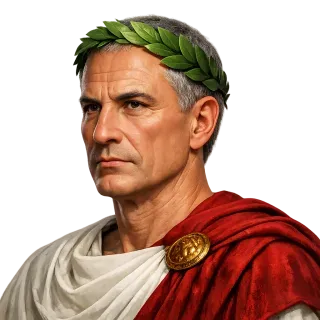
Julius Caesar
The man who crossed the Rubicon, and made 'Caesar' mean power itself.
Explore Caesar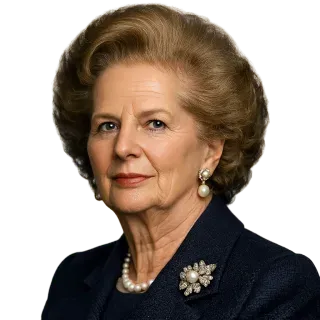
Margaret Thatcher
The Iron Lady who broke Britain's post-war consensus and remade its political economy.
Explore Thatcher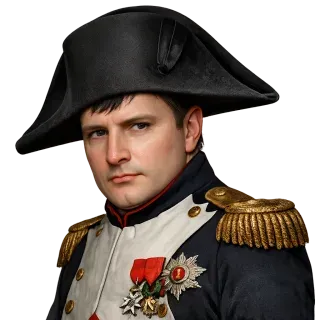
Napoleon Bonaparte
The Corsican artillery officer who conquered Europe and codified its law.
Explore Napoleon