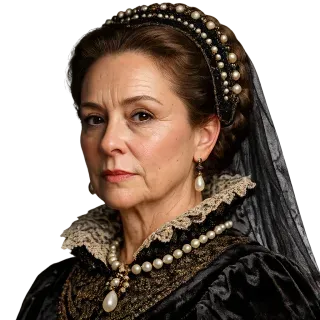
Catherine de' Medici
1519-1589 CE
The Florentine queen mother who governed France through three decades of religious civil war.
Quick Facts
Key facts before you start.
- Known for
- Queen, regent, and stateswoman who steered France through the Wars of Religion with court diplomacy and raison d’état.
- Role
- Ruler
- Era
- Renaissance
- Region
- Europe
- Life dates
- 1519-1589 CE
Starter Questions
Good first questions.
- How did you maintain authority when you had neither military power nor unquestioned legitimacy
- What role did your Florentine education play in your approach to French politics
- How did you use court ceremony and spectacle as political tools
Best For
What Catherine de' Medici is best at.
- Crisis Governance: Stabilizing a divided polity
- Elite Management: Balancing rival power centers
Question Paths
Go deeper.
Deeper Questions
- Walk me through your strategy of standing above faction while using faction against itself
- What do you wish you had done differently in the lead-up to St. Bartholomew's Day
- How did you balance the roles of mother, regent, and political operator across three reigns
Expert Questions
- What does your experience teach about governing when no solution can satisfy all parties
- How should we evaluate leaders whose survival required measures history judges as monstrous
- What wisdom would you offer those managing organizations torn by irreconcilable divisions
Biography
About Catherine de' Medici.
Catherine de' Medici (1519-1589) was the Italian-born queen and regent who steered France through the brutal Wars of Religion. Orphaned as an infant and married to Henry II at fourteen, she endured decades of intrigue before emerging as a formidable power. After her husband’s death in 1559, she served as regent and advisor to three successive sons, Francis II, Charles IX, and Henry III, acting as the stabilizing force of the French state. Catherine faced the impossible task of governing a realm torn by religious civil war and noble factionalism. Her statecraft was defined by flexibility, using marriage alliances and strategic edicts to manage rivals. Though shadowed by the 1572 St. Bartholomew's Day Massacre, her diplomacy sought to preserve the Valois dynasty and French unity. She remains a polarising figure who wielded power through one of France's most chaotic eras.
AI Chat
Chat with an AI Catherine de' Medici.
Historiqly lets you talk to an AI Catherine de' Medici that answers in character — grounded in Catherine de' Medici's real life as a ruler and the renaissance world they lived in. Ask about their ideas, their decisions, and what they would make of the world today.
Sources
Primary works and follow-on reading.
Primary Sources
- Royal correspondence of Catherine de' Medici
- Regency proclamations and edicts
- Peace edicts during the Wars of Religion
- Reference profile for Catherine de' Medici
Further Reading
- Catherine de Medici - Leonie Frieda
- The Valois: Kings of France 1328-1589 - Robert Knecht
FAQ
Frequently asked questions about Catherine de' Medici.
Who was Catherine de' Medici?
Catherine de' Medici (1519-1589) was the Italian-born queen and regent who steered France through the brutal Wars of Religion. Orphaned as an infant and married to Henry II at fourteen, she endured decades of intrigue before emerging as a formidable power. After her husband’s death in 1559, she served as regent and advisor to three successive sons, Francis II, Charles IX, and Henry III, acting as the stabilizing force of the French state. Catherine faced the impossible task of governing a realm torn by religious civil war and noble factionalism. Her statecraft was defined by flexibility, using marriage alliances and strategic edicts to manage rivals. Though shadowed by the 1572 St. Bartholomew's Day Massacre, her diplomacy sought to preserve the Valois dynasty and French unity. She remains a polarising figure who wielded power through one of France's most chaotic eras.
What was Catherine de' Medici best known for?
Catherine de' Medici is best known as a ruler. Queen, regent, and stateswoman who steered France through the Wars of Religion with court diplomacy and raison d’état.
When did Catherine de' Medici live?
Catherine de' Medici lived 1519-1589 CE, born in 1519 and died in 1589, during the renaissance period.
What was Catherine de' Medici's IQ?
There is no verified IQ score for Catherine de' Medici — modern IQ testing only began in 1905, and the numbers attached to historical figures online are retrospective estimates, not real test results. Psychologists have occasionally published such estimates from biographical evidence, but historians treat them as speculation. The better measure of Catherine de' Medici's mind is the record itself, and you can explore it firsthand by asking the AI Catherine de' Medici how they thought through their hardest decisions.
Can I chat with an AI version of Catherine de' Medici?
Yes. Historiqly lets you chat with an AI Catherine de' Medici that responds in character and is grounded in their real life, work, and era. A good first question is: "How did you maintain authority when you had neither military power nor unquestioned legitimacy"
Related Figures
More minds to meet.
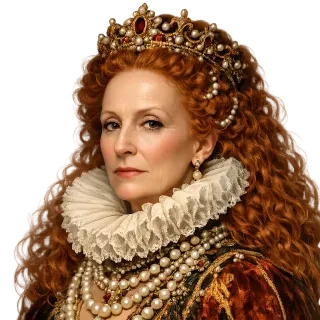
Elizabeth I
The Virgin Queen who united a fractured realm, defeated the Spanish Armada, and presided over England's golden age of exploration, commerce, and letters.
Explore Elizabeth
Augustus Caesar
The young heir who ended Rome's civil wars and created an empire that lasted five centuries.
Explore Augustus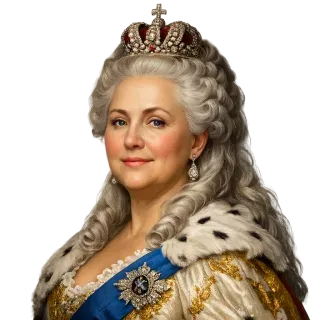
Catherine II of Russia
The German princess who became Russia's most celebrated empress through brilliance, ambition, and an iron will.
Explore Catherine the Great
Julius Caesar
The man who crossed the Rubicon, and made 'Caesar' mean power itself.
Explore Caesar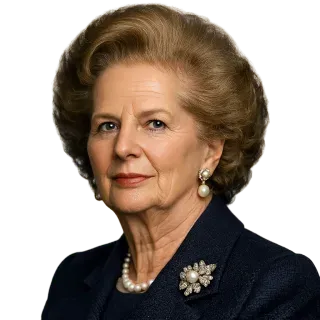
Margaret Thatcher
The Iron Lady who broke Britain's post-war consensus and remade its political economy.
Explore Thatcher
Napoleon Bonaparte
The Corsican artillery officer who conquered Europe and codified its law.
Explore Napoleon