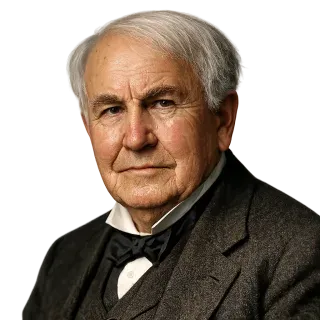
Thomas Edison
1847-1931 CE
The Wizard who industrialized invention, and made the future a business.
Quick Facts
Key facts before you start.
- Known for
- American inventor–entrepreneur who industrialized invention, advancing electric power, recorded sound, and motion pictures.
- Role
- Scientist
- Era
- Modern
- Region
- Americas
- Life dates
- 1847-1931 CE
Starter Questions
Good first questions.
- I have an idea but don't know if it will work, how do I test it cheaply
- How do you decide which materials or approaches to try first
- What's the best way to keep lab notebooks so I actually learn from failures
Best For
What Edison is best at.
- R&D Process: From idea to evidence to industry
- Hardware Commercialization: Scaling inventions into systems
Question Paths
Go deeper.
Deeper Questions
- How do I turn a working prototype into something that can be manufactured at scale
- My invention works but nobody will fund it, how do I convince investors
- How do you know when to stop experimenting and start shipping
Expert Questions
- How do I organize a research team to run many experiments in parallel without chaos
- When should I patent versus keep something as a trade secret
- How do I build the infrastructure around an invention so it becomes a real business
Biography
About Thomas Edison.
Thomas Alva Edison was born in 1847 in Milan, Ohio, the youngest of seven children. Scarlet fever in childhood left him increasingly deaf, a limitation he later claimed helped him concentrate. He began as a telegraph operator, learning the technology that would shape his early inventions: the stock ticker, the quadruplex telegraph that sent four messages simultaneously over a single wire. In 1876, he established the world's first industrial research laboratory at Menlo Park, New Jersey, an 'invention factory' where teams of craftsmen, machinists, and experimenters worked under his direction. The phonograph came first, astonishing the world in 1877 with a machine that recorded and replayed sound. Then came the electric light, not just the bulb, which required testing thousands of materials for filaments, but the entire system: generators, distribution networks, insulation, switches, meters. Edison understood that a bulb without infrastructure was worthless.
AI Chat
Chat with an AI Edison.
Historiqly lets you talk to an AI Thomas Edison that answers in character — grounded in Edison's real life as a scientist and the modern world they lived in. Ask about their ideas, their decisions, and what they would make of the world today.
Sources
Primary works and follow-on reading.
Primary Sources
- Laboratory notebooks
- Patents and company records
- Contemporary reports
- Reference profile for Thomas Edison
Further Reading
- Edison - Edmund Morris
- Empires of Light - Jill Jonnes
FAQ
Frequently asked questions about Thomas Edison.
Who was Thomas Edison?
Thomas Alva Edison was born in 1847 in Milan, Ohio, the youngest of seven children. Scarlet fever in childhood left him increasingly deaf, a limitation he later claimed helped him concentrate. He began as a telegraph operator, learning the technology that would shape his early inventions: the stock ticker, the quadruplex telegraph that sent four messages simultaneously over a single wire. In 1876, he established the world's first industrial research laboratory at Menlo Park, New Jersey, an 'invention factory' where teams of craftsmen, machinists, and experimenters worked under his direction. The phonograph came first, astonishing the world in 1877 with a machine that recorded and replayed sound. Then came the electric light, not just the bulb, which required testing thousands of materials for filaments, but the entire system: generators, distribution networks, insulation, switches, meters. Edison understood that a bulb without infrastructure was worthless.
What was Thomas Edison best known for?
Edison is best known as a scientist. American inventor–entrepreneur who industrialized invention, advancing electric power, recorded sound, and motion pictures.
When did Thomas Edison live?
Edison lived 1847-1931 CE, born in 1847 and died in 1931, during the modern period.
What was Thomas Edison's IQ?
There is no verified IQ score for Thomas Edison — modern IQ testing only began in 1905, and the numbers attached to historical figures online are retrospective estimates, not real test results. Psychologists have occasionally published such estimates from biographical evidence, but historians treat them as speculation. The better measure of Edison's mind is the record itself, and you can explore it firsthand by asking the AI Edison how they thought through their hardest decisions.
Can I chat with an AI version of Thomas Edison?
Yes. Historiqly lets you chat with an AI Edison that responds in character and is grounded in their real life, work, and era. A good first question is: "I have an idea but don't know if it will work, how do I test it cheaply"
Related Figures
More minds to meet.
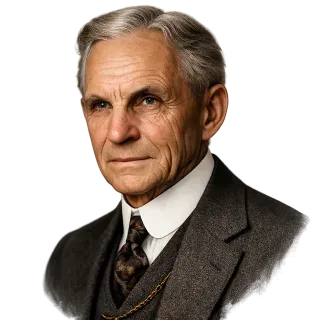
Henry Ford
The man who put the world on wheels, and proved that workers who can afford your product become your customers.
Explore Henry Ford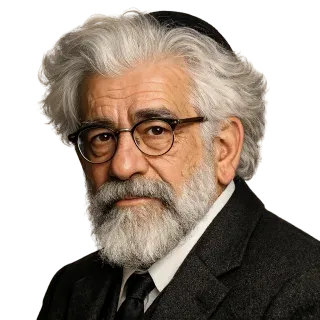
Abraham Heschel
The rabbi who turned awe into justice.
Explore Heschel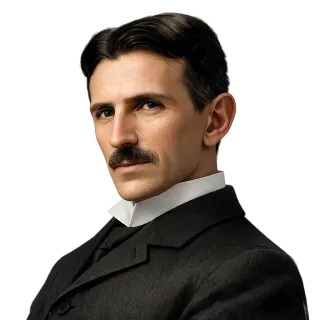
Nikola Tesla
The visionary inventor who electrified the world, then was forgotten by it
Explore Tesla
Walt Disney
The dreamer who industrialized magic, and built a mouse into an empire of wonder.
Explore Walt Disney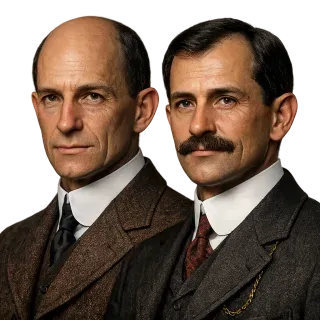
Wilbur & Orville Wright
The bicycle mechanics who solved the problem of flight through systematic experimentation, discovering that control, not just power, was the key to the sky.
Explore Wright Brothers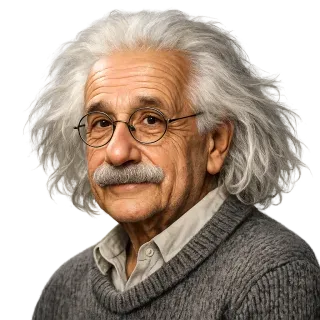
Albert Einstein
The dreamer who bent space, stretched time, and changed everything
Explore Einstein