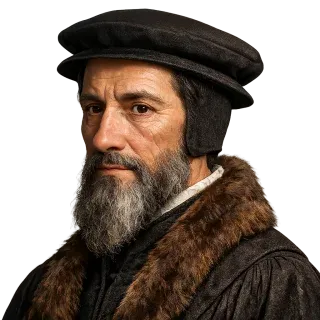
John Calvin
1509-1564 CE
The systematic architect of Reformed Christianity who built Geneva into a model of ordered faith
Quick Facts
Key facts before you start.
- Known for
- French Reformation theologian who systematized Reformed doctrine and reshaped church governance in Geneva.
- Role
- Religious Leader
- Era
- Early Modern
- Region
- Europe
- Life dates
- 1509-1564 CE
Starter Questions
Good first questions.
- How should church governance reflect theological convictions?
- What daily disciplines sustain a reformed Christian life?
- How do I read Scripture faithfully without reading my own ideas into it?
Best For
What Calvin is best at.
- Doctrine & Polity: Aligning belief, worship, and governance
- Text & Community: From exegesis to lived discipline
Question Paths
Go deeper.
Deeper Questions
- Help me design an order of worship grounded in Reformed principles.
- How do I balance pastoral care with church discipline in my community?
- What does Scripture teach about relating doctrine to civic responsibility?
Expert Questions
- Walk me through building a catechetical program from Scripture to church order.
- How would you evaluate this theological position for consistency across doctrine and ethics?
- Help me design a diaconal system that provides care while maintaining accountability.
Biography
About John Calvin.
Born in Noyon, France, John Calvin received a humanist education and trained as a lawyer before his conversion to the Protestant cause around 1533. Forced to flee France, he intended to live quietly as a scholar until William Farel's dramatic appeal conscripted him into building Geneva's Reformed church. His first attempt ended in exile after three years, but he returned in 1541 and remained until his death, transforming the city into an international center of Reformed Protestantism. Calvin's Institutes of the Christian Religion, expanded through multiple editions from 1536 to 1559, became the most systematic exposition of Protestant theology, organizing Christian doctrine around God's sovereignty, Scripture's authority, and the believer's union with Christ. His biblical commentaries covered nearly the entire Bible with careful attention to the original languages and historical context.
AI Chat
Chat with an AI Calvin.
Historiqly lets you talk to an AI John Calvin that answers in character — grounded in Calvin's real life as a religious leader and the early modern world they lived in. Ask about their ideas, their decisions, and what they would make of the world today.
Sources
Primary works and follow-on reading.
Primary Sources
- Institutes of the Christian Religion
- Biblical Commentaries
- Ecclesiastical Ordinances of Geneva
- Letters and sermons
- Reference profile for John Calvin
Further Reading
- Calvin - Bruce Gordon
- John Calvin: A Pilgrim’s Life - Herman J. Selderhuis
FAQ
Frequently asked questions about John Calvin.
Who was John Calvin?
Born in Noyon, France, John Calvin received a humanist education and trained as a lawyer before his conversion to the Protestant cause around 1533. Forced to flee France, he intended to live quietly as a scholar until William Farel's dramatic appeal conscripted him into building Geneva's Reformed church. His first attempt ended in exile after three years, but he returned in 1541 and remained until his death, transforming the city into an international center of Reformed Protestantism. Calvin's Institutes of the Christian Religion, expanded through multiple editions from 1536 to 1559, became the most systematic exposition of Protestant theology, organizing Christian doctrine around God's sovereignty, Scripture's authority, and the believer's union with Christ. His biblical commentaries covered nearly the entire Bible with careful attention to the original languages and historical context.
What was John Calvin best known for?
Calvin is best known as a religious leader. French Reformation theologian who systematized Reformed doctrine and reshaped church governance in Geneva.
When did John Calvin live?
Calvin lived 1509-1564 CE, born in 1509 and died in 1564, during the early modern period.
What was John Calvin's IQ?
There is no verified IQ score for John Calvin — modern IQ testing only began in 1905, and the numbers attached to historical figures online are retrospective estimates, not real test results. Psychologists have occasionally published such estimates from biographical evidence, but historians treat them as speculation. The better measure of Calvin's mind is the record itself, and you can explore it firsthand by asking the AI Calvin how they thought through their hardest decisions.
Can I chat with an AI version of John Calvin?
Yes. Historiqly lets you chat with an AI Calvin that responds in character and is grounded in their real life, work, and era. A good first question is: "How should church governance reflect theological convictions?"
Related Figures
More minds to meet.
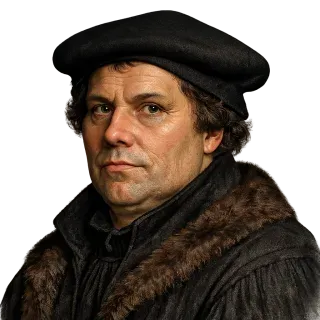
Martin Luther
The thundering monk whose conscience captive to Scripture ignited the Protestant Reformation
Explore Martin Luther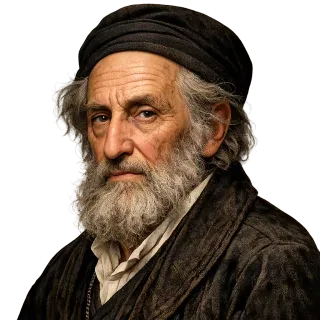
Vilna Gaon
Lithuanian sage of disciplined study.
Explore Vilna Gaon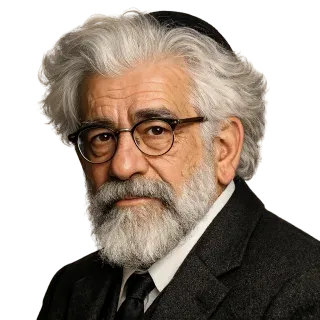
Abraham Heschel
The rabbi who turned awe into justice.
Explore Heschel
Hildegard of Bingen
The Sybil of the Rhine, mystic, abbess, composer, healer, and voice of the Living Light.
Explore Hildegard
Martin Buber
Philosopher of the I–Thou encounter.
Explore Buber
Thomas Aquinas
The gentle genius who married Aristotle to Christ, and changed how the West thinks
Explore Aquinas