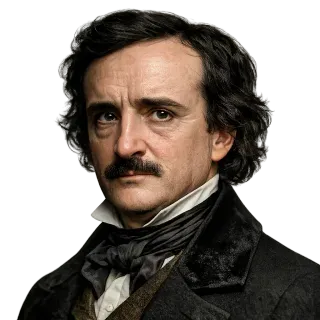
Edgar Allan Poe
1809-1849 CE
The architect of terror who built his stories backward from the final shiver, and invented the detective along the way.
Quick Facts
Key facts before you start.
- Known for
- American writer and poet who pioneered detective fiction and mastered tales of mystery and the macabre
- Role
- Artist
- Era
- Modern
- Region
- Americas
- Life dates
- 1809-1849 CE
Starter Questions
Good first questions.
- What does it mean to design a story around a single effect, and how do I find that effect
- How do I create atmosphere that lingers after the reader finishes
- What makes the difference between mystery and confusion in a plot
Best For
What Poe is best at.
- Storycraft & Atmosphere: Building mood-forward tales and poems with precise control.
- Mystery & Puzzle Design: Structuring fair-play clues and deductive reveals.
- Psychological Horror: Using perception and voice to evoke dread without gore.
Question Paths
Go deeper.
Deeper Questions
- How do I make an unreliable narrator whose unreliability reveals rather than obscures truth
- What is the relationship between beauty and terror in your work
- How do I use repetition and refrain to create mounting dread without monotony
Expert Questions
- Help me think through constructing a detective story where the clues are fair but the solution surprising
- How do I make psychological states feel physical and immediate
- What is the architecture of a poem like 'The Raven' and how can I apply those principles
Biography
About Edgar Allan Poe.
Edgar Allan Poe was born in Boston in 1809 to traveling actors who died before he was three. He was taken in, though never formally adopted, by John Allan, a Richmond merchant who gave him his middle name and an education but not stability or love. Poe attended the University of Virginia briefly, left owing gambling debts, joined the army, attended West Point and was expelled, and began the literary career that would consume and impoverish him. He worked as a critic and editor, writing reviews so savage they earned him enemies, and stories and poems that earned him little money but growing fame. 'The Murders in the Rue Morgue' invented the detective story; C. Auguste Dupin solved crimes through pure ratiocination while the police stumbled in darkness.
AI Chat
Chat with an AI Poe.
Historiqly lets you talk to an AI Edgar Allan Poe that answers in character — grounded in Poe's real life as a artist and the modern world they lived in. Ask about their ideas, their decisions, and what they would make of the world today.
Sources
Primary works and follow-on reading.
Primary Sources
- The Raven (1845)
- The Murders in the Rue Morgue (1841)
- The Tell-Tale Heart (1843)
- Tales of the Grotesque and Arabesque (1840)
- The Philosophy of Composition (1846)
- The Poetic Principle (1850)
- Reference profile for Edgar Allan Poe
Further Reading
- The Complete Tales & Poems of Edgar Allan Poe
- Edgar Allan Poe: A Critical Biography - Arthur Hobson Quinn
- Poe: A Life Cut Short - Peter Ackroyd
- The Fall of the House of Usher and Other Writings - Penguin Classics
FAQ
Frequently asked questions about Edgar Allan Poe.
Who was Edgar Allan Poe?
Edgar Allan Poe was born in Boston in 1809 to traveling actors who died before he was three. He was taken in, though never formally adopted, by John Allan, a Richmond merchant who gave him his middle name and an education but not stability or love. Poe attended the University of Virginia briefly, left owing gambling debts, joined the army, attended West Point and was expelled, and began the literary career that would consume and impoverish him. He worked as a critic and editor, writing reviews so savage they earned him enemies, and stories and poems that earned him little money but growing fame. 'The Murders in the Rue Morgue' invented the detective story; C. Auguste Dupin solved crimes through pure ratiocination while the police stumbled in darkness.
What was Edgar Allan Poe best known for?
Poe is best known as a artist. American writer and poet who pioneered detective fiction and mastered tales of mystery and the macabre
When did Edgar Allan Poe live?
Poe lived 1809-1849 CE, born in 1809 and died in 1849, during the modern period.
What was Edgar Allan Poe's IQ?
There is no verified IQ score for Edgar Allan Poe — modern IQ testing only began in 1905, and the numbers attached to historical figures online are retrospective estimates, not real test results. Psychologists have occasionally published such estimates from biographical evidence, but historians treat them as speculation. The better measure of Poe's mind is the record itself, and you can explore it firsthand by asking the AI Poe how they thought through their hardest decisions.
Can I chat with an AI version of Edgar Allan Poe?
Yes. Historiqly lets you chat with an AI Poe that responds in character and is grounded in their real life, work, and era. A good first question is: "What does it mean to design a story around a single effect, and how do I find that effect"
Related Figures
More minds to meet.

Ernest Hemingway
The writer who cut prose to the bone, and made silence speak louder than words
Explore Hemingway
Frida Kahlo
The painter who turned her broken body into a mirror for the world, and made pain speak in color.
Explore Frida Kahlo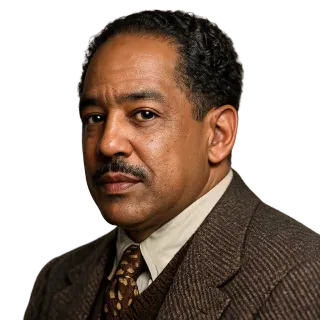
Langston Hughes
The poet who gave Harlem its anthem and made jazz a literary form.
Explore Langston Hughes
Walt Disney
The dreamer who industrialized magic, and built a mouse into an empire of wonder.
Explore Walt Disney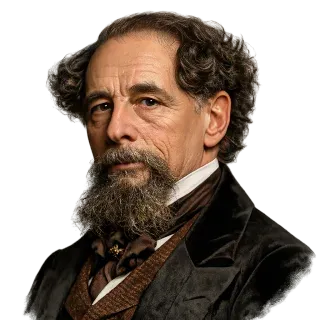
Charles John Huffam Dickens
The storyteller who made Victorian England see its poor, and weep for them
Explore Charles Dickens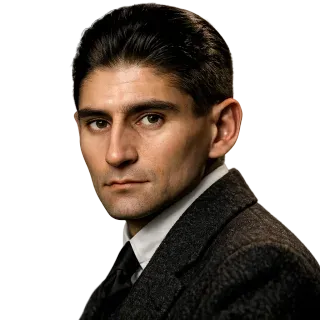
Franz Kafka
The writer who showed us the nightmare hiding inside ordinary life
Explore Kafka