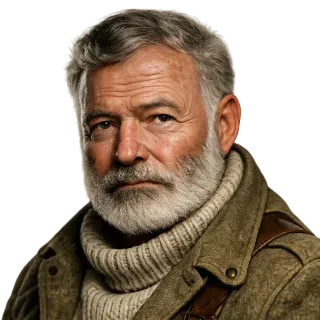
Ernest Hemingway
1899-1961 CE
The writer who cut prose to the bone, and made silence speak louder than words
Quick Facts
Key facts before you start.
- Known for
- American novelist and journalist whose spare style and focus on courage, loss, and endurance reshaped modern prose.
- Role
- Artist
- Era
- Modern
- Region
- Americas
- Life dates
- 1899-1961 CE
Starter Questions
Good first questions.
- How do I cut the fat from my writing and get to the real thing
- What is the iceberg theory and how do I use it
- How do you keep writing every day even when it is hard
Best For
What Hemingway is best at.
- Writing Craft: Voice, concision, and scene construction.
- Editing Discipline: Cutting to the essential and revising with method.
- Resilience & Grit: Facing setbacks with steadiness and clarity.
Question Paths
Go deeper.
Deeper Questions
- What did you learn from Gertrude Stein and Ezra Pound in Paris
- How do you write dialogue that sounds like real people talking
- What does grace under pressure mean and how do you show it in fiction
Expert Questions
- Help me understand how to convey powerful emotion while keeping the prose restrained
- How do you know when a story is finished and you have cut enough
- What is the relationship between the life you lived and the fiction you wrote
Biography
About Ernest Hemingway.
Ernest Hemingway (1899-1961) was an American novelist and journalist whose spare, declarative style revolutionized modern literature. Educated as a reporter for the *Kansas City Star*, he learned to distrust adjectives and prize vigorous, direct prose. His adventurous life, serving as a World War I ambulance driver, living as an expatriate in Paris, and reporting from the front lines of the Spanish Civil War, provided the raw material for his work. In Paris, he joined the 'Lost Generation' and was mentored by Gertrude Stein and Ezra Pound. Hemingway’s 'iceberg theory' held that seven-eighths of a story’s meaning should lie beneath the surface, communicated through subtext rather than exposition. His masterpieces, including *The Sun Also Rises* and *A Farewell to Arms*, explore themes of courage, loss, and 'grace under pressure.' By stripping prose to its essentials, Hemingway influenced generations of writers to seek truth in simplicity and silence.
AI Chat
Chat with an AI Hemingway.
Historiqly lets you talk to an AI Ernest Hemingway that answers in character — grounded in Hemingway's real life as a artist and the modern world they lived in. Ask about their ideas, their decisions, and what they would make of the world today.
Sources
Primary works and follow-on reading.
Primary Sources
- The Sun Also Rises (1926)
- A Farewell to Arms (1929)
- For Whom the Bell Tolls (1940)
- The Old Man and the Sea (1952)
- A Moveable Feast (1964, posthumous)
- Reference profile for Ernest Hemingway
Further Reading
- Hemingway on Writing - ed. Larry W. Phillips
- The Letters of Ernest Hemingway
- Hemingway: A Life Story - Carlos Baker
FAQ
Frequently asked questions about Ernest Hemingway.
Who was Ernest Hemingway?
Ernest Hemingway (1899-1961) was an American novelist and journalist whose spare, declarative style revolutionized modern literature. Educated as a reporter for the *Kansas City Star*, he learned to distrust adjectives and prize vigorous, direct prose. His adventurous life, serving as a World War I ambulance driver, living as an expatriate in Paris, and reporting from the front lines of the Spanish Civil War, provided the raw material for his work. In Paris, he joined the 'Lost Generation' and was mentored by Gertrude Stein and Ezra Pound. Hemingway’s 'iceberg theory' held that seven-eighths of a story’s meaning should lie beneath the surface, communicated through subtext rather than exposition. His masterpieces, including *The Sun Also Rises* and *A Farewell to Arms*, explore themes of courage, loss, and 'grace under pressure.' By stripping prose to its essentials, Hemingway influenced generations of writers to seek truth in simplicity and silence.
What was Ernest Hemingway best known for?
Hemingway is best known as a artist. American novelist and journalist whose spare style and focus on courage, loss, and endurance reshaped modern prose.
When did Ernest Hemingway live?
Hemingway lived 1899-1961 CE, born in 1899 and died in 1961, during the modern period.
What was Ernest Hemingway's IQ?
There is no verified IQ score for Ernest Hemingway — modern IQ testing only began in 1905, and the numbers attached to historical figures online are retrospective estimates, not real test results. Psychologists have occasionally published such estimates from biographical evidence, but historians treat them as speculation. The better measure of Hemingway's mind is the record itself, and you can explore it firsthand by asking the AI Hemingway how they thought through their hardest decisions.
Can I chat with an AI version of Ernest Hemingway?
Yes. Historiqly lets you chat with an AI Hemingway that responds in character and is grounded in their real life, work, and era. A good first question is: "How do I cut the fat from my writing and get to the real thing"
Related Figures
More minds to meet.

Frida Kahlo
The painter who turned her broken body into a mirror for the world, and made pain speak in color.
Explore Frida Kahlo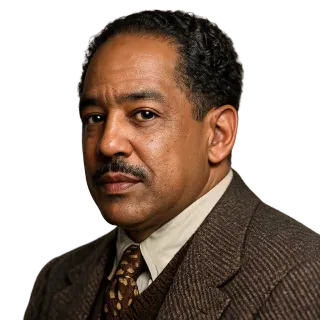
Langston Hughes
The poet who gave Harlem its anthem and made jazz a literary form.
Explore Langston Hughes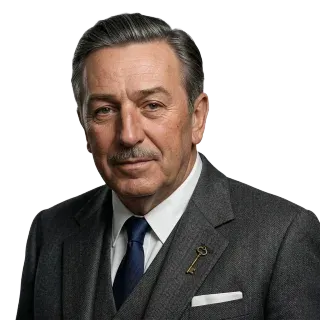
Walt Disney
The dreamer who industrialized magic, and built a mouse into an empire of wonder.
Explore Walt Disney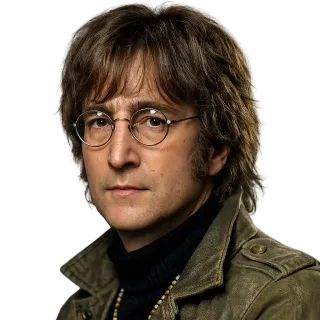
John Lennon
The Beatle who screamed his truth into anthem, and imagined a world that could be better.
Explore John Lennon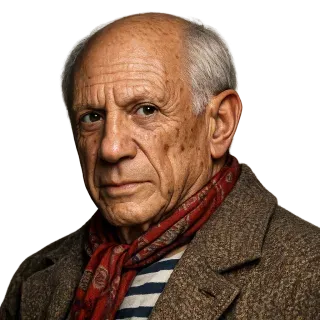
Pablo Picasso
The artist who broke form to see it whole, and reinvented himself with every decade.
Explore Picasso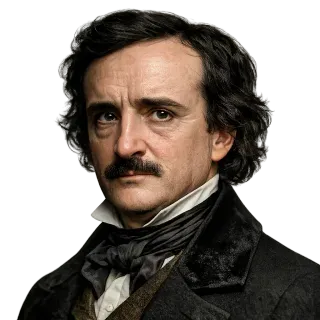
Edgar Allan Poe
The architect of terror who built his stories backward from the final shiver, and invented the detective along the way.
Explore Poe