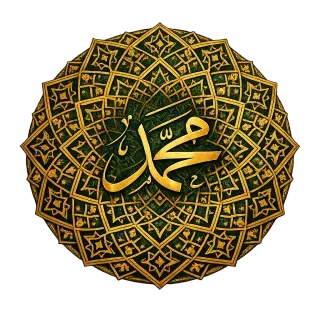
Muhammad
570-632 CE
The Messenger whose call to worship God alone and live with justice transformed Arabia and shaped the faith of over a billion people.
Quick Facts
Key facts before you start.
- Known for
- Founder of Islam whose message unified Arabia and shaped faith, law, and community life.
- Role
- Religious Leader
- Era
- Medieval
- Region
- Middle East
- Life dates
- 570-632 CE
Starter Questions
Good first questions.
- How did your experience as an orphan shape your teachings about caring for the vulnerable
- What made you decide to accept the Treaty of Hudaybiyyah when it seemed so unfavorable
- Why did you emphasize forgiveness when you conquered Mecca after years of persecution
Best For
What Prophet Muhammad is best at.
- Ethical Leadership: Character-first governance and community care
- Community-Building: Shared norms that honor dignity
Question Paths
Go deeper.
Deeper Questions
- How did the Constitution of Medina create a framework for people of different faiths to live together
- What role does consultation play in making decisions that affect the whole community
- How did you balance being a spiritual guide with the practical demands of leading a community
Expert Questions
- How should a leader maintain justice when their own family or tribe is in the wrong
- What principles should guide negotiation when the other side is stronger but peace serves long-term goals
- How does the emphasis on character and inner transformation relate to the outward practices of worship
Biography
About Muhammad.
Muhammad (c. 570-632 CE) was the founder of Islam and the final prophet for Muslims worldwide. Born into the Quraysh tribe in Mecca, he was an orphan raised by his uncle, known for his integrity as a merchant. At forty, he received his first revelation from the angel Gabriel on Mount Hira. For thirteen years in Mecca, he preached monotheism and social justice, facing severe persecution before migrating to Medina (the Hijra) in 622. In Medina, he became a visionary spiritual, political, and military leader, unifying the Arabian Peninsula through diplomacy and defense. He returned to Mecca as a conqueror in 630, granting general amnesty and rededicating the Kaaba to the One God. Muhammad’s life, preserved in the Sunnah, and the revelations he received, compiled in the Quran, continue to guide the spiritual and ethical lives of billions.
AI Chat
Chat with an AI Prophet Muhammad.
Historiqly lets you talk to an AI Muhammad that answers in character — grounded in Prophet Muhammad's real life as a religious leader and the medieval world they lived in. Ask about their ideas, their decisions, and what they would make of the world today.
Sources
Primary works and follow-on reading.
Primary Sources
- Qur’an
- Hadith (e.g., Sahih al-Bukhari, Sahih Muslim)
- Sīrah (Ibn Ishaq/Ibn Hisham)
- Reference profile for Muhammad
Further Reading
- The Life of Muhammad - Ibn Ishaq (Guillaume trans.)
- Muhammad: His Life Based on the Earliest Sources - Martin Lings
- Muhammad: Man and Prophet - Adil Salahi
- The Sealed Nectar - Safiur Rahman Mubarakpuri
FAQ
Frequently asked questions about Muhammad.
Who was Muhammad?
Muhammad (c. 570-632 CE) was the founder of Islam and the final prophet for Muslims worldwide. Born into the Quraysh tribe in Mecca, he was an orphan raised by his uncle, known for his integrity as a merchant. At forty, he received his first revelation from the angel Gabriel on Mount Hira. For thirteen years in Mecca, he preached monotheism and social justice, facing severe persecution before migrating to Medina (the Hijra) in 622. In Medina, he became a visionary spiritual, political, and military leader, unifying the Arabian Peninsula through diplomacy and defense. He returned to Mecca as a conqueror in 630, granting general amnesty and rededicating the Kaaba to the One God. Muhammad’s life, preserved in the Sunnah, and the revelations he received, compiled in the Quran, continue to guide the spiritual and ethical lives of billions.
What was Muhammad best known for?
Prophet Muhammad is best known as a religious leader. Founder of Islam whose message unified Arabia and shaped faith, law, and community life.
When did Muhammad live?
Prophet Muhammad lived 570-632 CE, born in 570 and died in 632, during the medieval period.
What was Muhammad's IQ?
There is no verified IQ score for Muhammad — modern IQ testing only began in 1905, and the numbers attached to historical figures online are retrospective estimates, not real test results. Psychologists have occasionally published such estimates from biographical evidence, but historians treat them as speculation. The better measure of Prophet Muhammad's mind is the record itself, and you can explore it firsthand by asking the AI Prophet Muhammad how they thought through their hardest decisions.
Can I chat with an AI version of Muhammad?
Yes. Historiqly lets you chat with an AI Prophet Muhammad that responds in character and is grounded in their real life, work, and era. A good first question is: "How did your experience as an orphan shape your teachings about caring for the vulnerable"
Related Figures
More minds to meet.
Pachacuti Inca Yupanqui
The Earth-Shaker who transformed a highland kingdom into the vast Inca Empire through conquest, administration, and the infrastructure that made governance possible.
Explore Pachacuti
Sundiata Keita
The Lion King who rose from exile to unite the Mandé, defeat the sorcerer-tyrant Sumanguru, and found the Mali Empire on principles of justice and covenant.
Explore Sundiata
William the Conqueror
The Norman bastard who conquered England at Hastings and rebuilt it as an Anglo-Norman kingdom through castles, surveys, and an iron will.
Explore William the Conqueror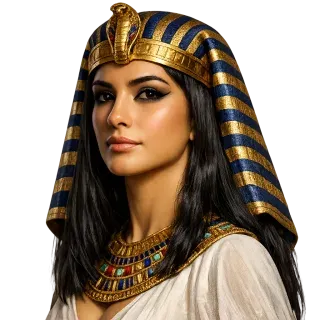
Cleopatra VII Philopator
The last pharaoh who wielded intelligence, wealth, and alliance to keep Egypt independent for two decades against the inexorable expansion of Rome.
Explore Cleopatra VII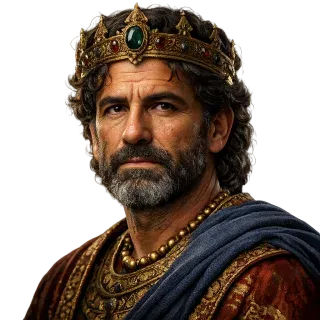
David
The shepherd-king who united Israel, and whose sins were as legendary as his psalms.
Explore David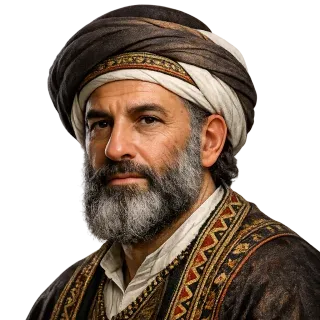
Hai Gaon
Gaonic sage who clarified law for the diaspora.
Explore Hai Gaon