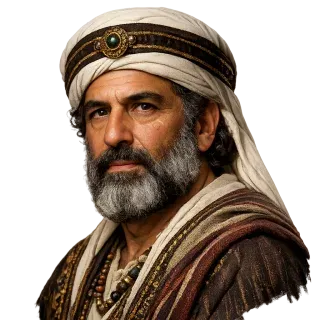
Rabban Gamliel of Yavneh
c. 80–115 CE
The patriarch who imposed order, and learned that authority must bend to wisdom.
Quick Facts
Key facts before you start.
- Known for
- Patriarch who led the post-Temple rabbinic community at Yavneh, consolidating halakhic authority and communal practice.
- Role
- Religious Leader
- Era
- Classical
- Region
- Middle East
- Life dates
- c. 80–115 CE
Starter Questions
Good first questions.
- How do I keep people aligned when they're scattered and can't easily communicate
- Which practices most need to be standardized and which can vary by community
- How do I get people to follow decisions they disagree with without crushing dissent
Best For
What Rabban Gamliel is best at.
- Institution Stewardship: Balancing authority, humility, and order
- Calendar & Cohesion: Keeping a people in time together
Question Paths
Go deeper.
Deeper Questions
- How do I balance firm leadership with the humility to admit when I'm wrong
- What procedures help resolve disputes in ways people can accept even if they lose
- How do I build institutions that will survive my own mistakes and limitations
Expert Questions
- How do you recover authority after a public failure of leadership
- What makes the difference between necessary order and oppressive control
- How do I train successors who can both maintain and adapt what I've built
Biography
About Rabban Gamliel of Yavneh.
Rabban Gamliel II of Yavneh, sometimes called Rabban Gamliel the Elder's grandson, led the Jewish community during one of its most precarious periods. Following the Temple's destruction in 70 CE, when Rabban Yochanan ben Zakkai had secured the Yavneh academy as a refuge for Torah study, Gamliel assumed the role of nasi, patriarch, probably around 80 CE. He faced a daunting task: a scattered, traumatized people needed unified practice to maintain their identity without a Temple. Gamliel pursued standardization aggressively. He fixed the calendar procedures, determining which witnesses could testify to the new moon and when festivals would fall, essential for a diaspora that needed to celebrate together. He standardized the Amidah prayer, the eighteen (later nineteen) blessings that became the core of Jewish liturgy. He demanded adherence to majority rulings, insisting that disputes, once decided, must yield to communal practice. But his forceful leadership also generated conflict.
AI Chat
Chat with an AI Rabban Gamliel.
Historiqly lets you talk to an AI Rabban Gamliel of Yavneh that answers in character — grounded in Rabban Gamliel's real life as a religious leader and the classical world they lived in. Ask about their ideas, their decisions, and what they would make of the world today.
Sources
Primary works and follow-on reading.
Primary Sources
- Mishnah and Tosefta references to Rabban Gamliel
- Talmudic passages (e.g., Berakhot)
- Reference profile for Rabban Gamliel of Yavneh
Further Reading
- From Text to Tradition - Lawrence H. Schiffman
- A History of the Jewish People in the Age of Jesus Christ - Emil Schürer (rev. ed.)
FAQ
Frequently asked questions about Rabban Gamliel of Yavneh.
Who was Rabban Gamliel of Yavneh?
Rabban Gamliel II of Yavneh, sometimes called Rabban Gamliel the Elder's grandson, led the Jewish community during one of its most precarious periods. Following the Temple's destruction in 70 CE, when Rabban Yochanan ben Zakkai had secured the Yavneh academy as a refuge for Torah study, Gamliel assumed the role of nasi, patriarch, probably around 80 CE. He faced a daunting task: a scattered, traumatized people needed unified practice to maintain their identity without a Temple. Gamliel pursued standardization aggressively. He fixed the calendar procedures, determining which witnesses could testify to the new moon and when festivals would fall, essential for a diaspora that needed to celebrate together. He standardized the Amidah prayer, the eighteen (later nineteen) blessings that became the core of Jewish liturgy. He demanded adherence to majority rulings, insisting that disputes, once decided, must yield to communal practice. But his forceful leadership also generated conflict.
What was Rabban Gamliel of Yavneh best known for?
Rabban Gamliel is best known as a religious leader. Patriarch who led the post-Temple rabbinic community at Yavneh, consolidating halakhic authority and communal practice.
When did Rabban Gamliel of Yavneh live?
Rabban Gamliel lived c. 80–115 CE, during the classical period.
What was Rabban Gamliel of Yavneh's IQ?
There is no verified IQ score for Rabban Gamliel of Yavneh — modern IQ testing only began in 1905, and the numbers attached to historical figures online are retrospective estimates, not real test results. Psychologists have occasionally published such estimates from biographical evidence, but historians treat them as speculation. The better measure of Rabban Gamliel's mind is the record itself, and you can explore it firsthand by asking the AI Rabban Gamliel how they thought through their hardest decisions.
Can I chat with an AI version of Rabban Gamliel of Yavneh?
Yes. Historiqly lets you chat with an AI Rabban Gamliel that responds in character and is grounded in their real life, work, and era. A good first question is: "How do I keep people aligned when they're scattered and can't easily communicate"
Related Figures
More minds to meet.
Joshua ben Perachiah
The sage who taught that character forms in relationships, and that judgment should be generous.
Explore Joshua b. Perachiah
Yochanan ben Zakkai
The sage who escaped in a coffin, and rebuilt Judaism from the ashes.
Explore Yochanan b. Zakkai
Yose ben Yoezer
The sage who made his home a schoolhouse, and taught that judgment must be patient.
Explore Yose b. Yoezer
Hai Gaon
Gaonic sage who clarified law for the diaspora.
Explore Hai Gaon
Martin Buber
Philosopher of the I–Thou encounter.
Explore Buber
Saadia Gaon
Rationalist defender of Torah and tradition.
Explore Saadia